

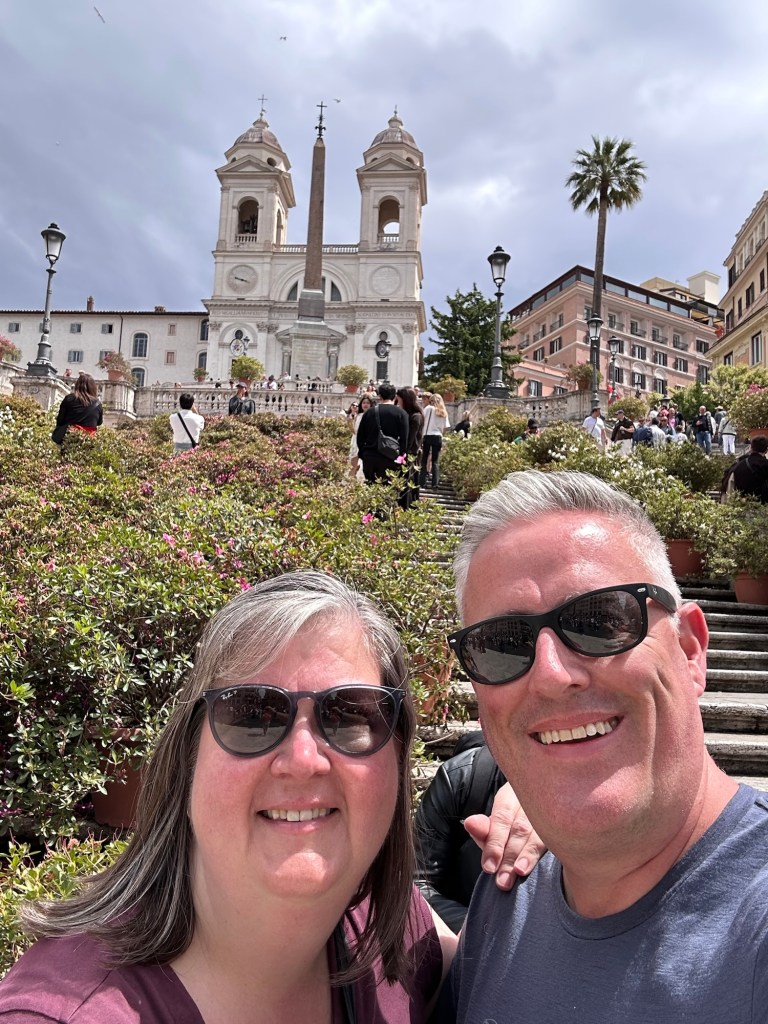
The last time we were in Rome, the Spanish Steps were closed due to renovations. We decided to return today to get to experience the site! People are no longer allowed to sit and lounge on the steps which actually makes photographs somewhat better. Politzi will make sure you don’t break the new rules!
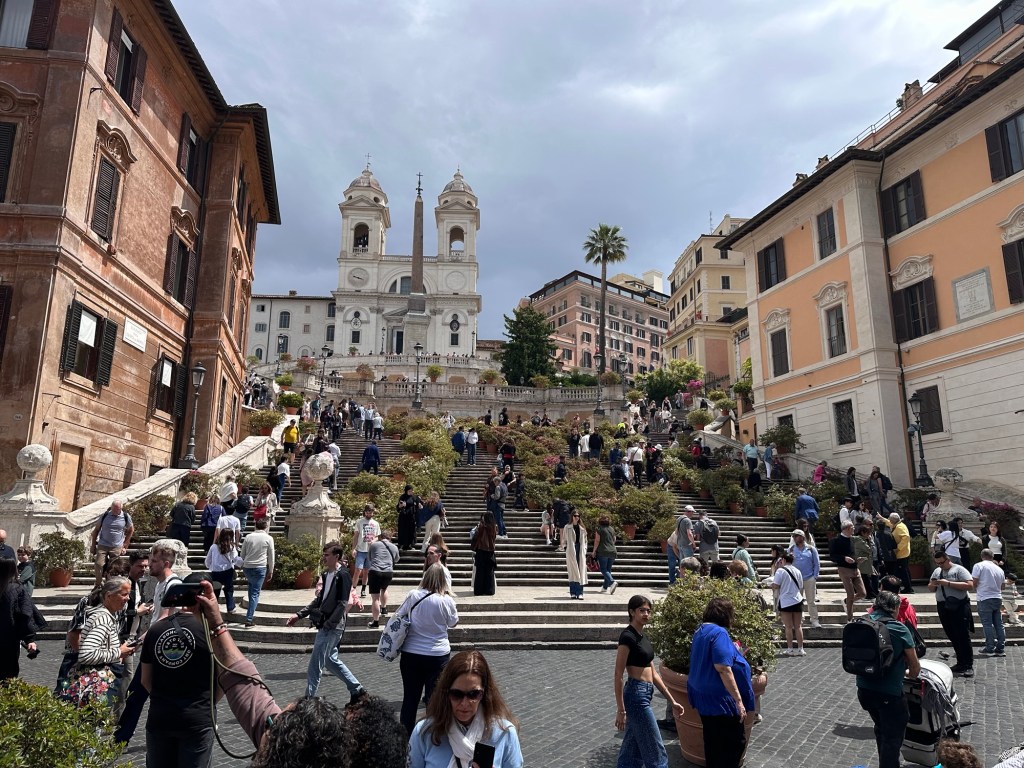
There are 11 ramps of 12 steps each, made of travertine marble built between 1723 – 1726. The steps are said to be the widest and longest staircase in Europe.
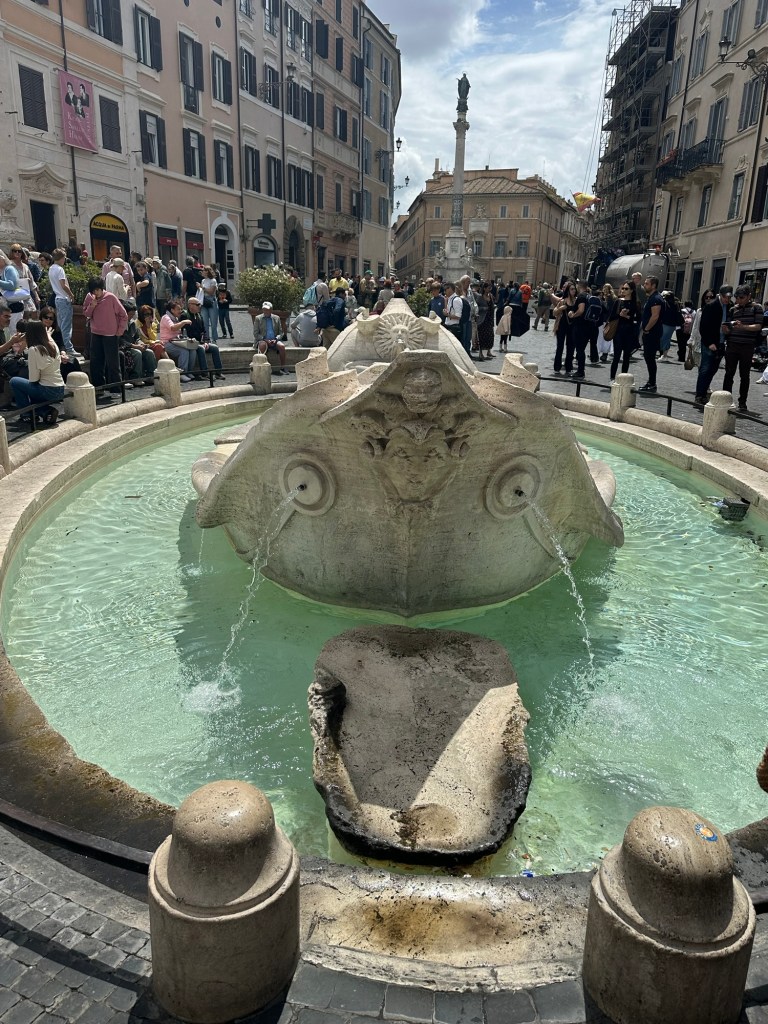
Fontana della Barcaccia (1626-1629) in the Piazza de Spagna at the foot of the Spanish Steps. The fountain is basically a large nasoni from which you can fill water bottles, but Dave was concerned about the amount of pigeon poop.
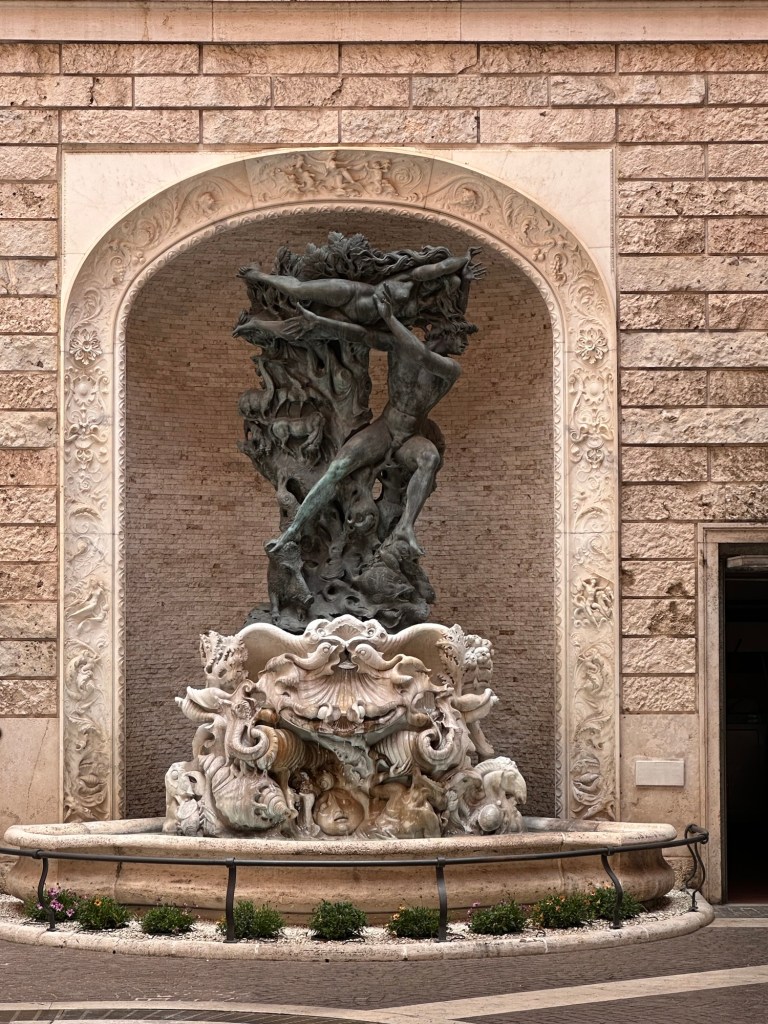
The sculpture/fountain of Daphne and Apollo depicts the myth from Ovid’s Metamorphosis where the nymph, Daphne, transforms into a laurel tree to escape Apollo’s pursuit.
The Palazetto Zuccari, called the “Monster House”, is a 16th C residence famous for its front door and windows shaped like the heads of monsters.

The palace was built by the famous Baroque artist Federico Zuccari in 1590 as a studio for himself and his children. He drew inspiration from the Gardens of Bomarzo (we hope to visit the gardens on our next trip to Italy!) and the palace became a hot spot for aspiring artists.

The Queen of Poland lived here in 1702 and the building is now the bibliotheca Hertziana, a library and part of the Max Planck institute for art history.

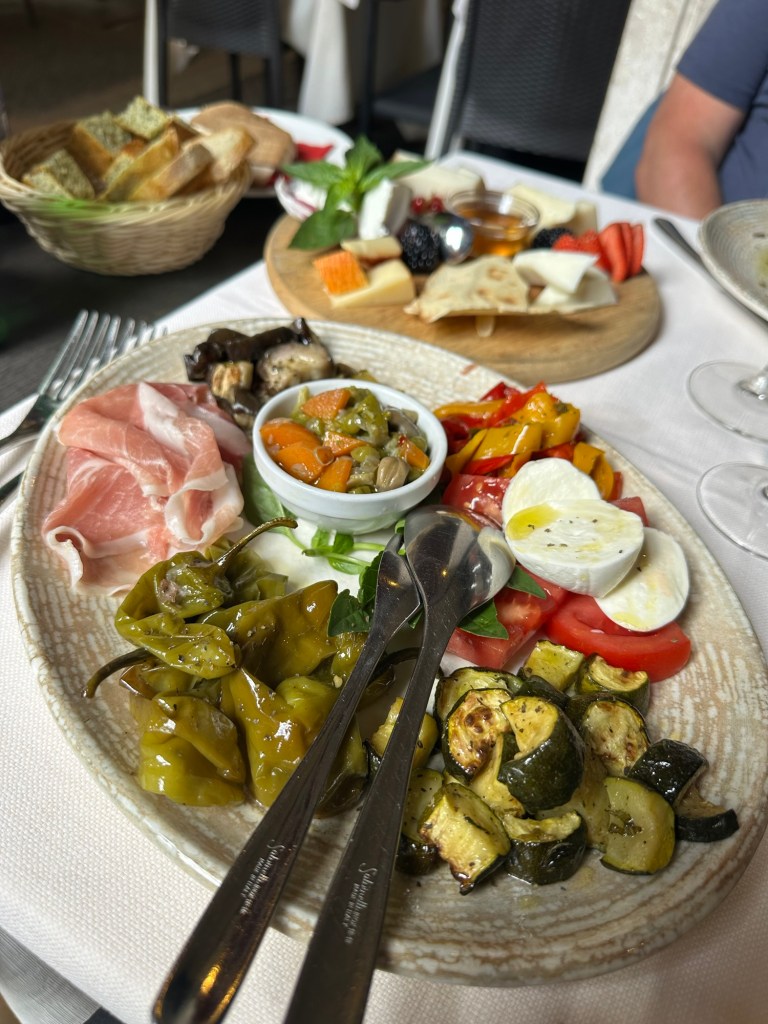
Lunch was a great tagliere (‘cutting board’) of meats, cheeses and warmed veggies served with olive oil and balsamic vinegar. Yum!
In the 500-year old Church of Santa Maria della Concezione dei Cappuccini, we picked up the audio tour for the new museum and learned about the history of the Capuchin friars. During the years of the Terrors in France, a period during the French Revolution in the late 1700’s, many Capuchins, in order not to renounce their faith and save their heads from the guillotine, took refuge in Rome.
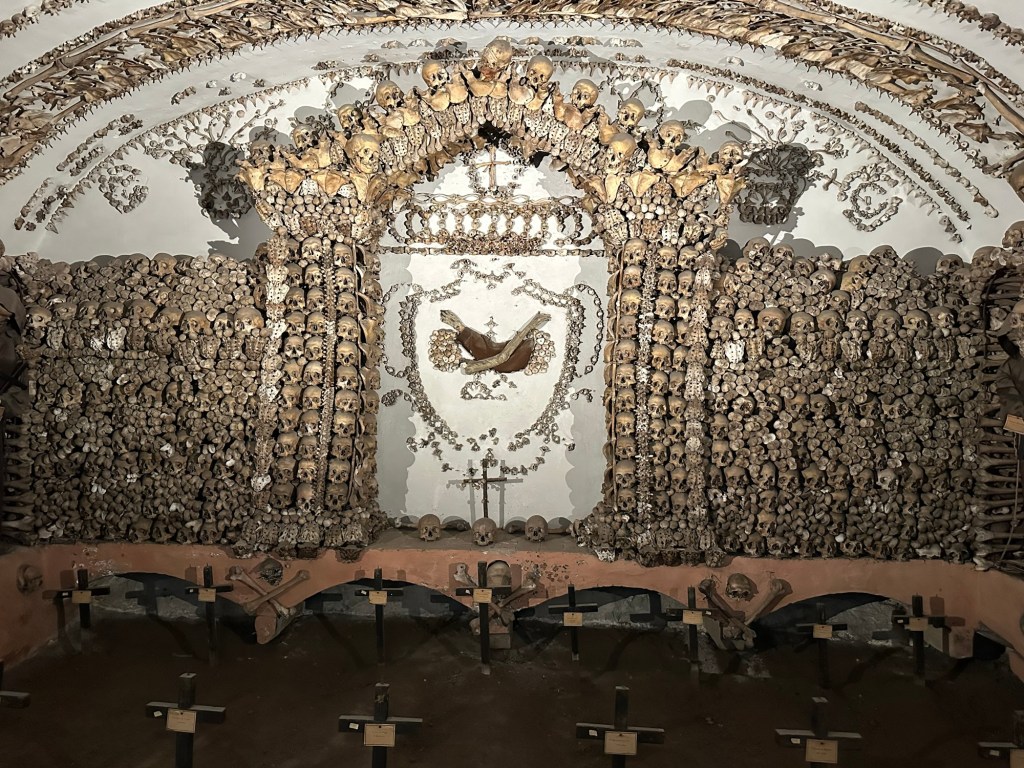
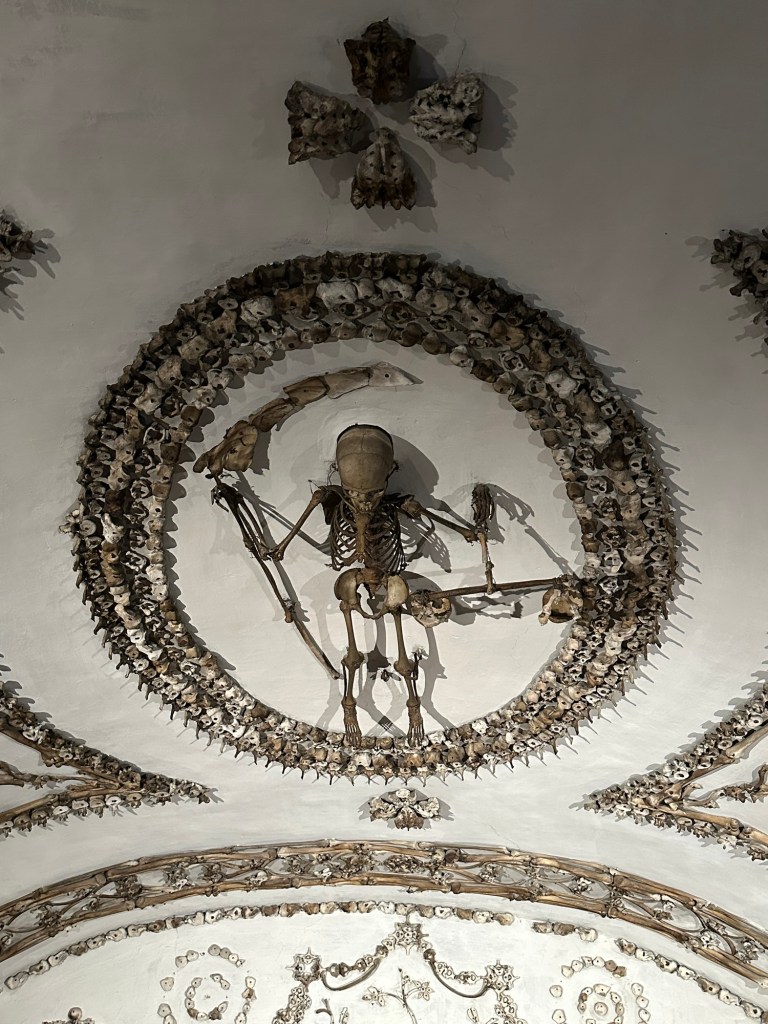
The crypt under the church is a 30m corridor flanked by 6 rooms in which the skulls and bones of about 3700 friars are elaborately displayed.


Deciding it was too early to return to the hotel, we took the local bus to wander around the Piazza Navona.
The Piazza Navona was built in the late 15th C on the site of the ancient stadium of Domitian (86 AD) where agones (chariot races and gymnastic competitions) took place in imitation of the Greek Olympics.
There are three beautiful fountains on the oval-shaped plaza.
Fontana del Moro – the central figure standing in the conch shell is likely a Moor wrestling a dolphin. He is surrounded by Tritons in a basin of rose-coloured marble
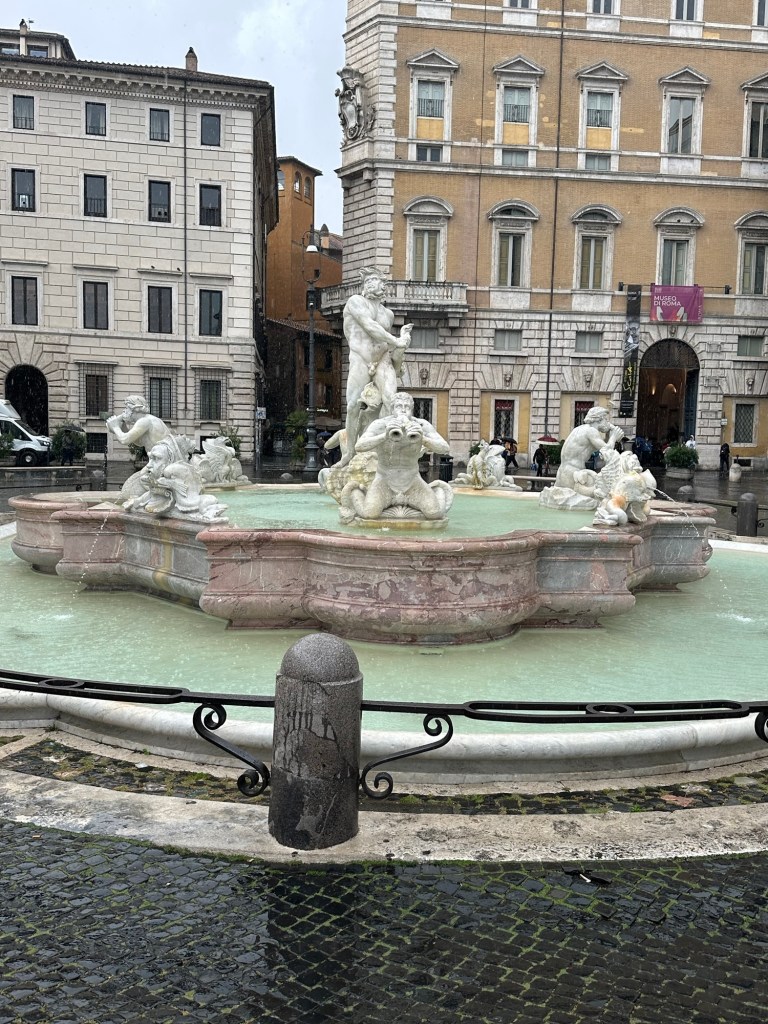
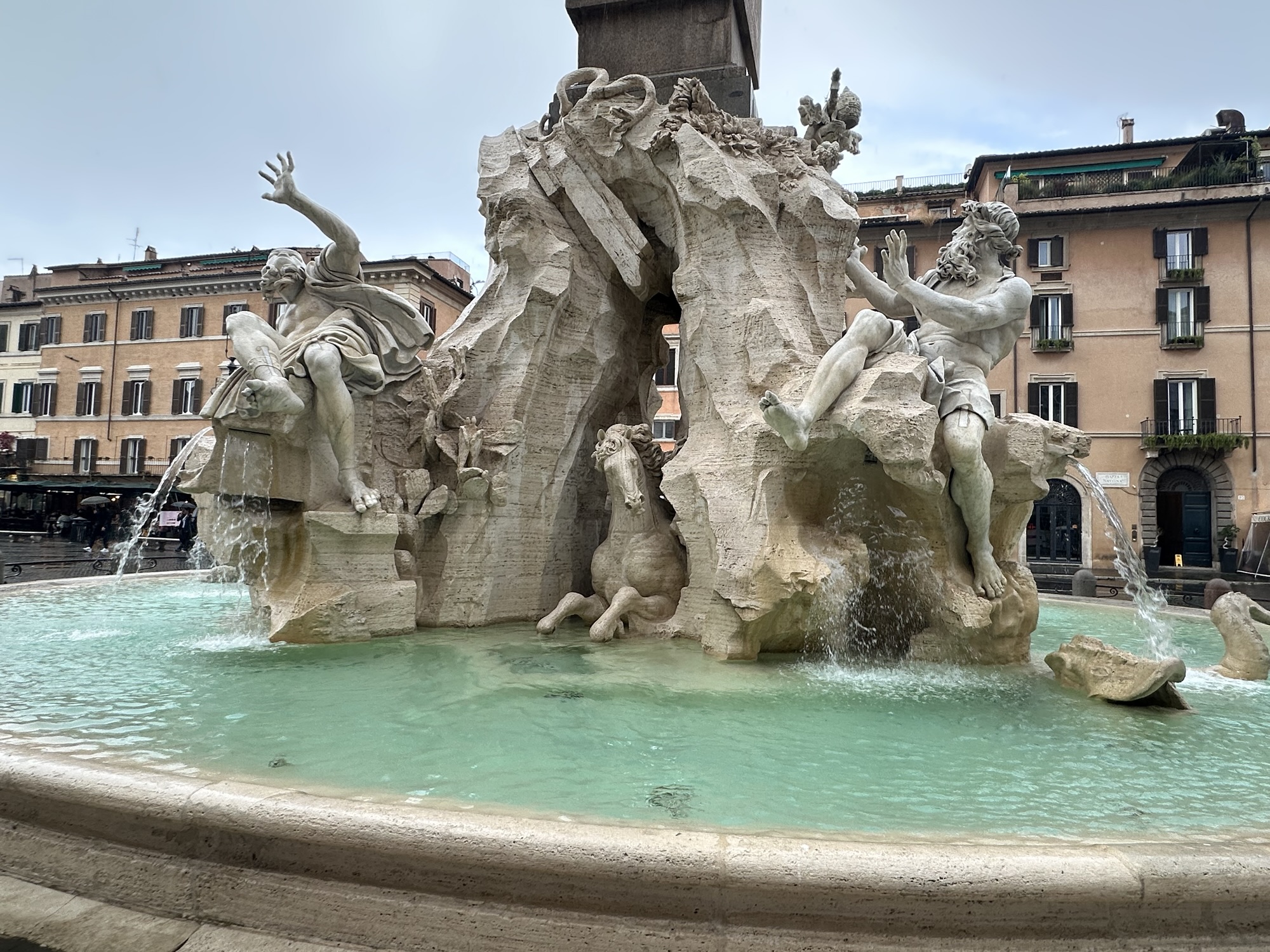
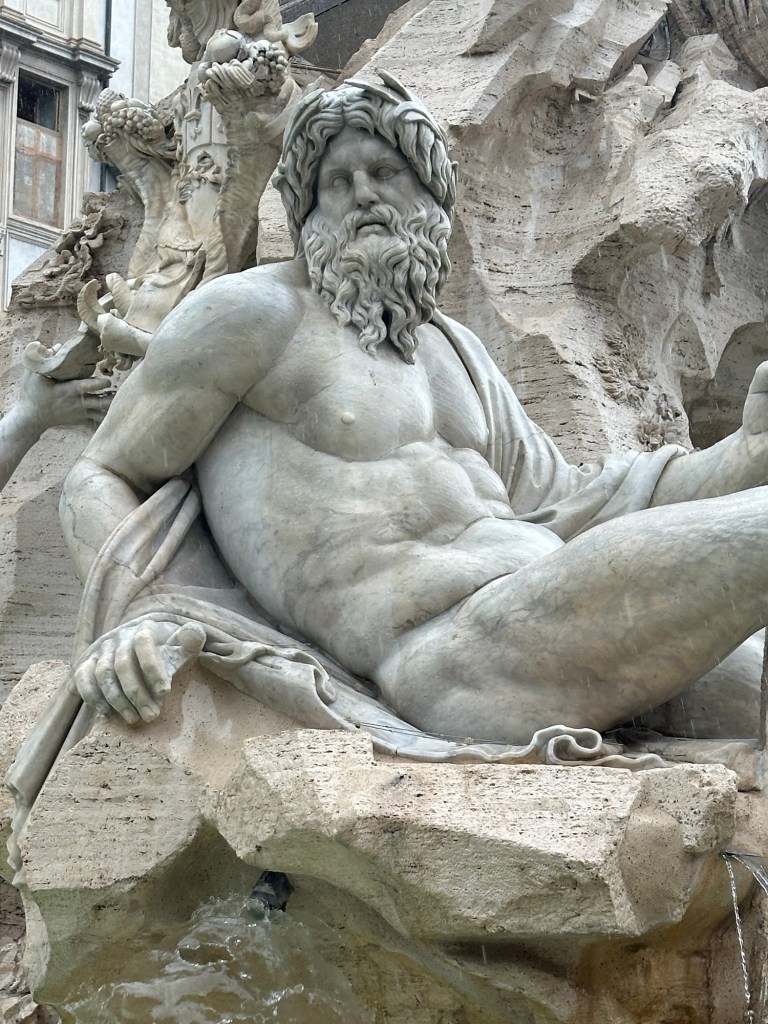
The Fontana dei Quattro fiumi (fountain of the 4 rivers) is topped by the obelisk of Domitian. The fountain was used in the movie adaptation of Dan Brown’s Angels and Demons.

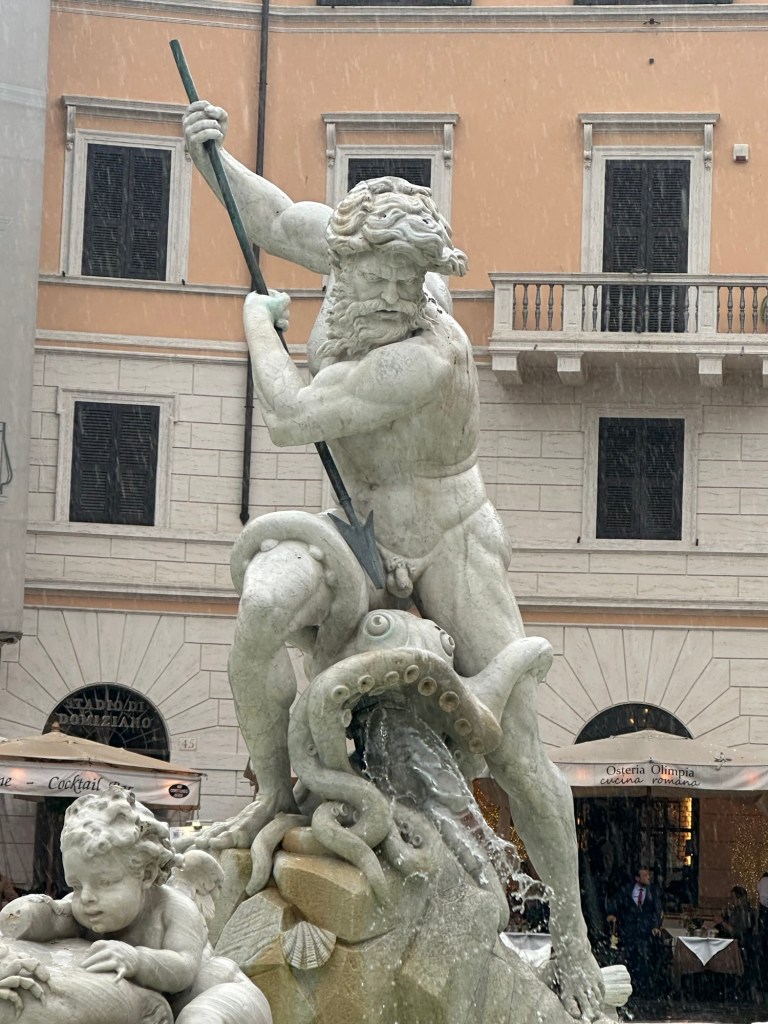
Fontana di Netunno with Neptune fighting an octopus.
Somewhere at the south end of the piazza, the rain that was in the forecast started. We tried to hide under an overhang for a while to see if it would stop. After deciding this was our fate, we skipped the rest of our day and made our way back to the bus stop absolutely soaked.

The rain had mostly stopped by the time we headed out for our last dinner in Rome. At Trattoria da Danilo, we were seated in their brick-lined cellar.
Their carbonara is said to be the best in all of Rome, so Kris had to give it a try! The menu lists the pasta dish as “la sua maestra la carbonara” which translates as Her Majesty the carbonara!
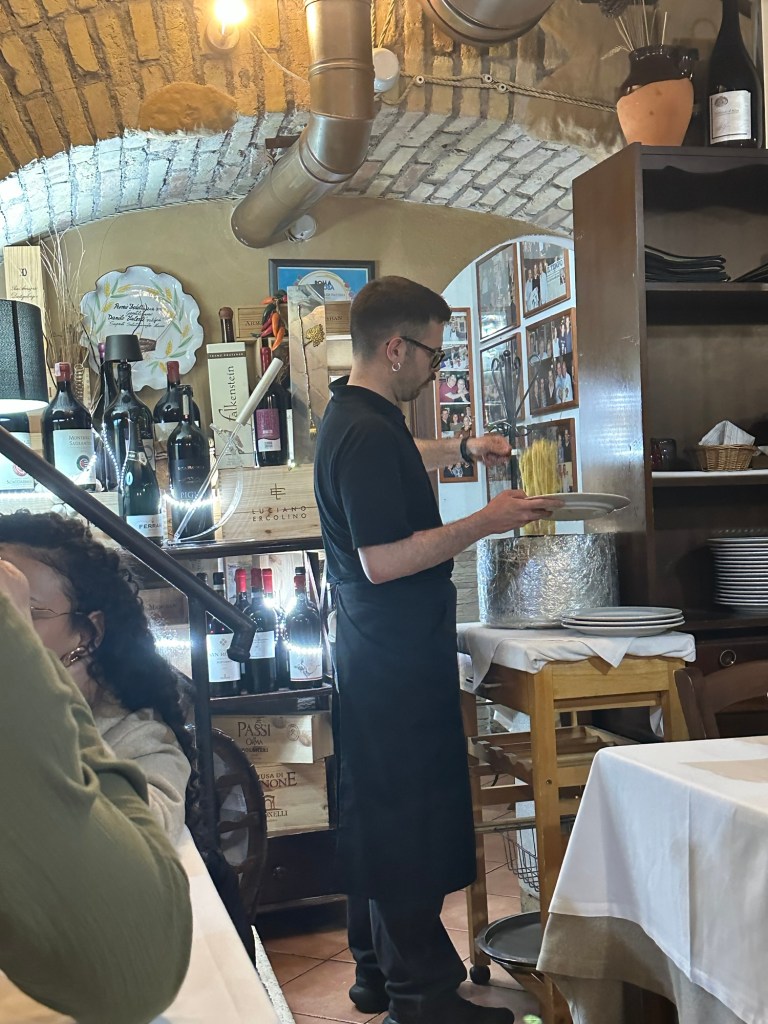
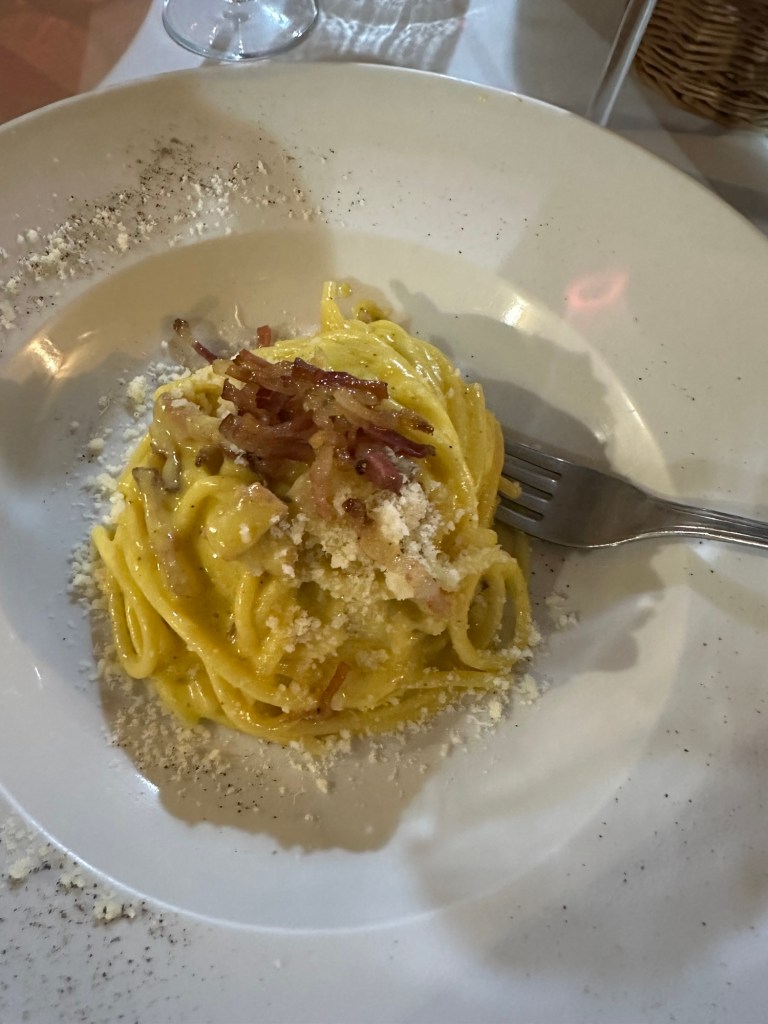
Guanciale salt-cured pork jowls or cheeks (guancia means cheek). Rendered fat gives flavour to and thickens the sauce of pasta dishes. It is often referred to as ‘face bacon’.
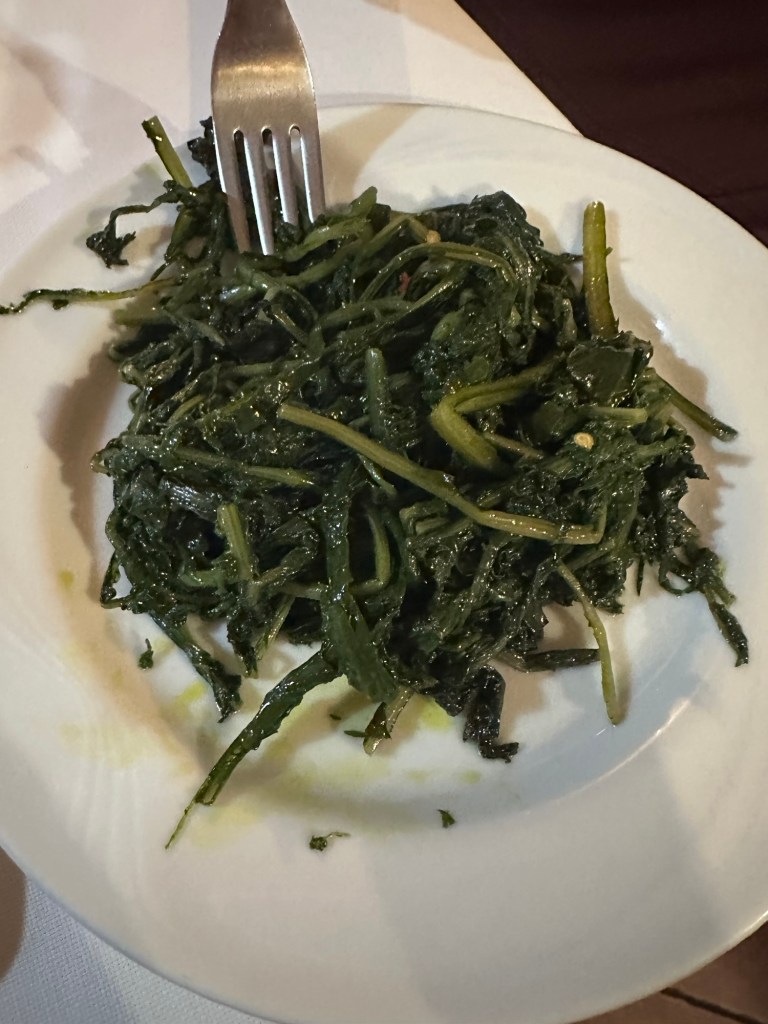
We had our entrees with a side of wilted chicory, a popular option in Italy.
Tomorrow we leave Rome and head north into Tuscany.


Leave a Reply