

We have landed in Rome! Kris bought tickets for the Leonardo Express train into town while Dave waited for the luggage. After a quick train ride into Termini station we had a short walk dragging our suitcases over the ancient cobblestones to our hotel. We are staying at the same hotel we stayed with our sons in 2016, mostly because it is close to the train, has a decent breakfast and Kris didn’t want to do more research! As is typical in Europe, the room is tiny but we don’t plan to spend a lot of time here anyway!
We lucked into an early check-in at the hotel, dropped the bags and headed out for an explore.
Just outside the Barberini metro station is the Fontana delle Api, the fountain of the bees.
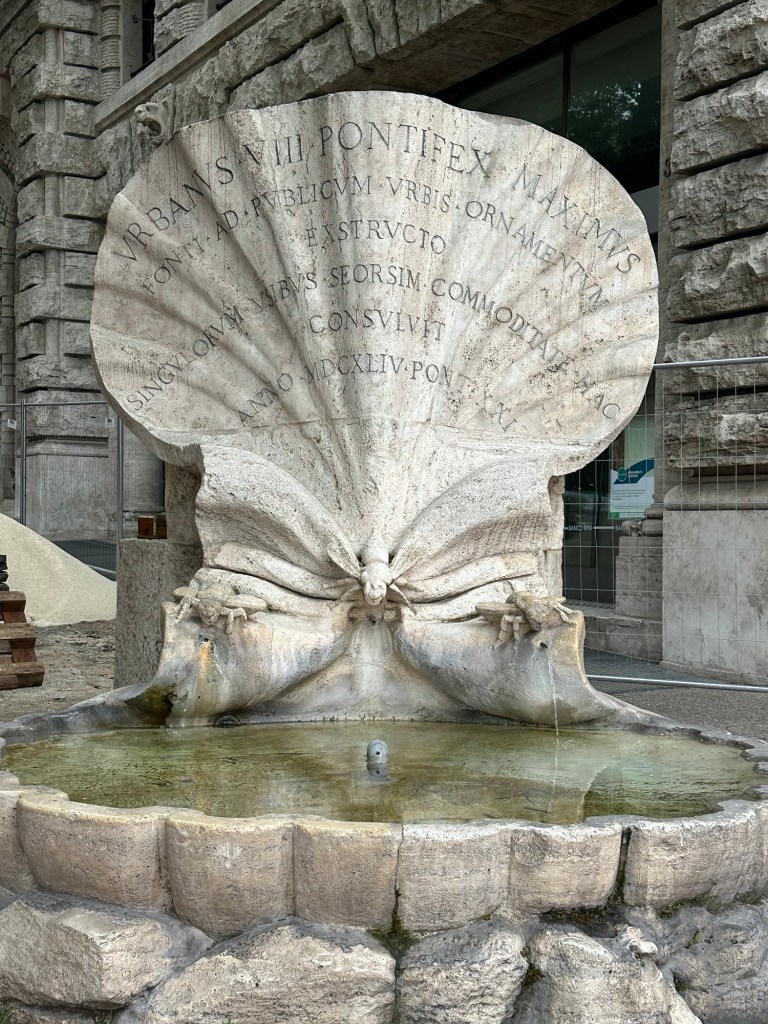
The fountain was originally built as a horse trough.
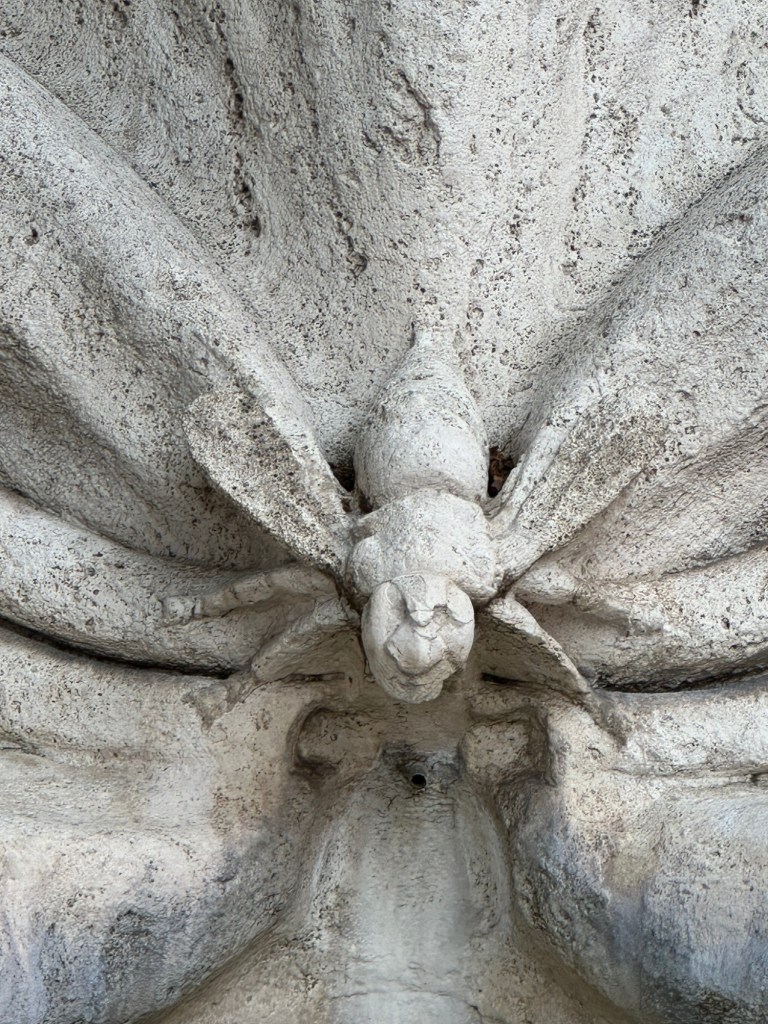
The three bees are heraldic symbols of the powerful Barberini family.

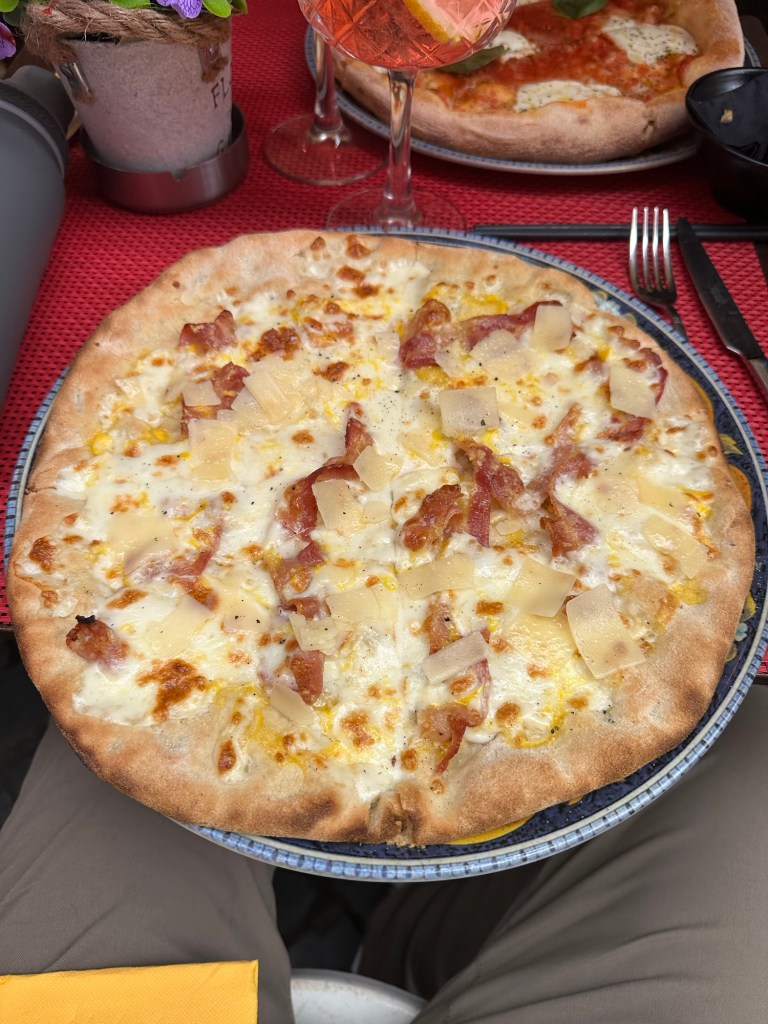
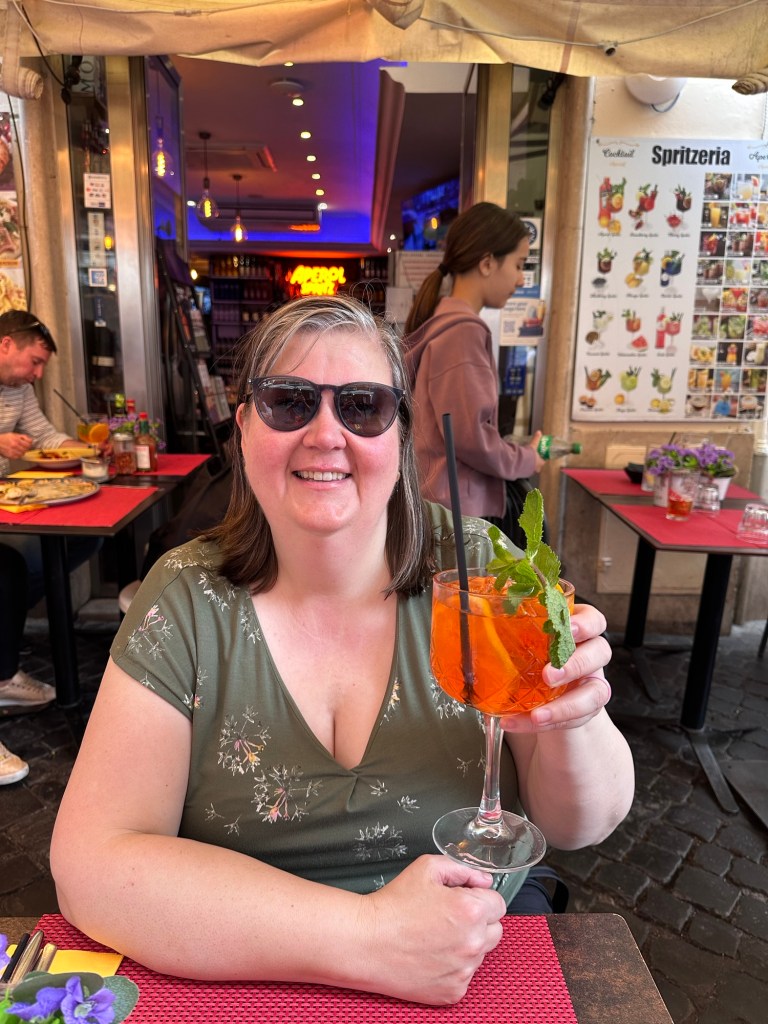
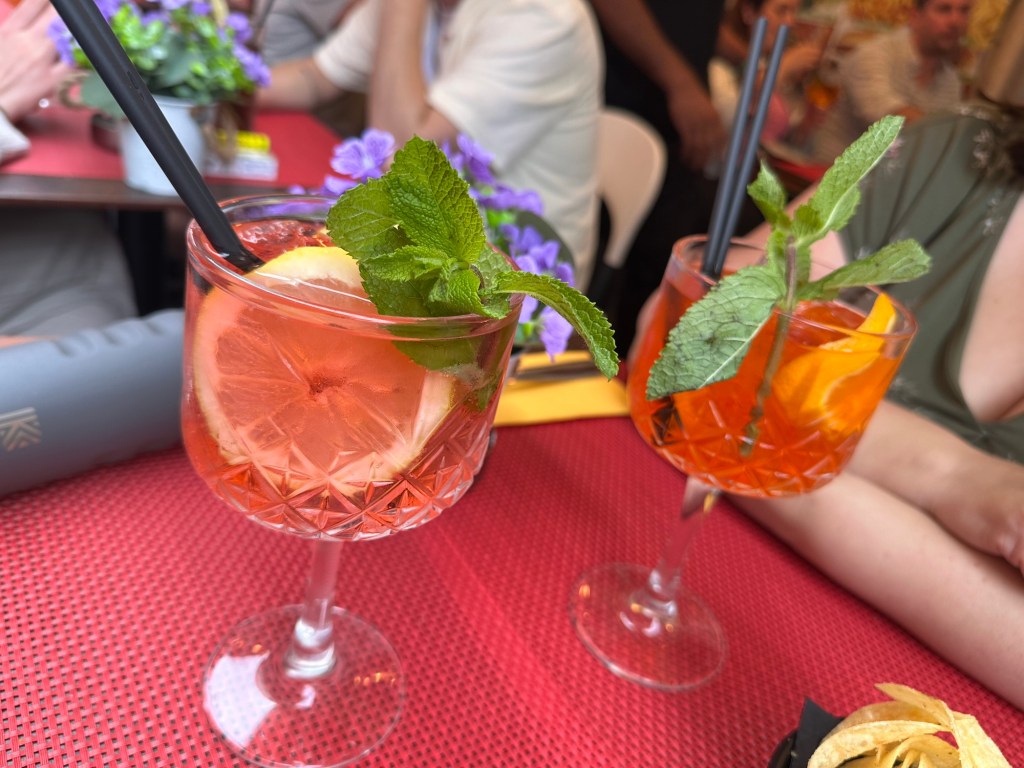
Our first stop was lunch at an AIC restaurant on our way to the Trevi Fountain. Italy is very good at providing gluten free menu options.

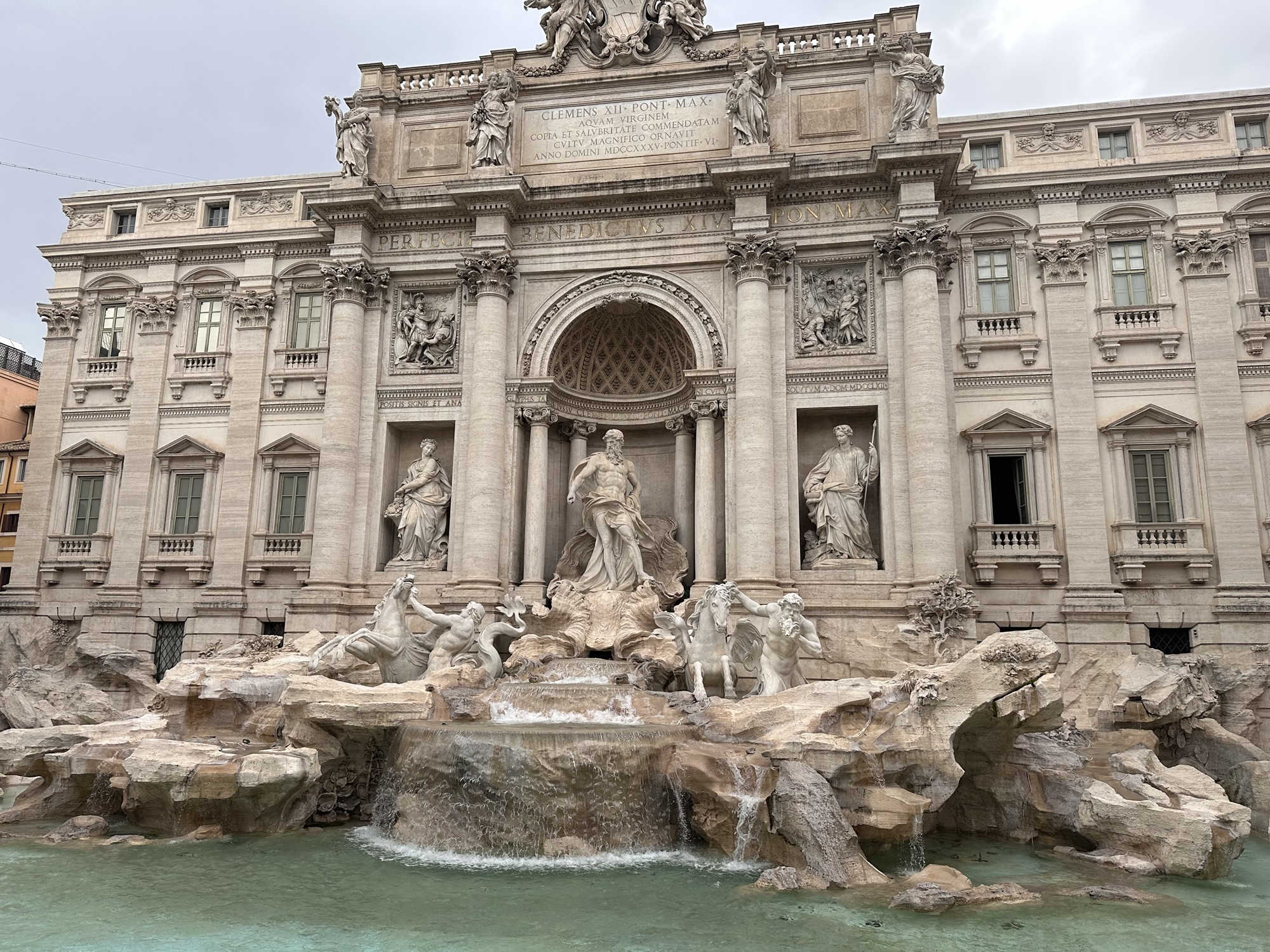
We have returned to the Trevi Fountain. The name Trevi is a mash up of ‘tre’ meaning three and ‘vie’ meaning roads, as the fountain and its Palazzo (the Poli Palace) were constructed at the intersection of the three most important roads in Rome at the time. This is the endpoint of the ancient Aqua Virgo aqueduct that supplied fresh water to the neighborhood.

Access to the Trevi Fountain has changed this year in an effort to control the maddening crowds. Tourists now must line up in a queue and wait their turn to move up to the edge of the fountain for photos. Once we bought our €2 tickets, we waited only a few minutes for access to the basin.
We filled our water bottles from the Lover’s Fountain to one side of the larger basin.

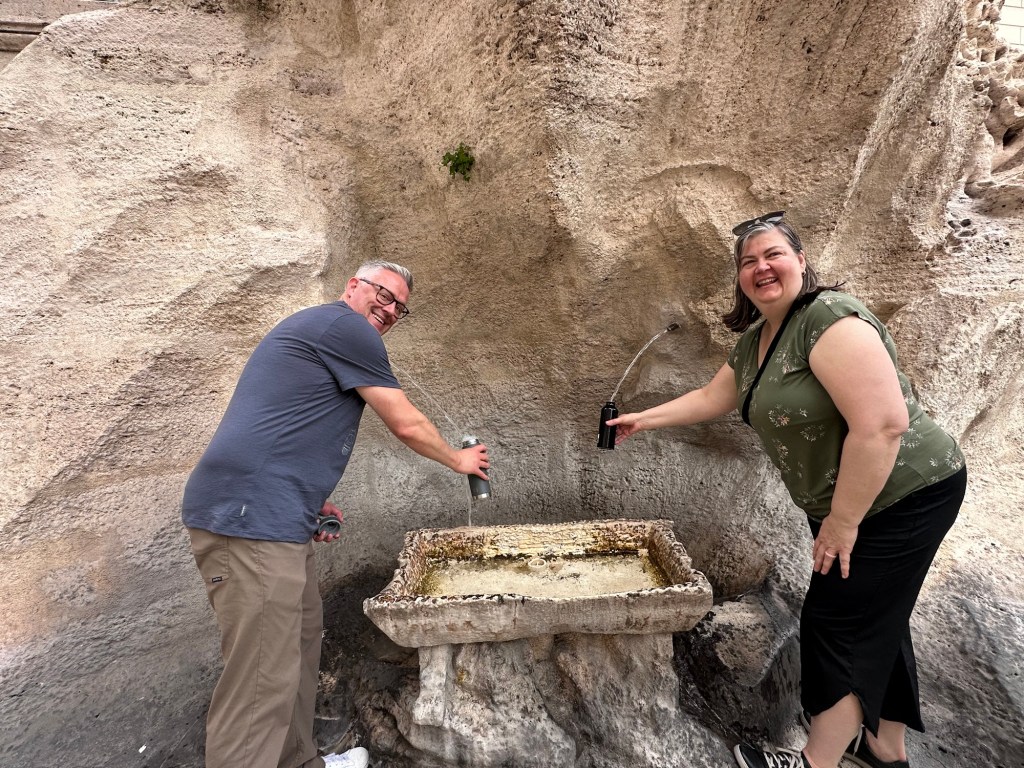
Legend says if you drink from the Lover’s Fountain, you will be in love forever! We are celebrating our 32nd anniversary later in this trip, so I think we’re on our way to forever.

The Church of Saint Ignatius of Loyola is well known for its illusionistic paintings, or quadrature, by Andrea Pozzo. The painted ceiling is actually flat but looks 3-dimensional.

The painting shows a beam of light from the central Christ figure illuminating St Ignatius who is surrounded by angels, bringing light to the ends of the world.
Four light beams radiate from the saint toward four allegorical figures representing the four known continents at the time (Europe, Asia, Africa, America).


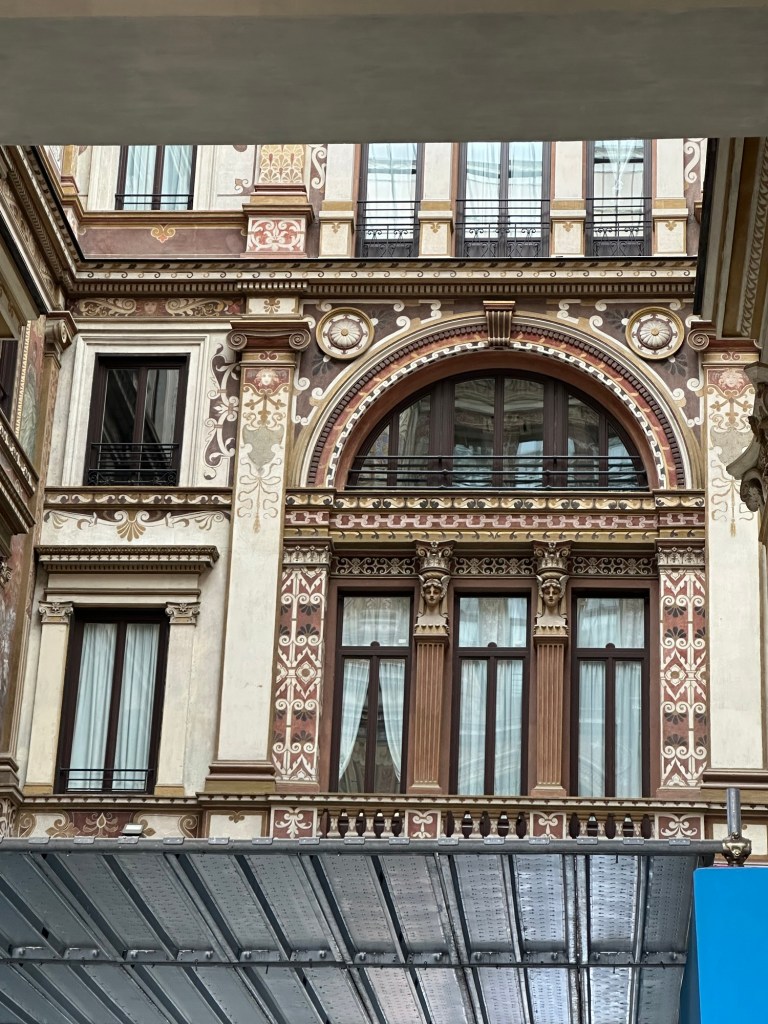
The Galleria Sciarra is a glass-covered pedestrian passage with Art Nouveau architecture. The private courtyard is only open to the public during office hours.
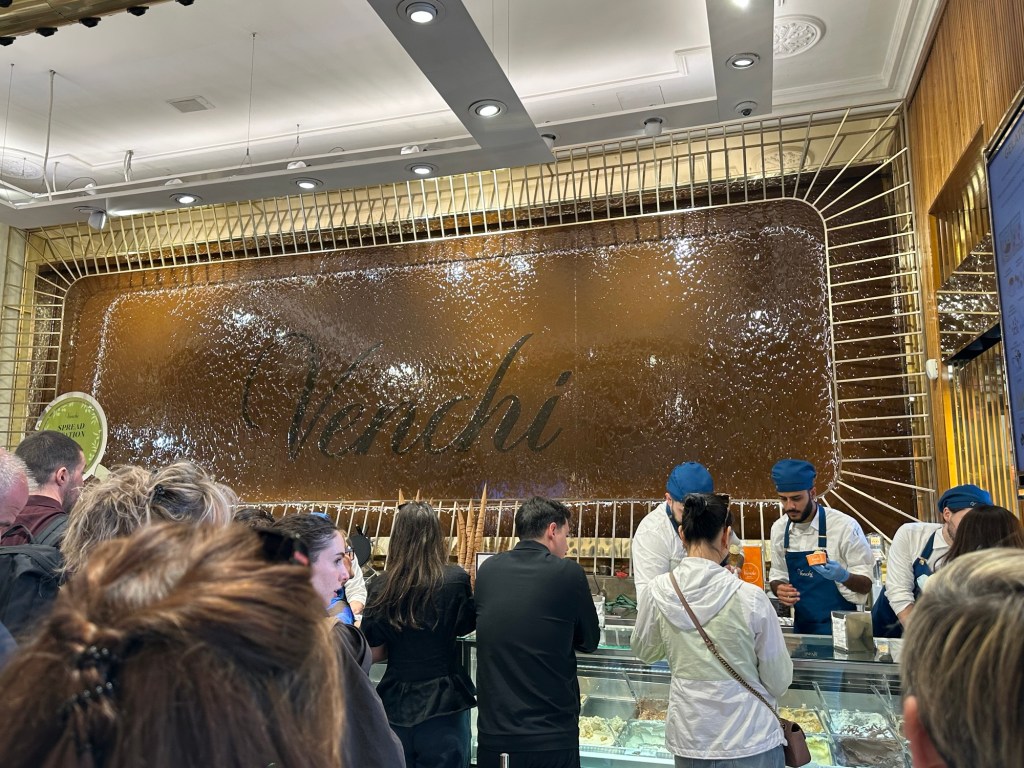
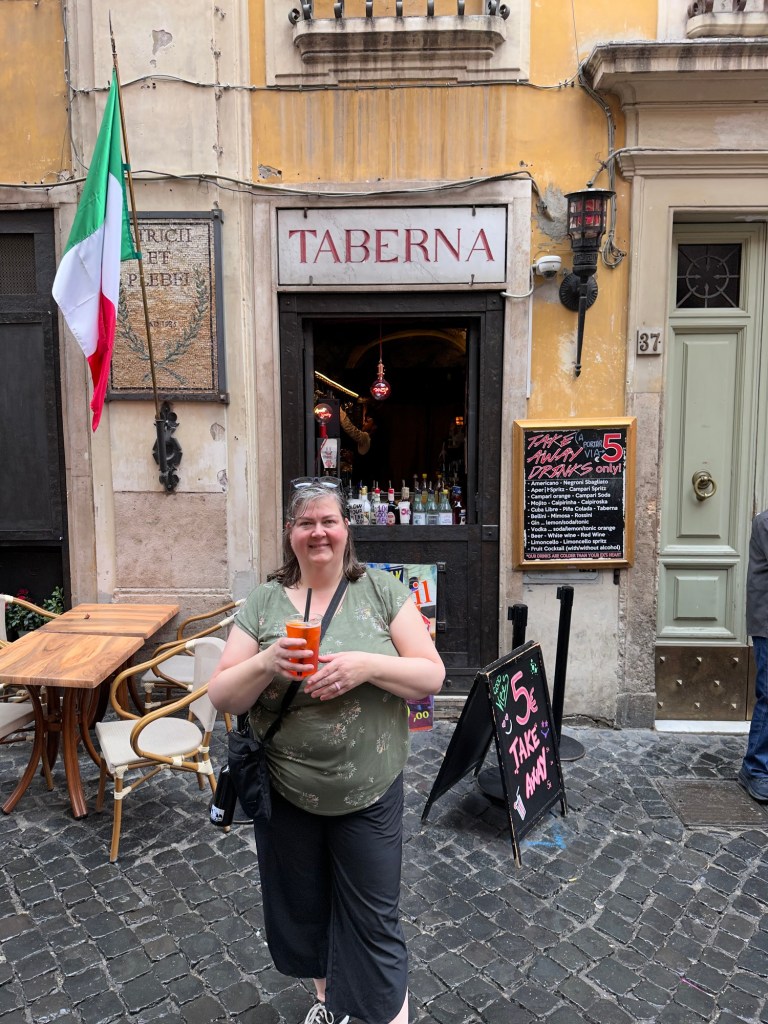
After returning to the hotel for a rest, we headed out to dinner at Babbo’s. We realized upon arriving that we had eaten here on one of our last nights in Rome with our sons in 2016!
Satiated, but exhausted, we are off to bed early tonight!


Leave a Reply