

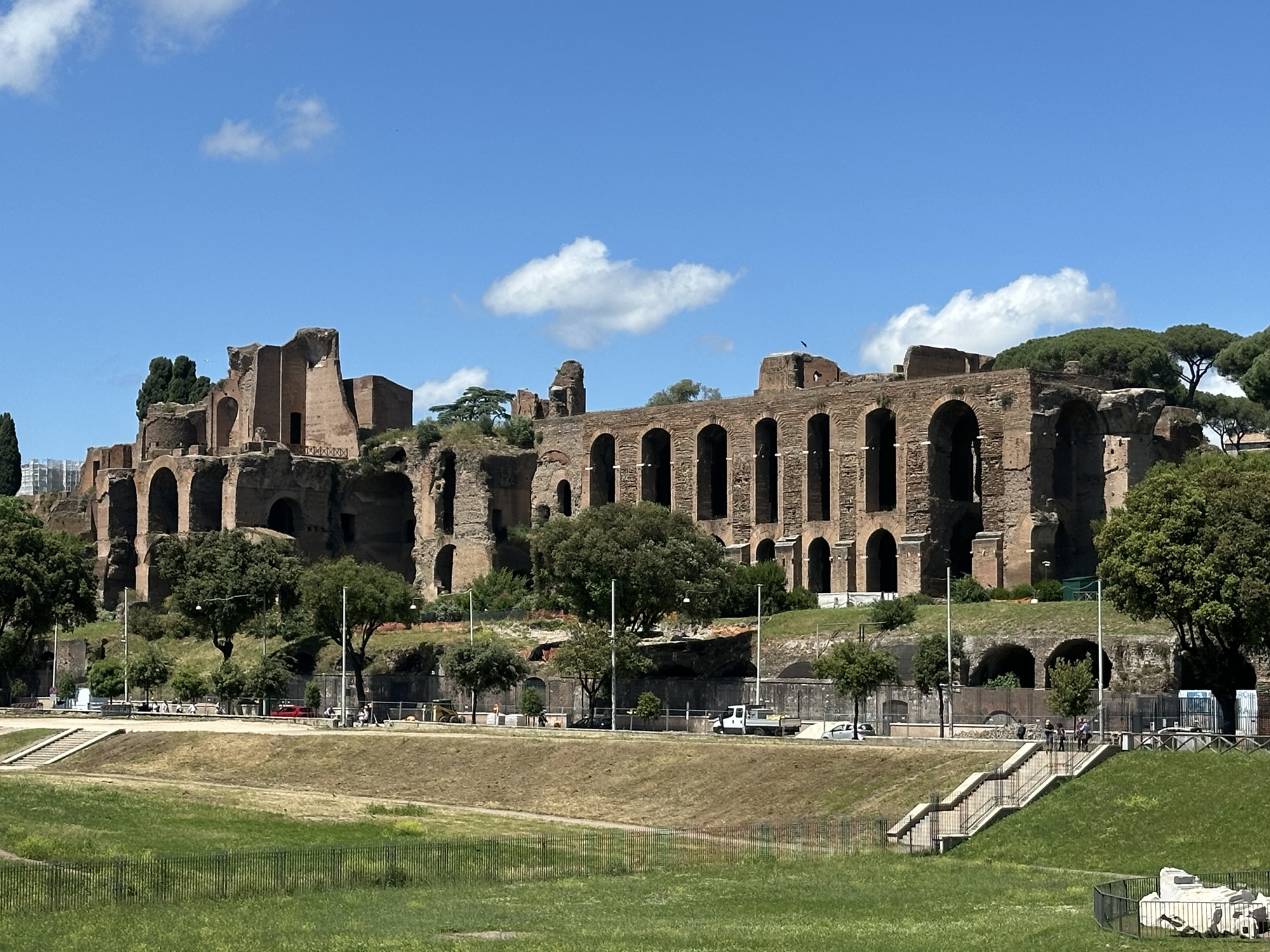
Jet lag is real. We slept though our alarm this morning and barely made it downstairs before breakfast closed. Good thing we didn’t have any timed excursions planned for today!
Once we got ourselves going, we did a quick pass-by of the outside of the Colosseum. We did a much longer visit inside the first time we were here.
The Colosseum was originally called the Amphitheatre Flavium and was commissioned by Emperor Vespasian and his son Titus of the Flavian dynasty.

It took 10 years to build (70 – 80 AD) by over 60,000 Jewish slaves.
The four-story, elliptical arena wasn’t called ‘colosseum’ until the middle ages, the name likely adopted because it was situated close to a colossal statue of Nero.
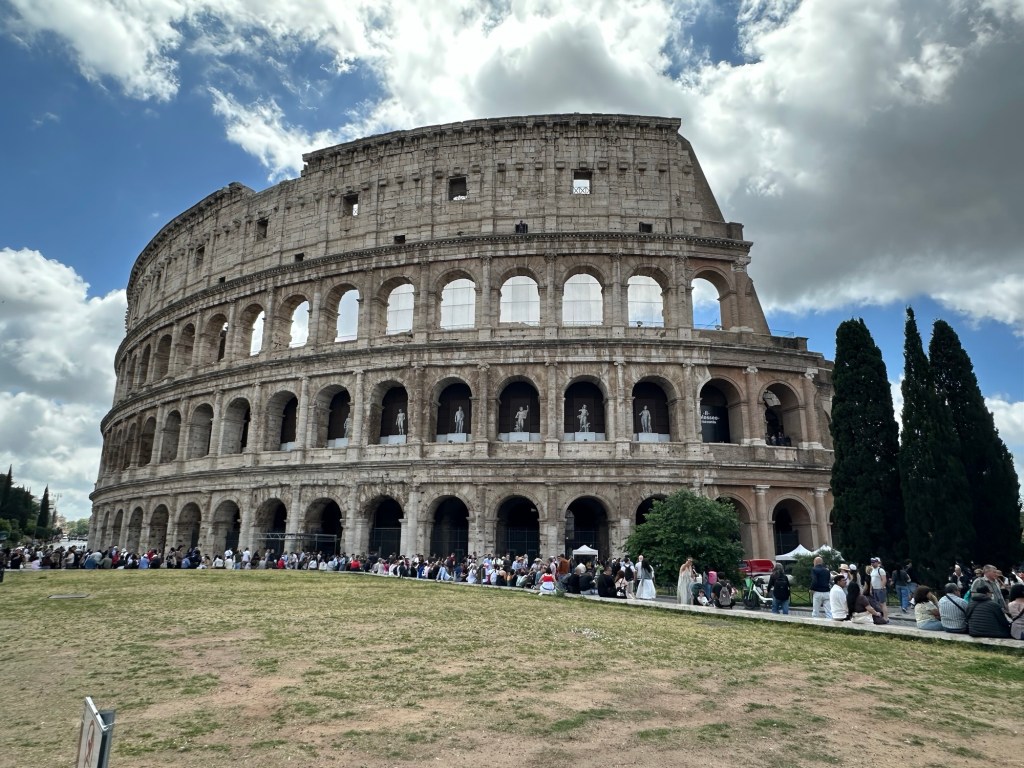
In 1744, the Colosseum was dedicated as a memorial to Christian martyrs and a bronze cross was erected in the arena. Now it stands as a monument to the preservation of human rights for the UN and as a reminder of the cruelty and brutality of the ancient Roman world! It is bathed in golden lights for 48 hours whenever a person condemned to death is pardoned, anywhere in the world.


The city of Rome was built on 7 hills – Palatine, Capitoline, Aventine, Caelian, Esquiline, Viminal and Quirinal. Two others, Gianicolo and Pincio were never part of the original ancient city. Today we explored the Palatine.

The Palatine is the centermost of the 7 hills of Rome & one of the most ancient parts of the city. Some say Rome dates from 753 BC, but archaeological finds below the Capitol and Palatine hills date to the 10th C BC. A sacred cave below the palatine (the Lupercal) is said to be the place where Romulus and Remus were cared for by the she-wolf Lupa before they were ‘rescued’
The Palatine was a perfect place to build a grand and opulent villa – the top of the hill was removed from the bustling city below, the temperatures were cooler and the air fresher. It became the favorite neighborhood for Augustus, the first emperor of Rome, and several who followed him, Tiberius, Domitian & Severus. Over time, their palaces merged into one great complex.

The Palace of Domitian, built in 92 AD was divided into three separate sections: The Domus Augustana were the private living quarters, the Domus Flavia held the large public rooms used for official business, entertaining and ceremonies.

The third section, the stadium of Domitian, was a sunken garden, only accessible to the emperor, his family and his inner circle.


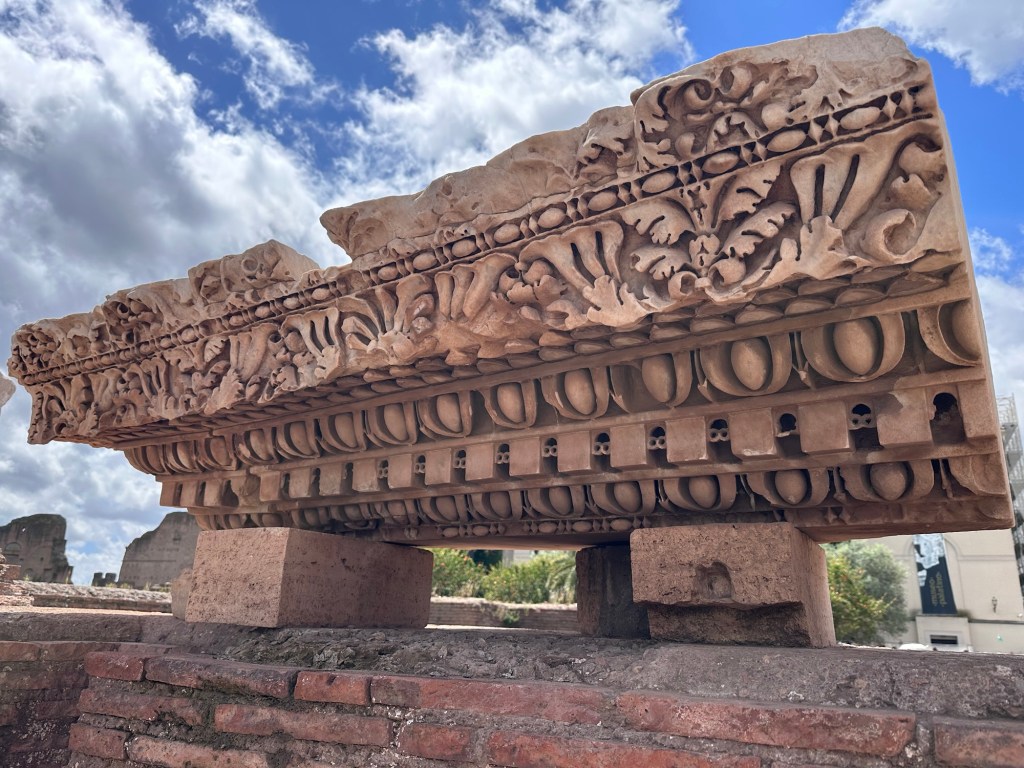
Below the Palatine hill is a remaining piece of the Aqua Claudia, an ancient aqueduct that brought fresh water to the neighbourhood.

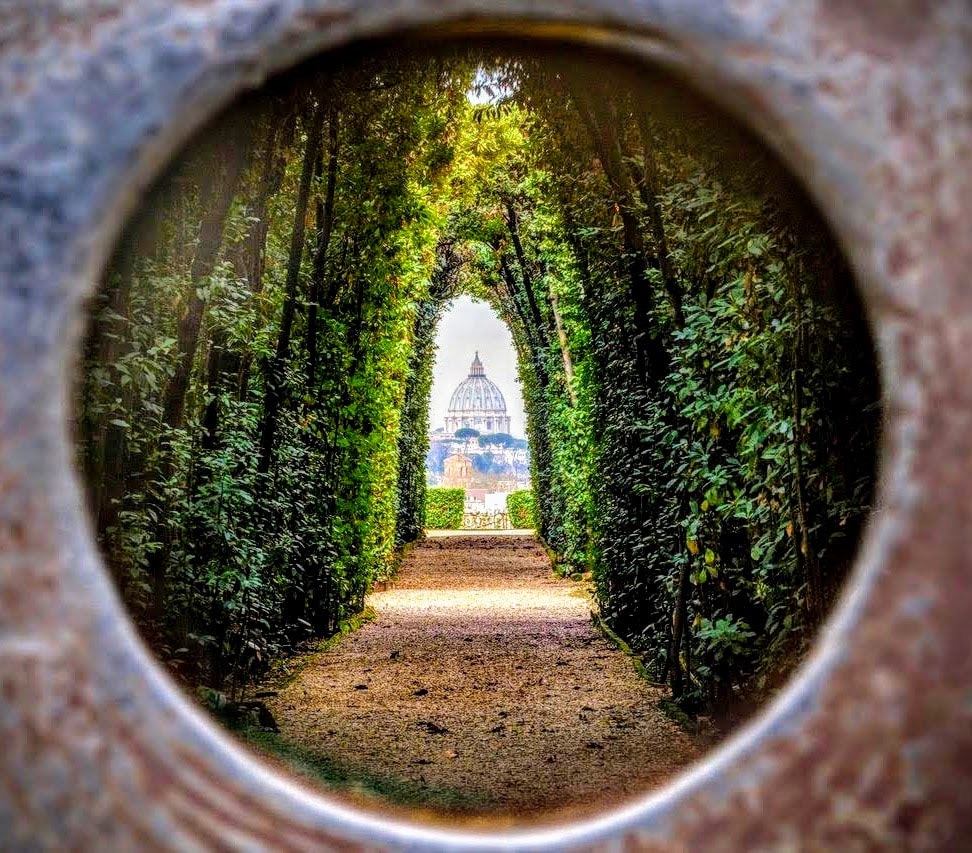
The Bucco della Serratura dell’Ordinedi Malta, the Keyhole of the Order of Malta, is exactly that – a keyhole in a door leading to the priory garden of the Villa Magistrale designed by Giovan Battista Piranesi.

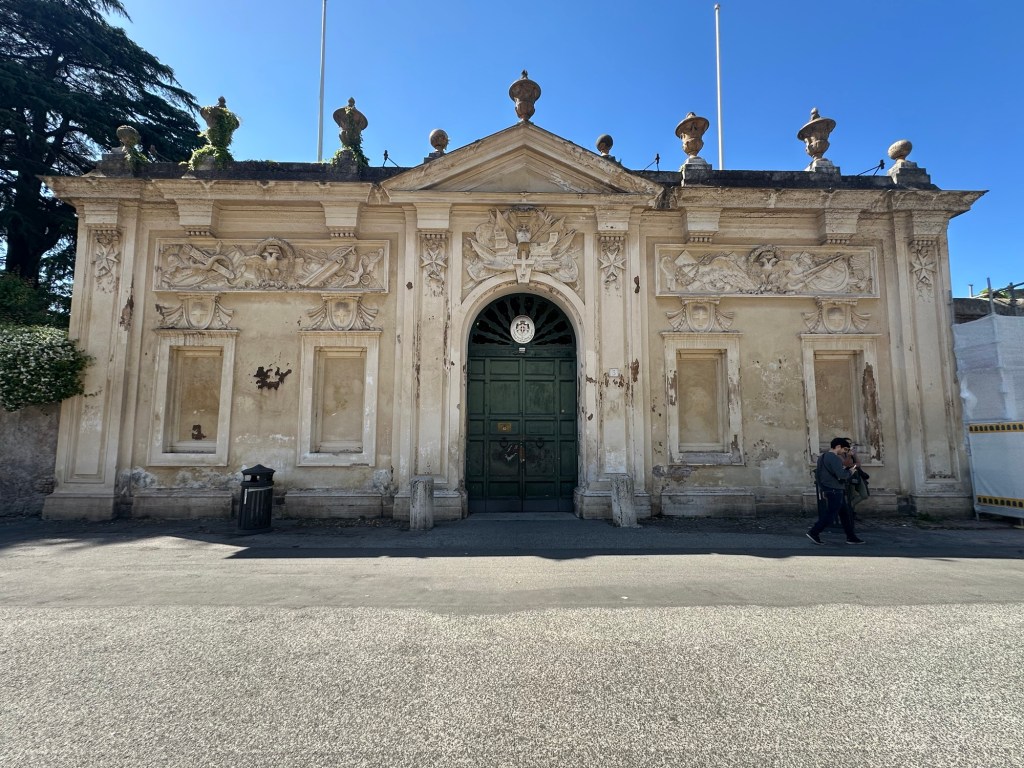
This is the view through said keyhole – through the priory garden to St. Peter’s Basilica in the Vatican. Since the building is technically owned by Malta, we can see three countries through the keyhole (Italy, Vatican City and Malta).
Unfortunately, the unshaded line-up to look through the keyhole was very long, and we both ended up quite sunburned!
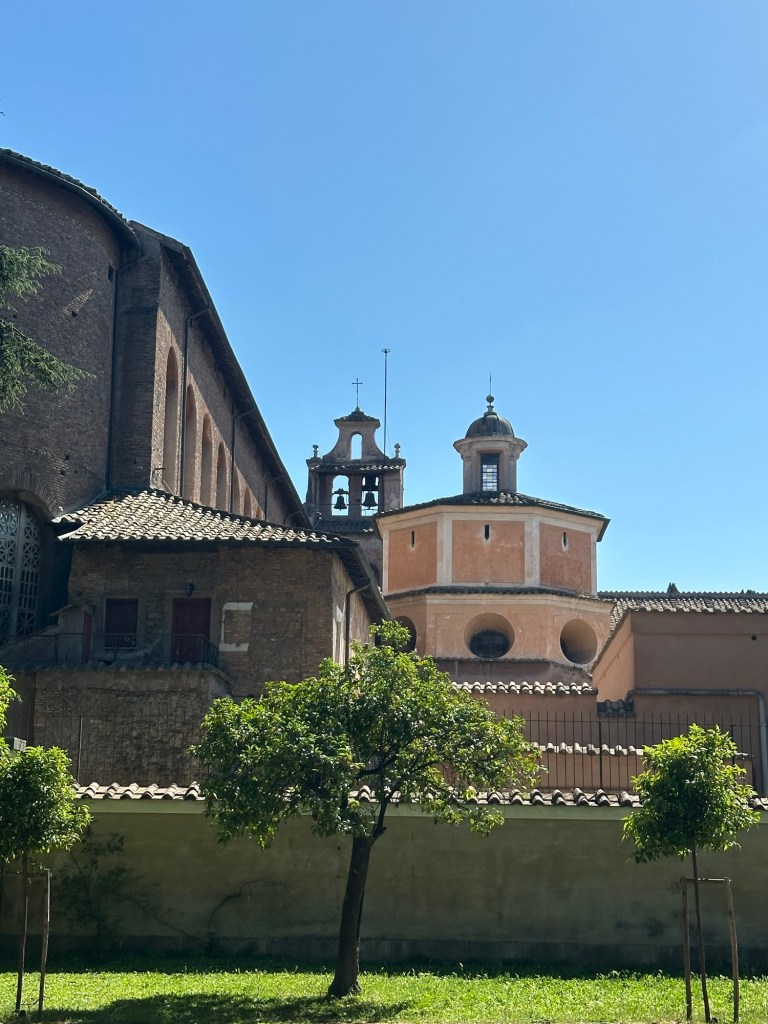
Orange Garden (Giardino degli aranci) was a nice shady place to end the day. This park, on a hill overlooking the Tiber River, has a weird optical illusion – the further you get from the ‘end’ of the garden, the closer the dome of St Peter’s looks…



Dinner was at the small, family run Ristorante Regina. We’re pretty sure it was Nonna Regina folding napkins (and barking orders) at one of the tables. You know it’s a genuine Roman place when you’re the only English speaking patrons. Very economical too €52 for 1L of house red wine, prosciutto and mozzarella appetizer, ravioli and a gluten free carbonara. We left stuffed and happy. If you are ever near Termini in Roma, and need dinner we can’t recommend Ristorante Regina enough.


Leave a Reply