


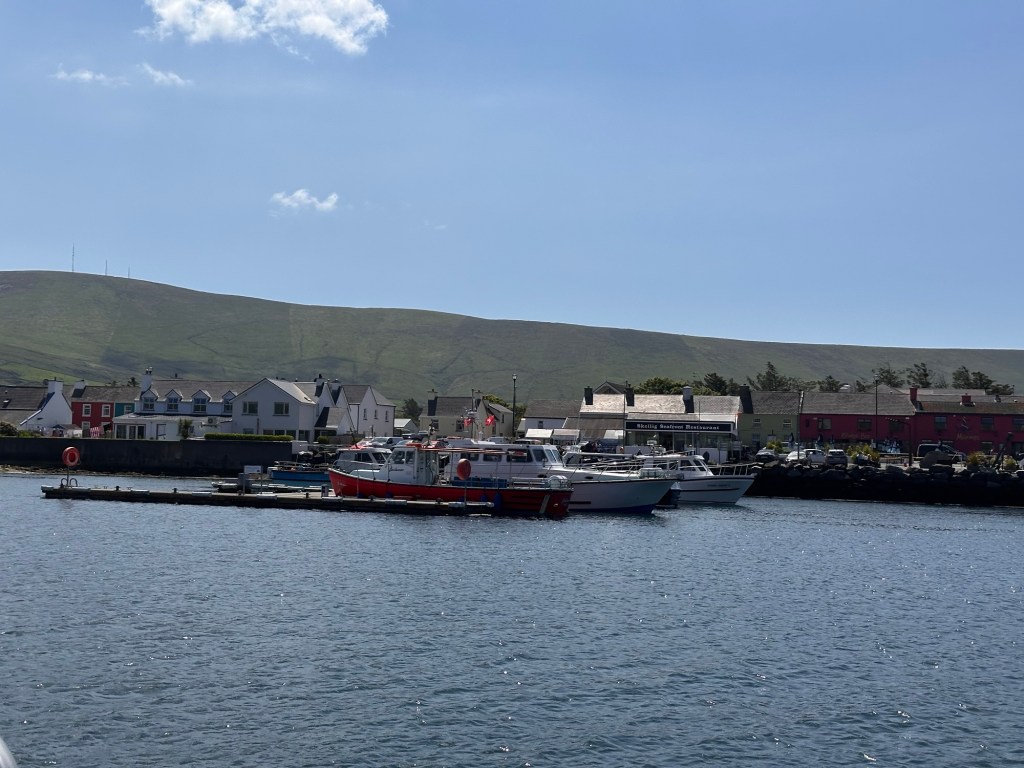
This morning we drove about 20 minutes into the town of Portmagee and met up with captain Jay at Paul Devane Cruises for our tour to Skellig Michael.
A few days ago we got the disappointing news that due to some interference from the Office of Public Works, we are not currently allowed to land/walk on the island of Skellig Michael. There are 13 tour operators in town that are allowed to land on the island, and there is a limit of only 180 tourists per day. We booked these tickets months ago to make sure that we made the cut!
Three boats recently had their license pulled for some reason, and the rest of the companies took the government to court. So the OPW stopped granting permits altogether until a hearing in early June. As upset as we are to not get our promised tour, the locals are quite pissed!
So, at the last minute, our landing tour became an Eco-tour, much shorter with a focus on wildlife instead of ancient history.
The crossing took about an hour and was pretty calm. (Kris took her prescription anti-nausea medication just in case!).

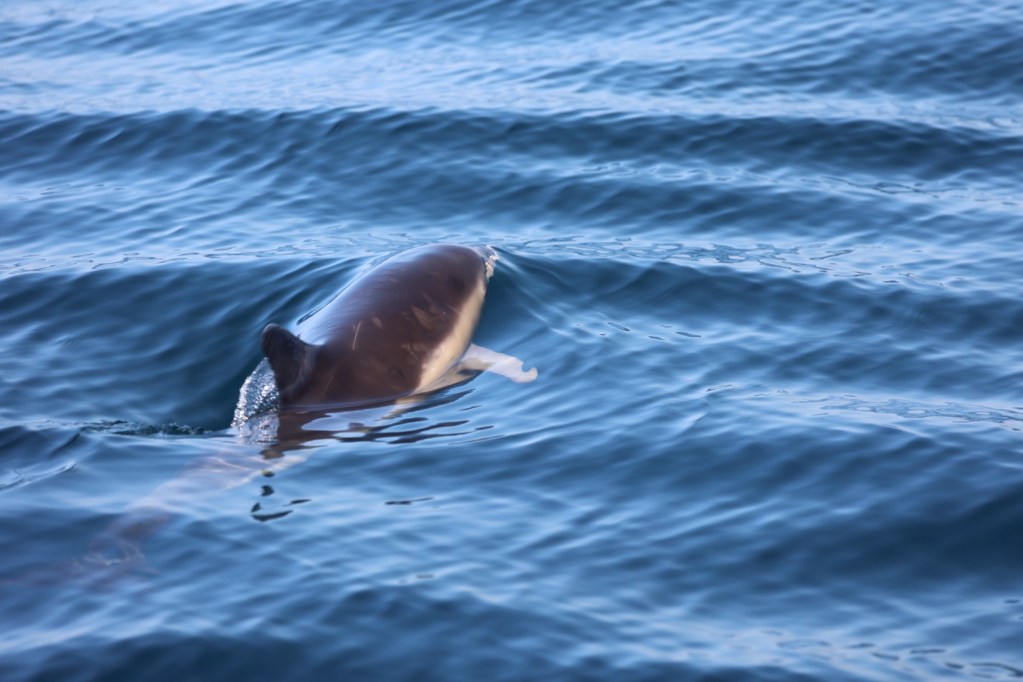
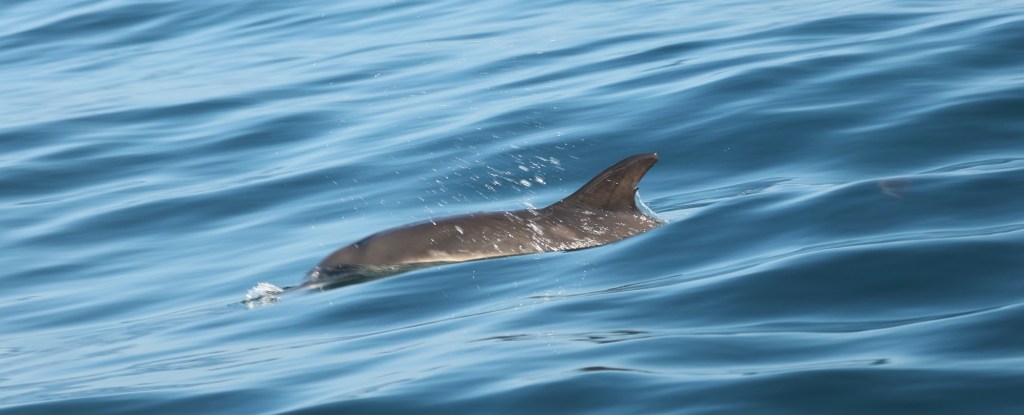
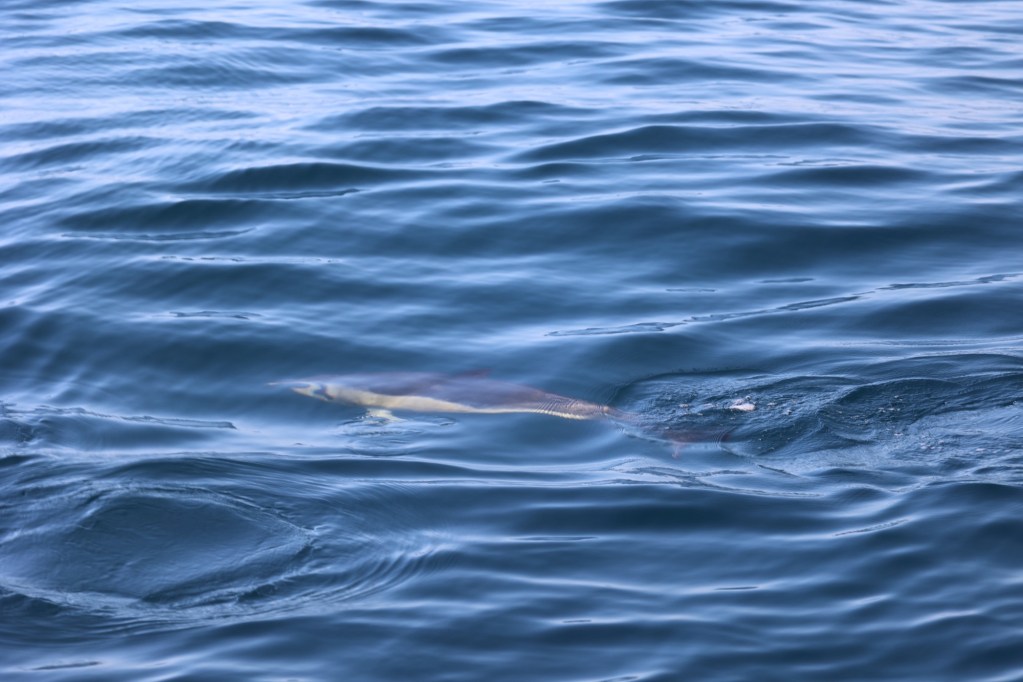
On the way out we came across a small pod of dolphins. We stopped to check them out and they did the same back.
Sceilg Mhichil / Skellig Michael (Michael’s Rock) is a small island 12km off the coast of the Iveragh peninsula.

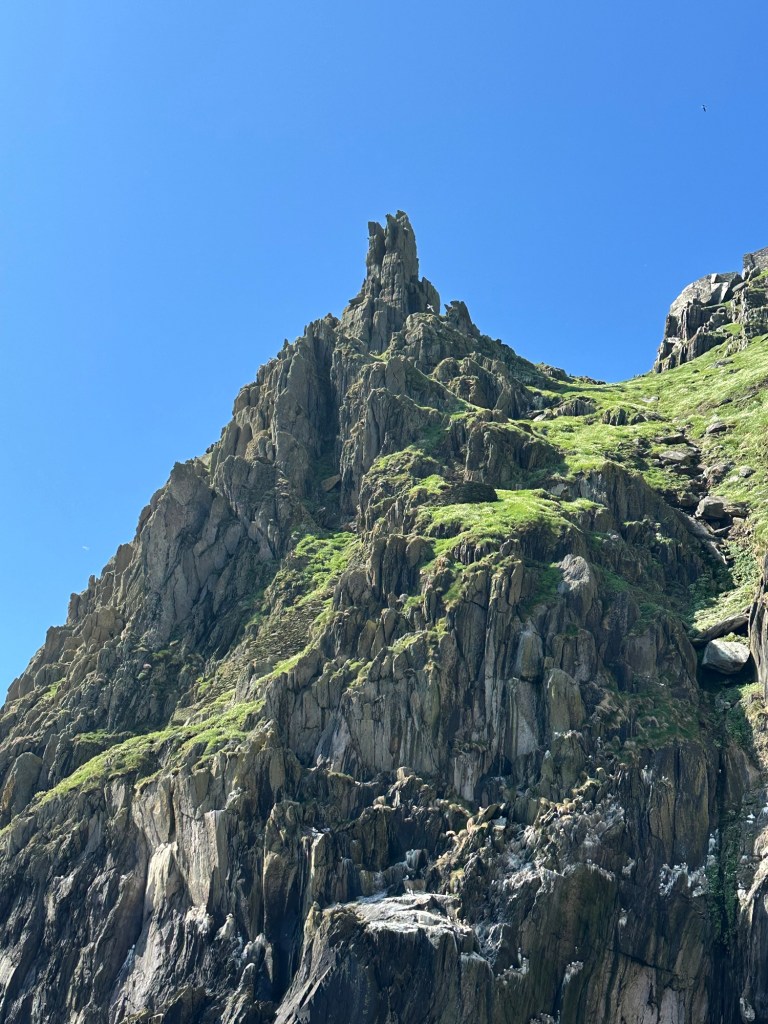
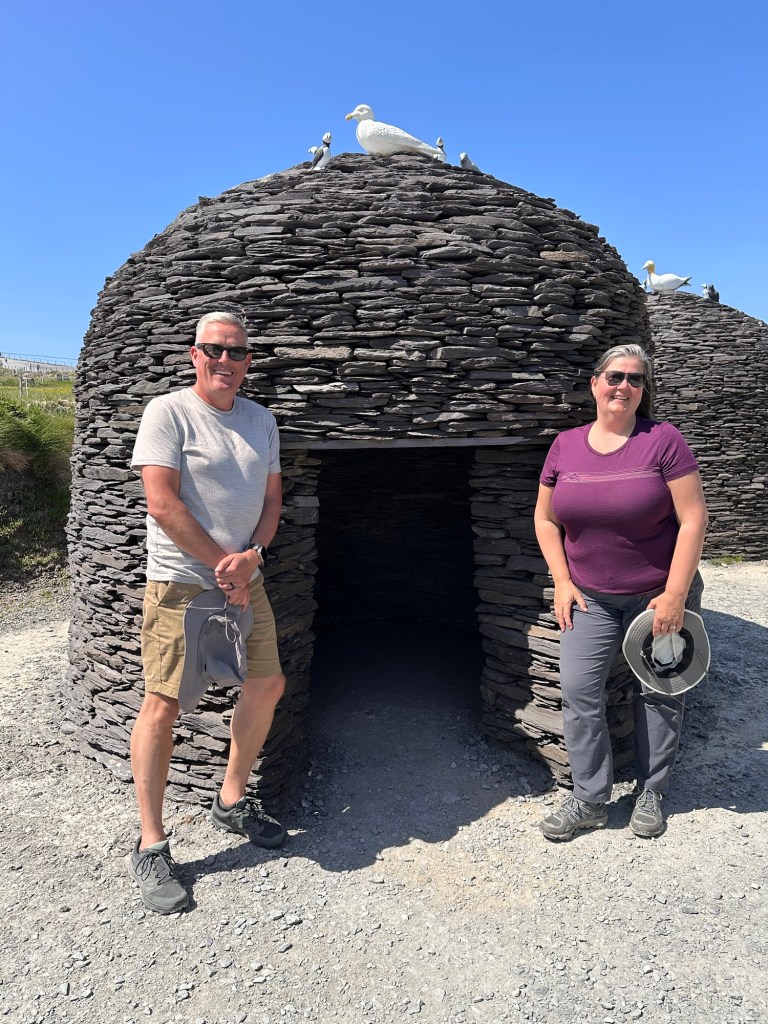
The very hilly island contains a well preserved 6th C monastic settlement. The series of clochans, or beehive huts are a UNESCO site. It is thought that a small number of monks lived in isolation on the island as religious penance between the 6th and 12th centuries.
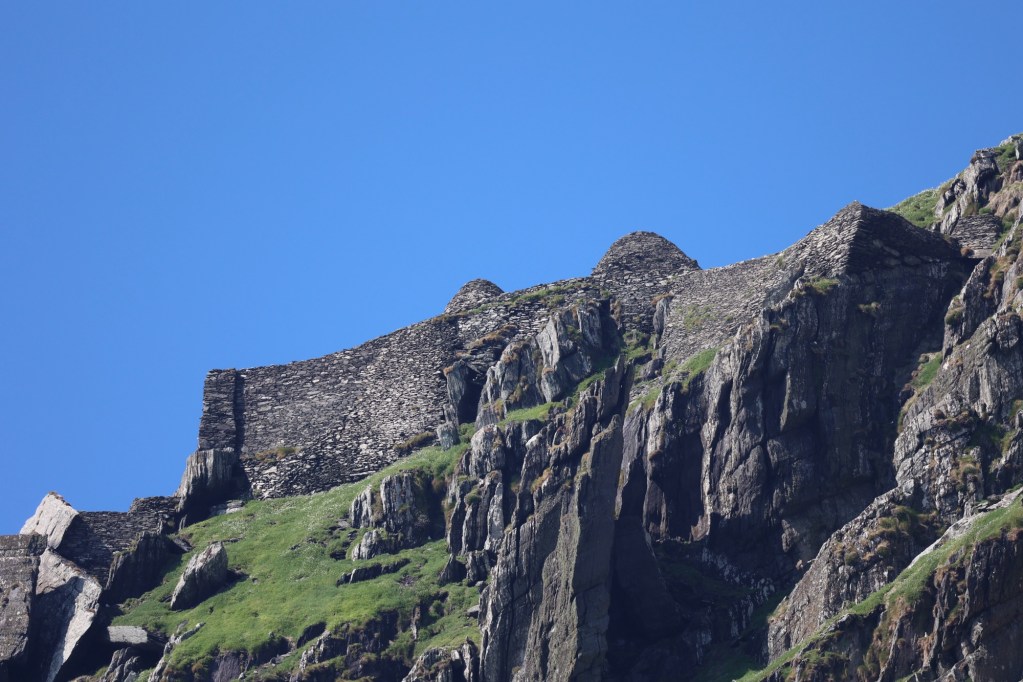
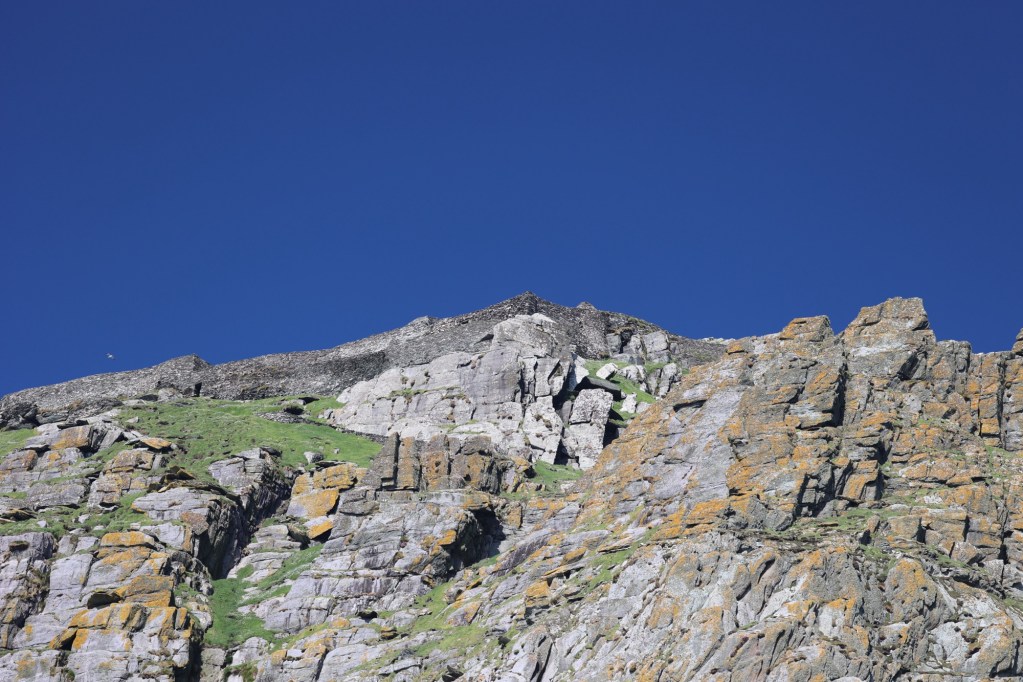
It would have been a steep climb up 618 stairs to get to the monastery.
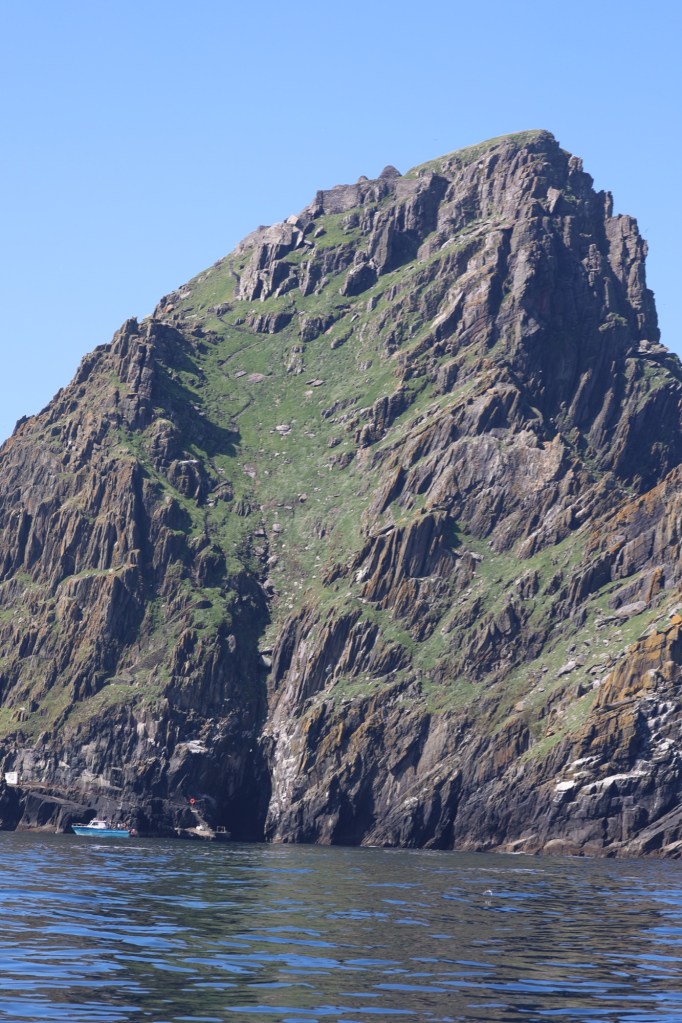
Skellig Michael was a filming site for Star Wars The Force Awakens and The Last Jedi as Luke Skywalker’s island sanctuary on the planet Ahch-To. We, of course, knew about the island years before it became popular!
There were a few Atlantic puffins in the water, but sadly we didn’t get to see the 10,000 birds who nest in burrows in the grassy areas near the top of the island.

Apparently, the cinematographers of Star Wars created the porgs of Ahch-To because there were too many puffins around to edit out of their shots.
Our tour also circumnavigated little Skellig island, the 2nd largest Gannet breeding population in the world boasting 35000 nesting pairs.

After returning from the island, we had lunch in Portmagee and sampled (guess what?) some more whiskey.
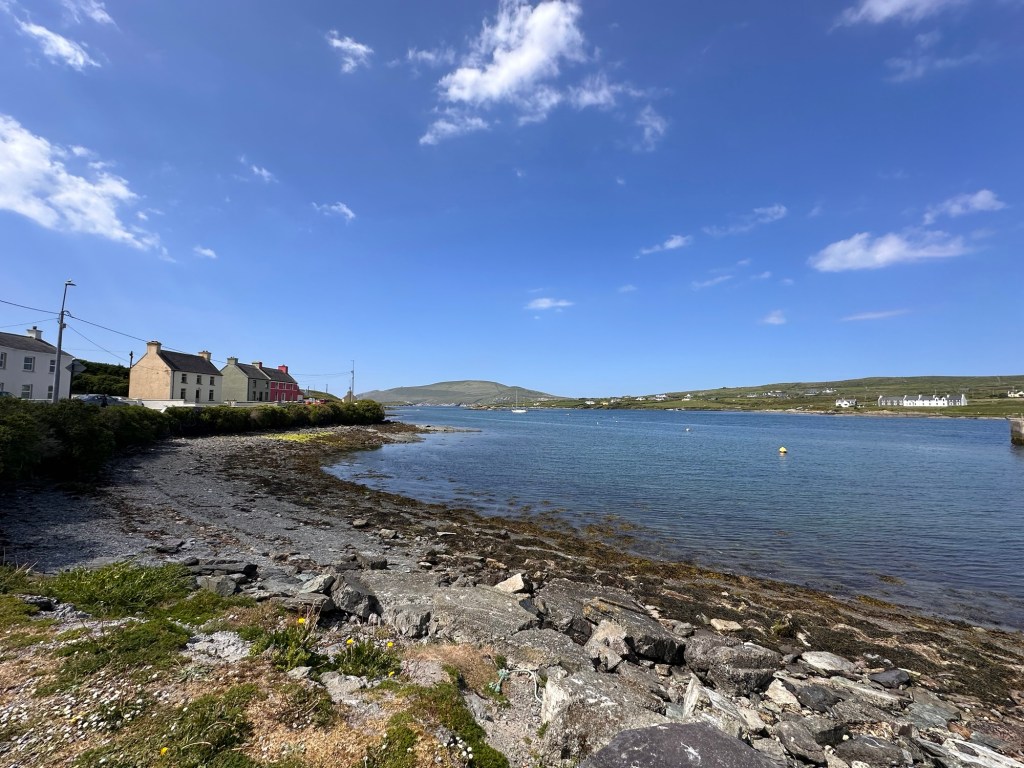
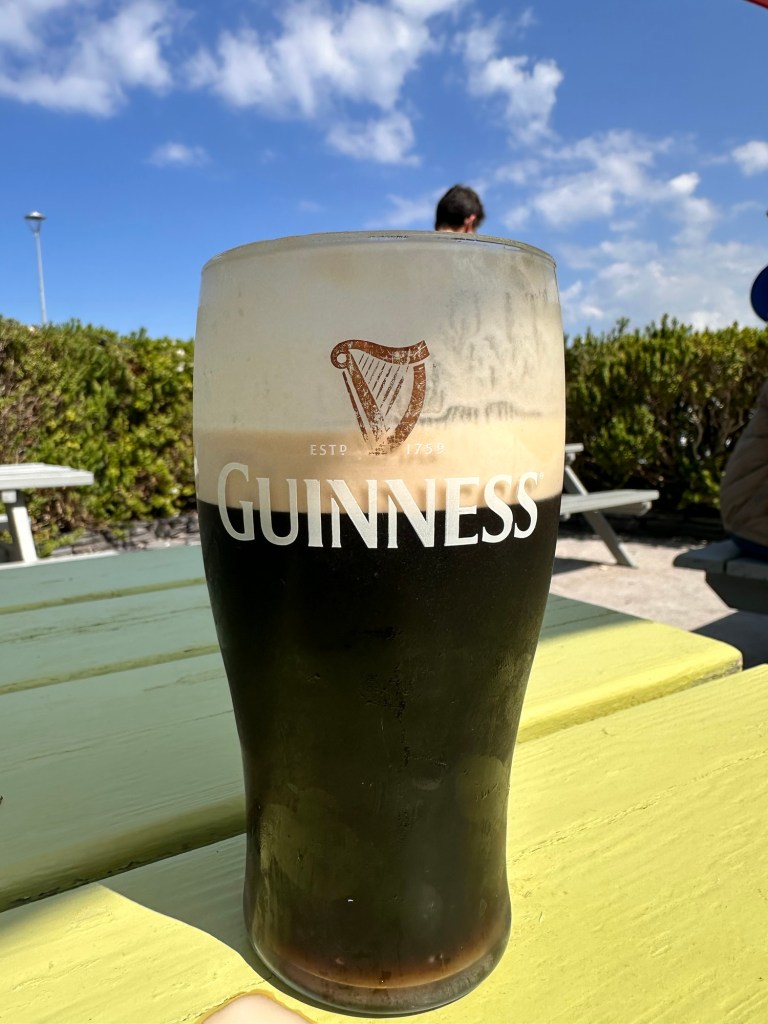
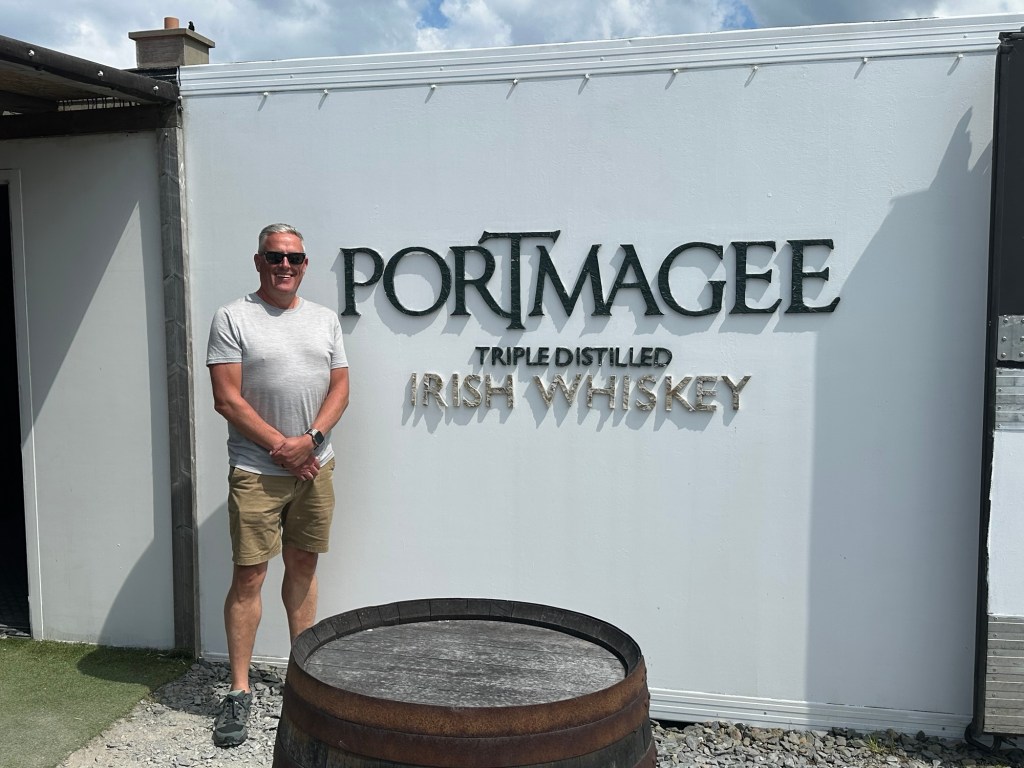
We met Seamus at PortMagee Distillery for a whiskey tasting. He was quite the story teller. We did the short tasting; can’t imagine how many stories you get with the long version.
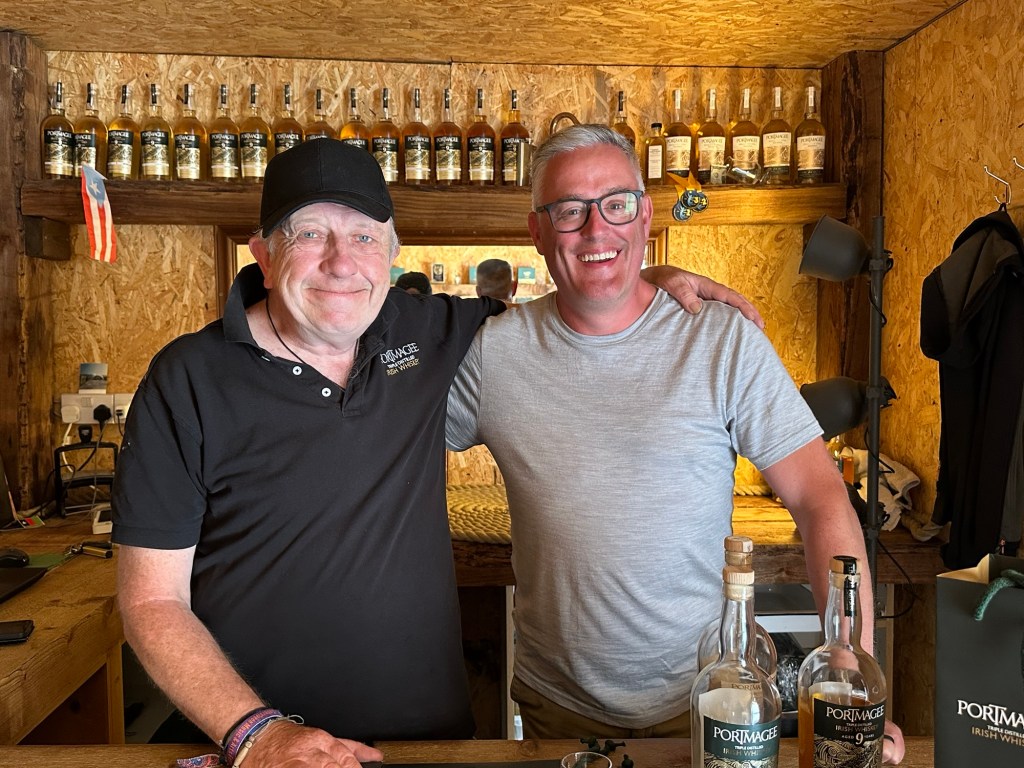
Portmagee is known as a peaceful fishing village, but hides a deeper and darker history of smuggling. The village was named for Captain Theobald Magee, a notorious 18th C smuggler. He found that the many inlets around the southwest coast were difficult to police and he was able to ‘trade’ contraband spirits, textiles, tea and tobacco. He’s the reason PortMagee distillery ages their whiskey in rum barrels instead of sherry or bourbon!
Later, we took the Skellig Ring drive, a small offshoot of the larger Ring of Kerry around the end of the peninsula.
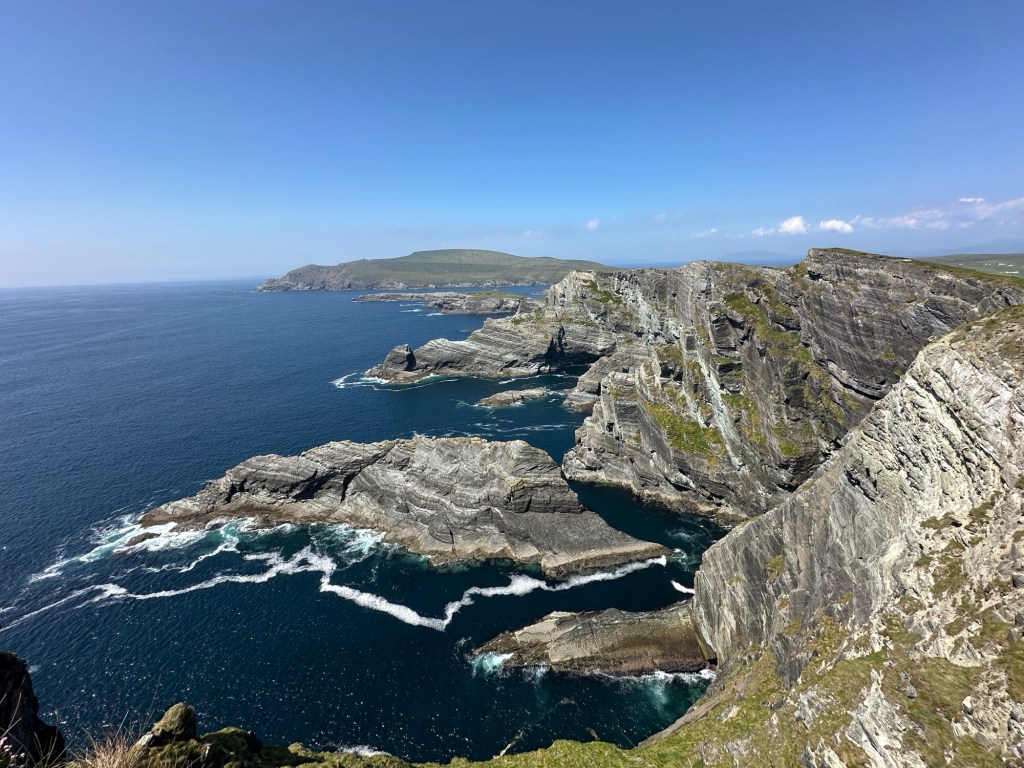
The Kerry Cliffs are at the end of the Iveragh peninsula.
Skelligs Chocolate factory sources their cacao from Côte d’Ivoire and routes it through Belgium for some of the production. We had a tasting of several of their tasty options.

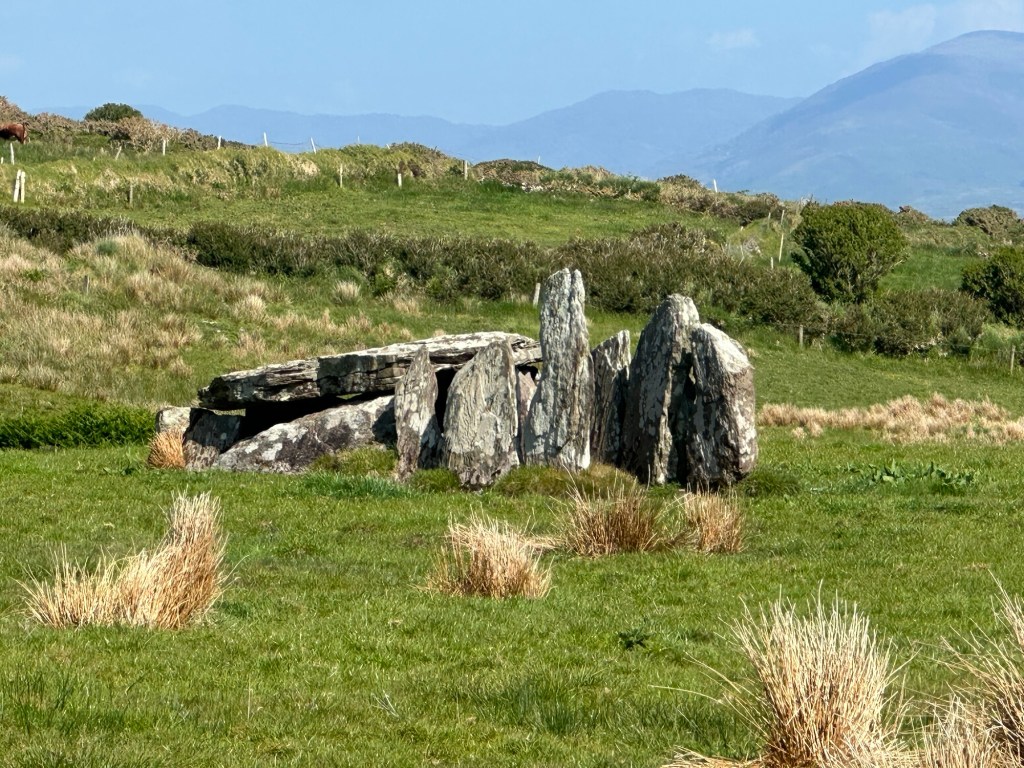
Coom Wedge tomb sits in the middle of a farmer’s field. The wedge tomb is specifically an Irish type of monument and differs from portal and passage tombs that are generally found further to the north of the country (we will see several later). Dave dropped Kris off for the photo while he found a place to turn around on this tiny farm road!
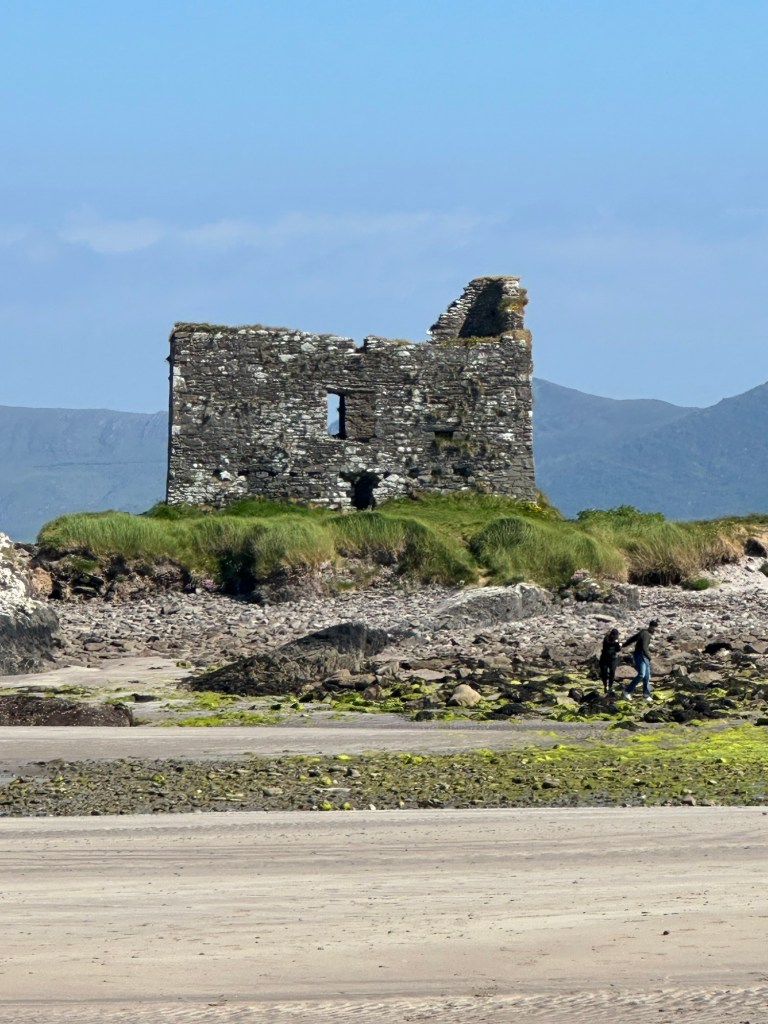
The ruin of Ballinskelligs Castle on Ballinskelligs Beach. The castle was built in the 16th C at the end of the narrow promontory to protect the bay from pirates, and possibly in order to charge a tariff on incoming trade vessels!

Completing the Ring of Skellig, we headed back to our glamping pod for the evening.


Leave a Reply