


The northern and western edges of the Cotswolds are marked by a steep escarpment that leads down to the Severn River Valley and its tributary the River Avon. The limestone of the escarpment was formed during the Jurassic period and is full of fossils, especially those of urchins. The limestone has long been quarried to build the classic yellow/gold stone houses in the villages.
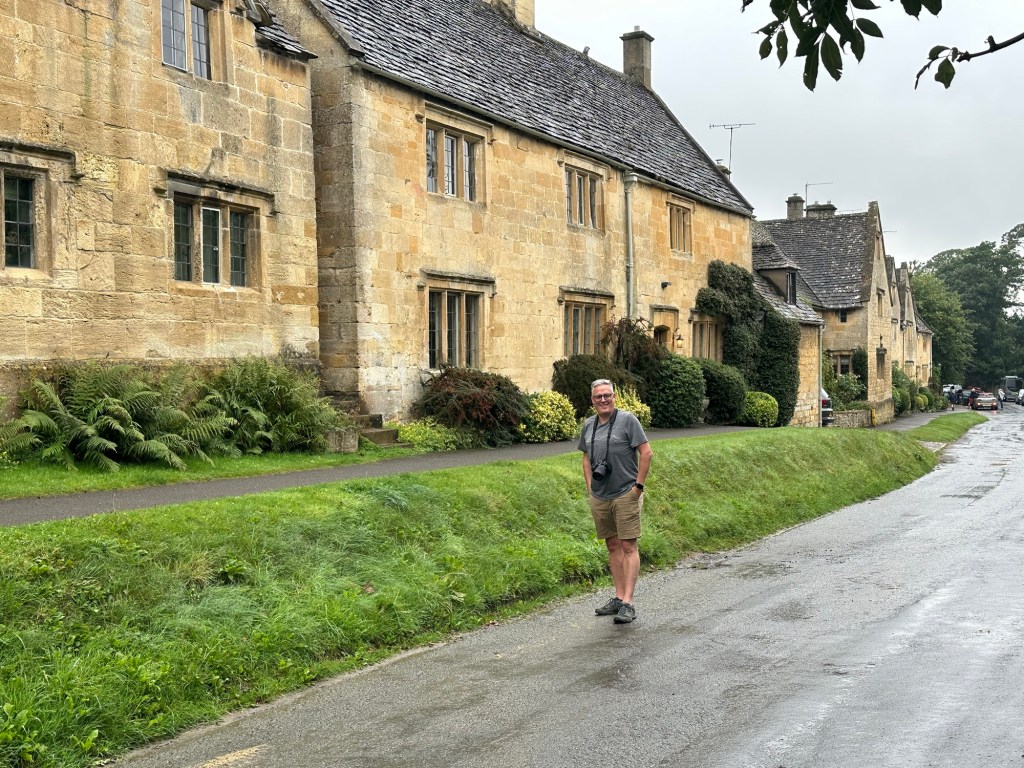
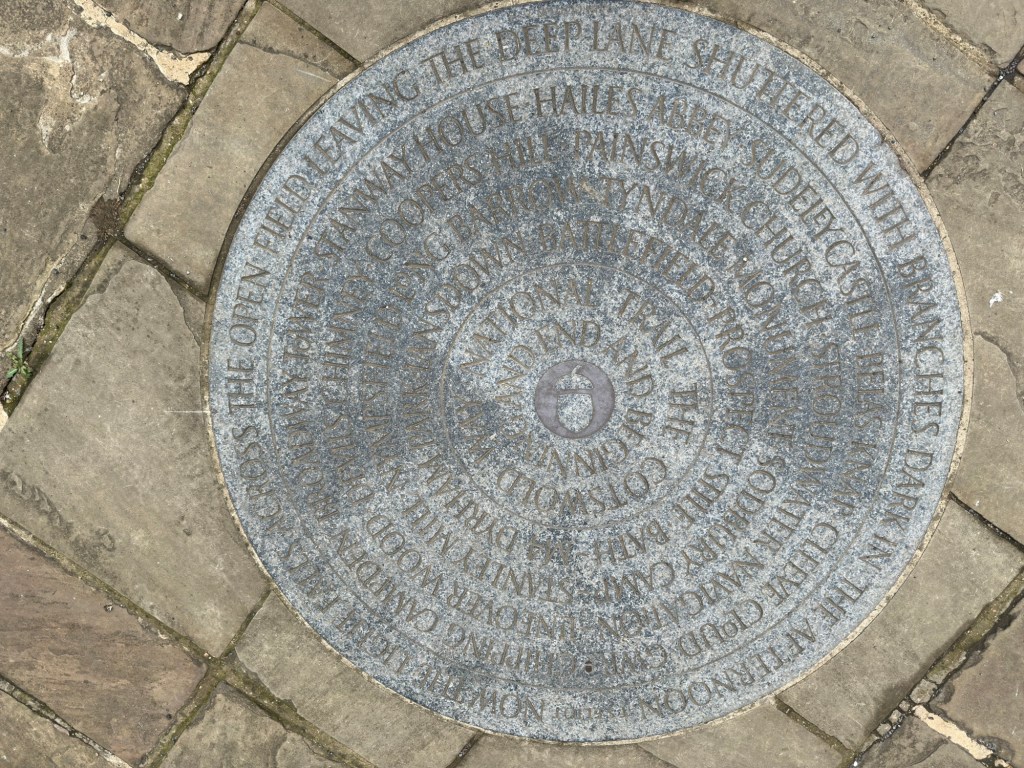
The Cotswolds Way is a 164km/102mile long-distance walking trail that follows the Cotswolds escarpment roughly northeast to southwest from Chipping Campden to Bath. Hikers typically take from 5-10 days to hike the trail. We don’t have the time or inclination to hike for a week, so we are planning to just walk several small sections of the Way.
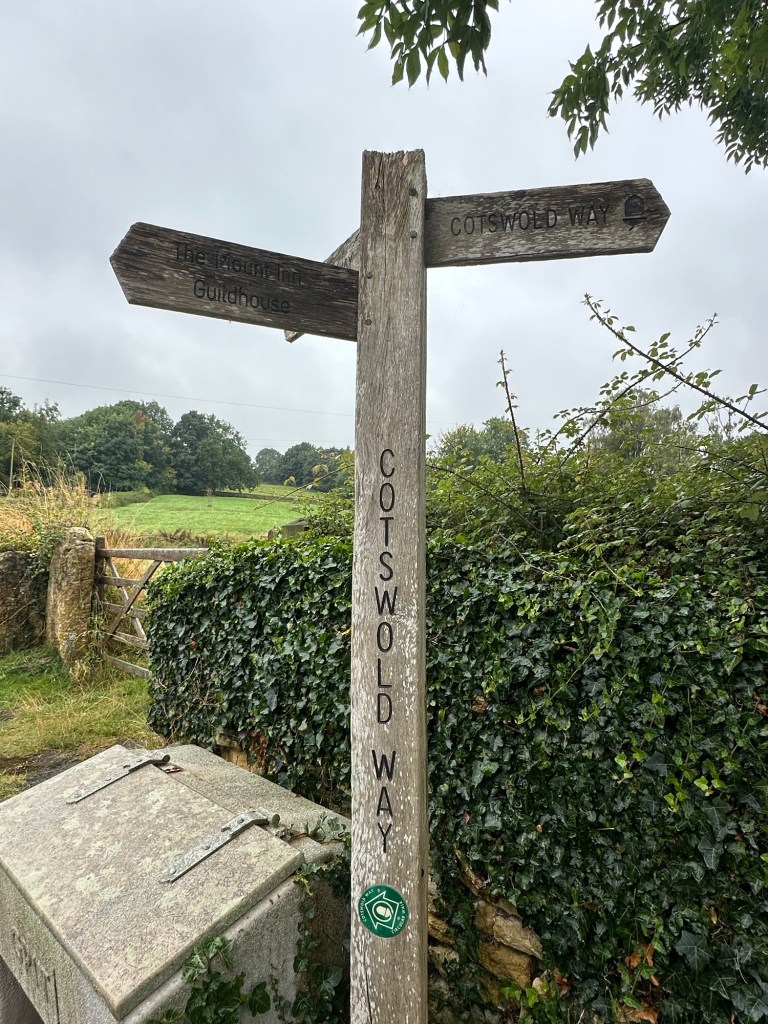
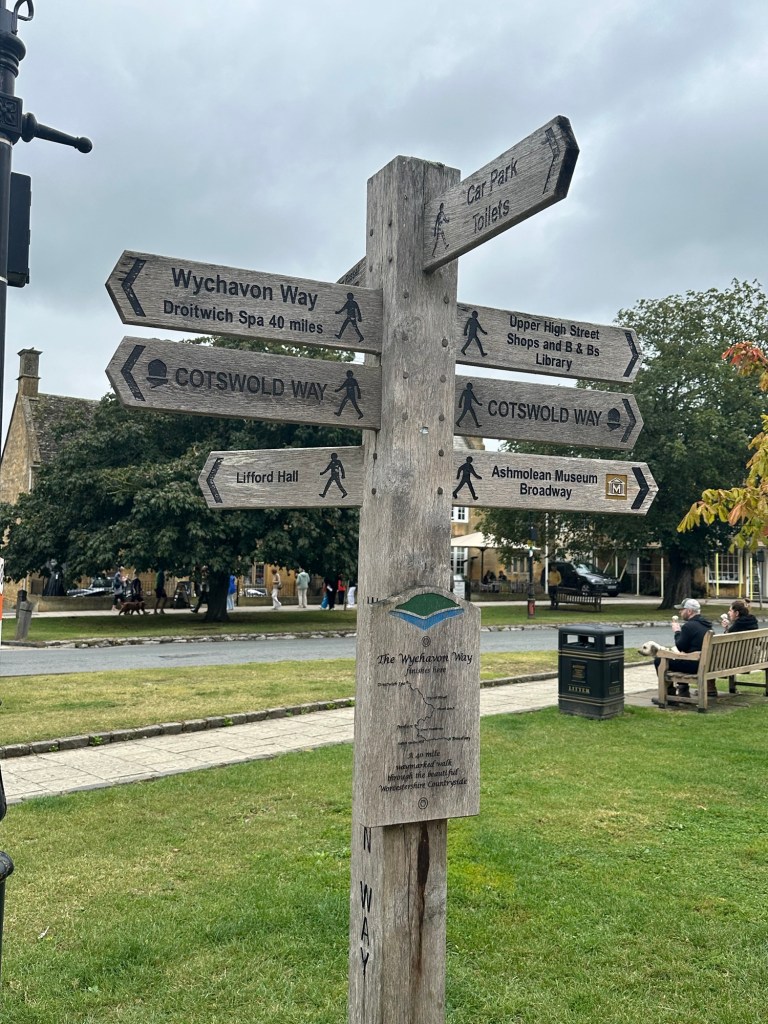
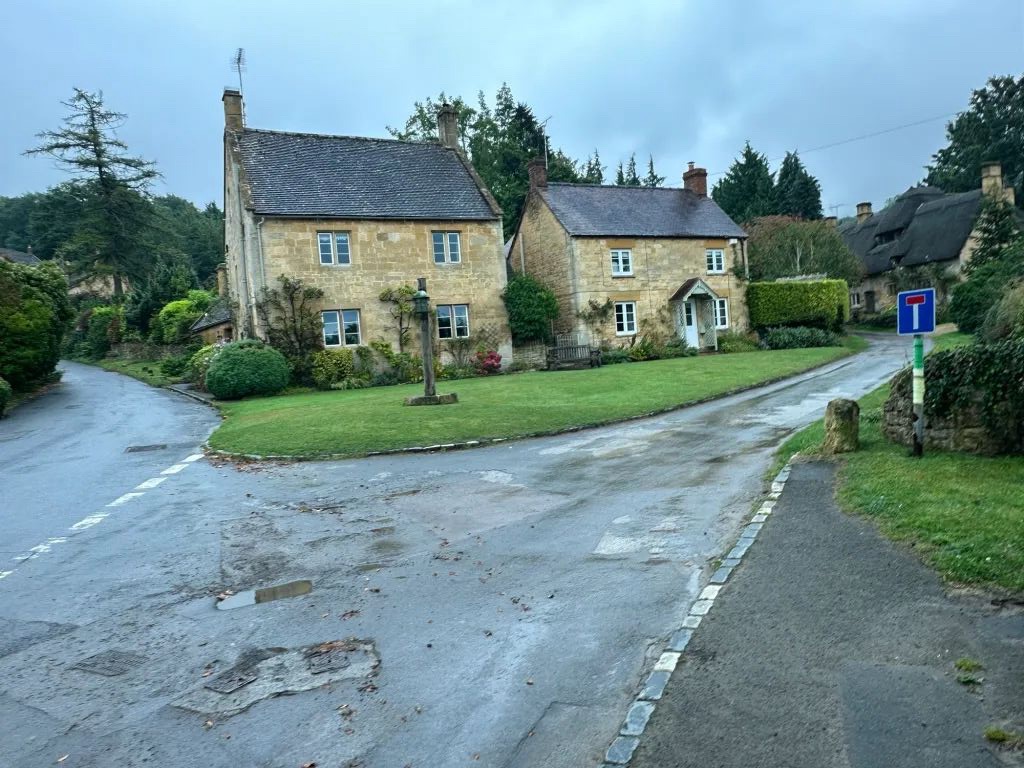
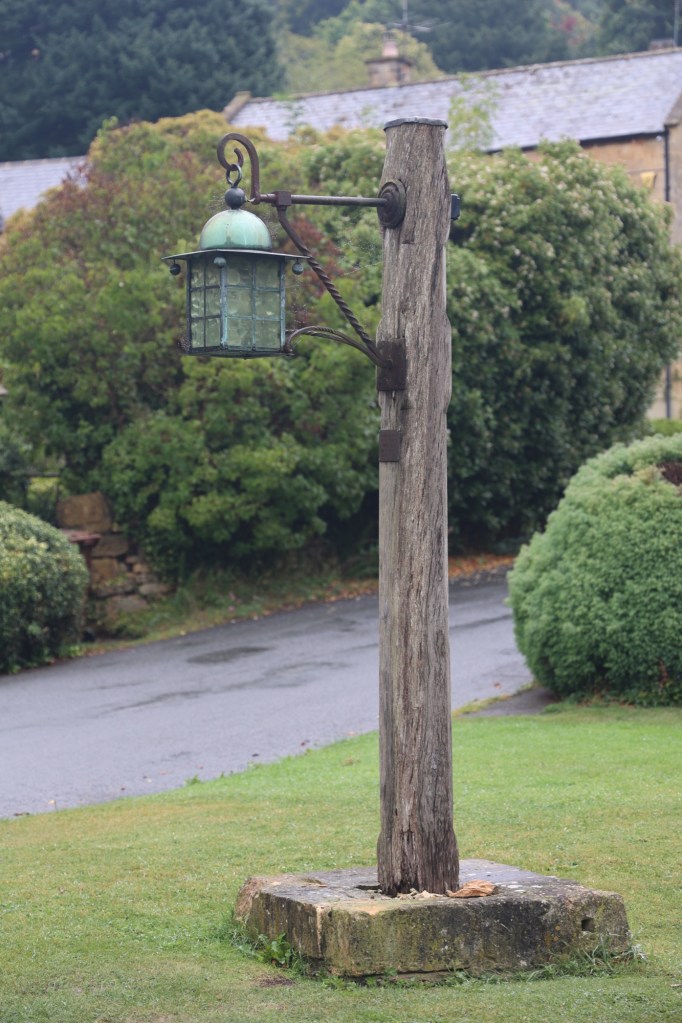
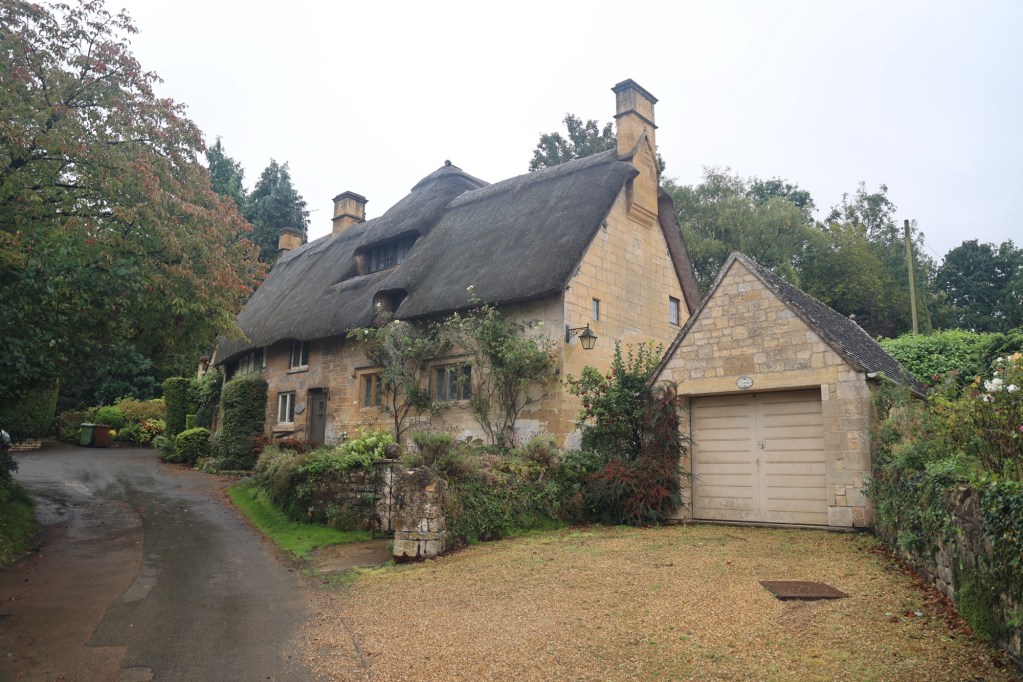
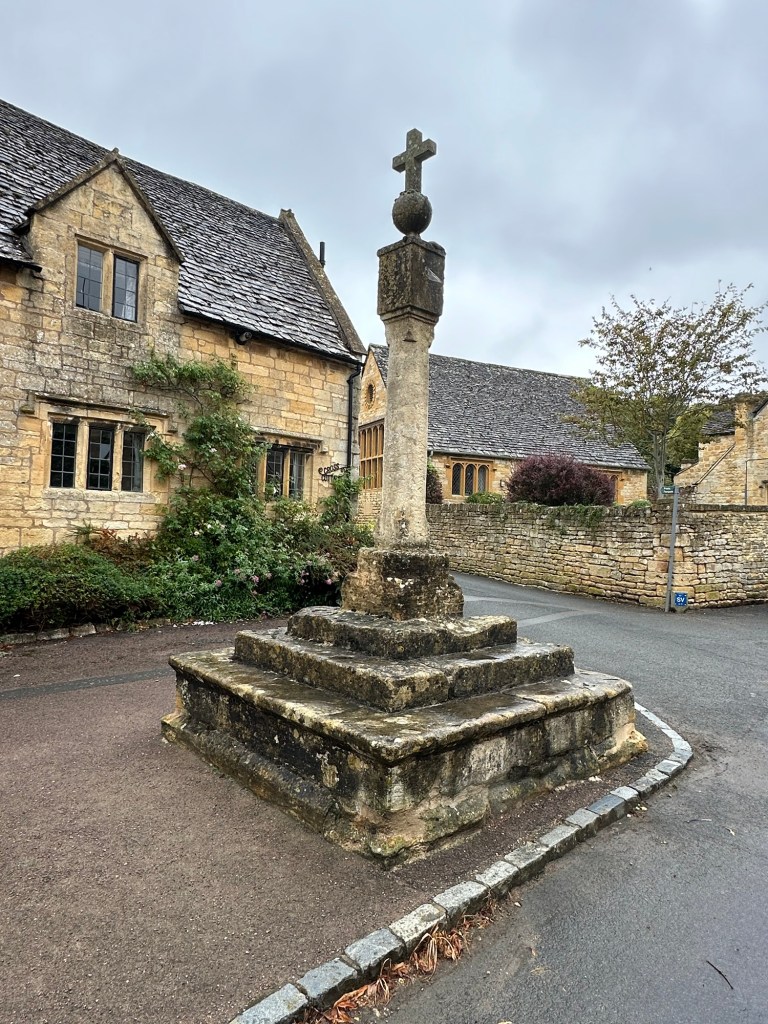
A quick detour off the highway has led us to the tiny village of Stanton.
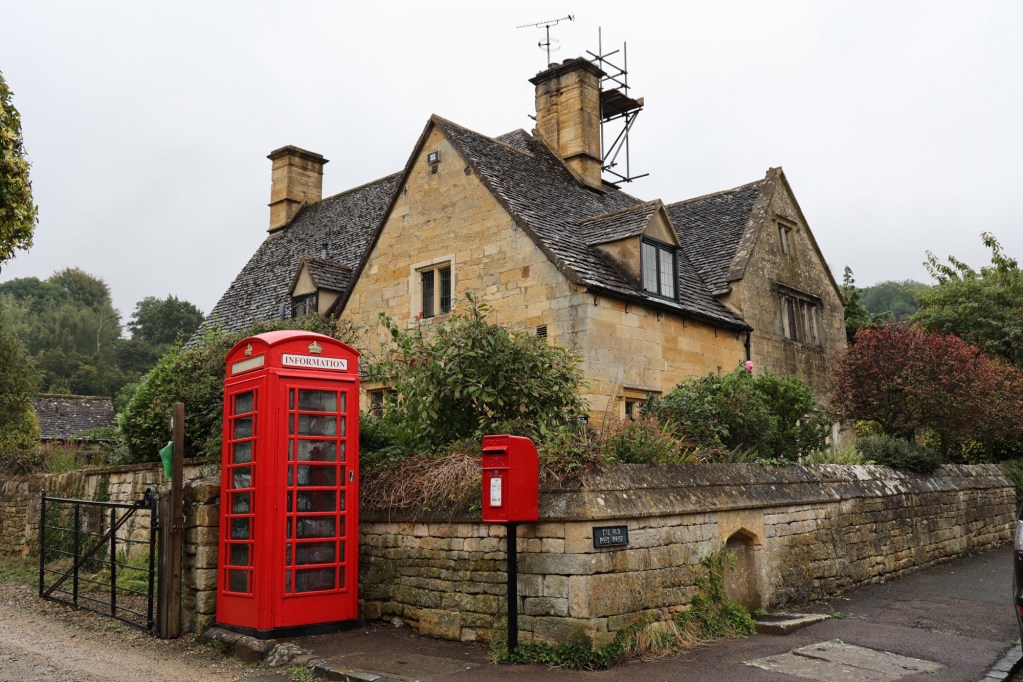
No one is exactly sure when the earliest settlement at Stanton was established but there was definitely farming taking place in the area as early as 2500 BC. Stanton is mentioned in the Domesday Book as ‘land of the church at Winchcombe’ in 811AD, having been granted to the parish by King Kenulf. The telephone booth standing outside the old Post House is now an information kiosk for hikers on the Cotswolds Way.
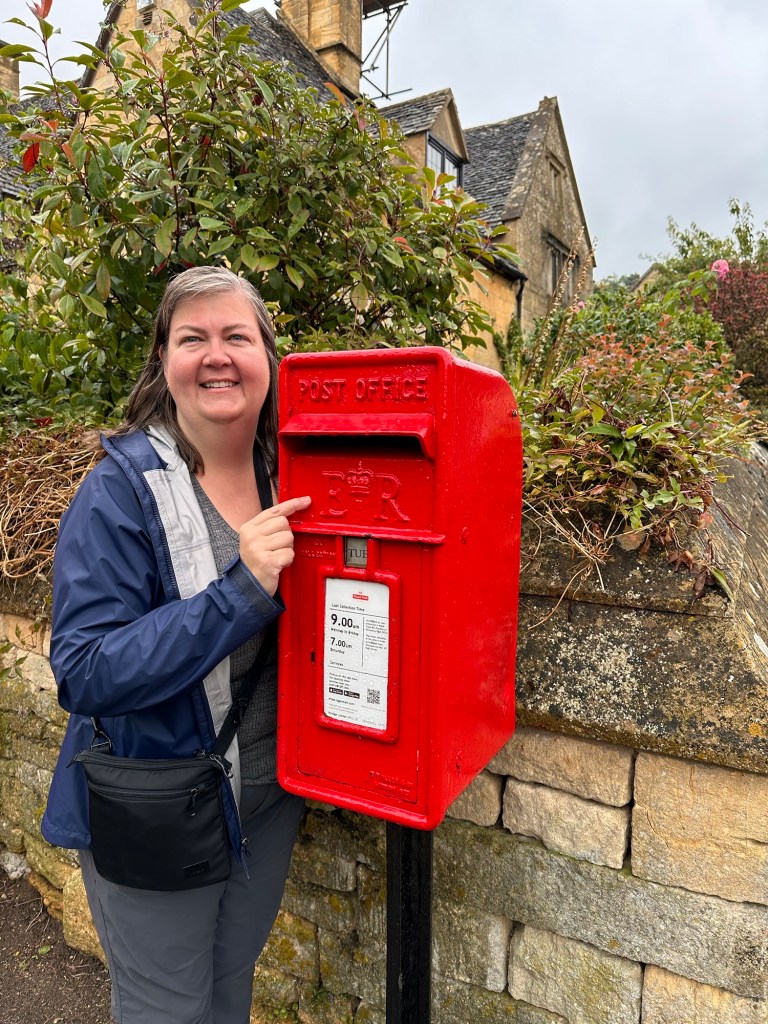
C III R for King Charles.

From the town of Broadway it was a steep 2km up to the second highest point in the Cotswolds. The trail up the hill from town is a small part of the larger Cotswolds Way.

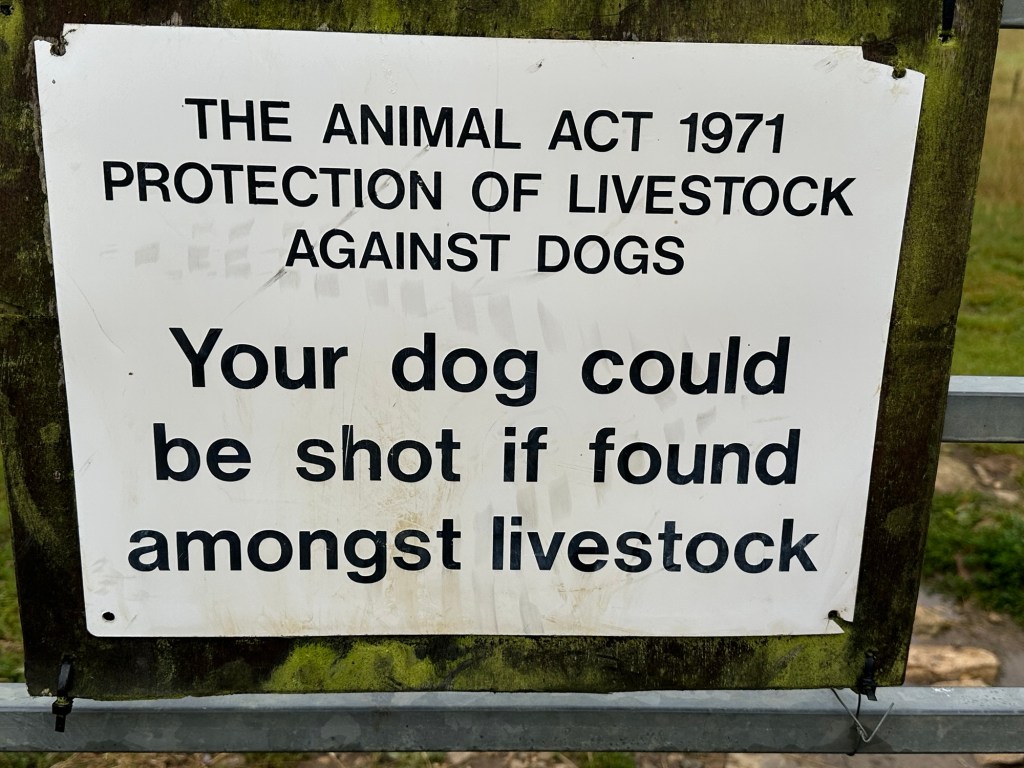
Despite this sign, most of the people we saw on the trail had a dog with them!
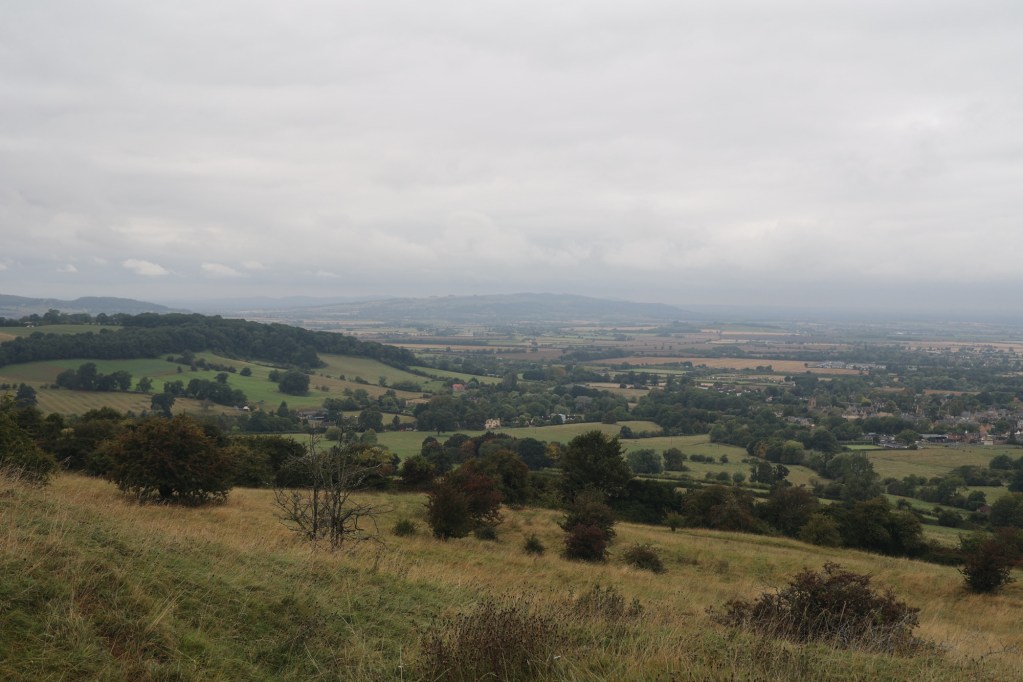
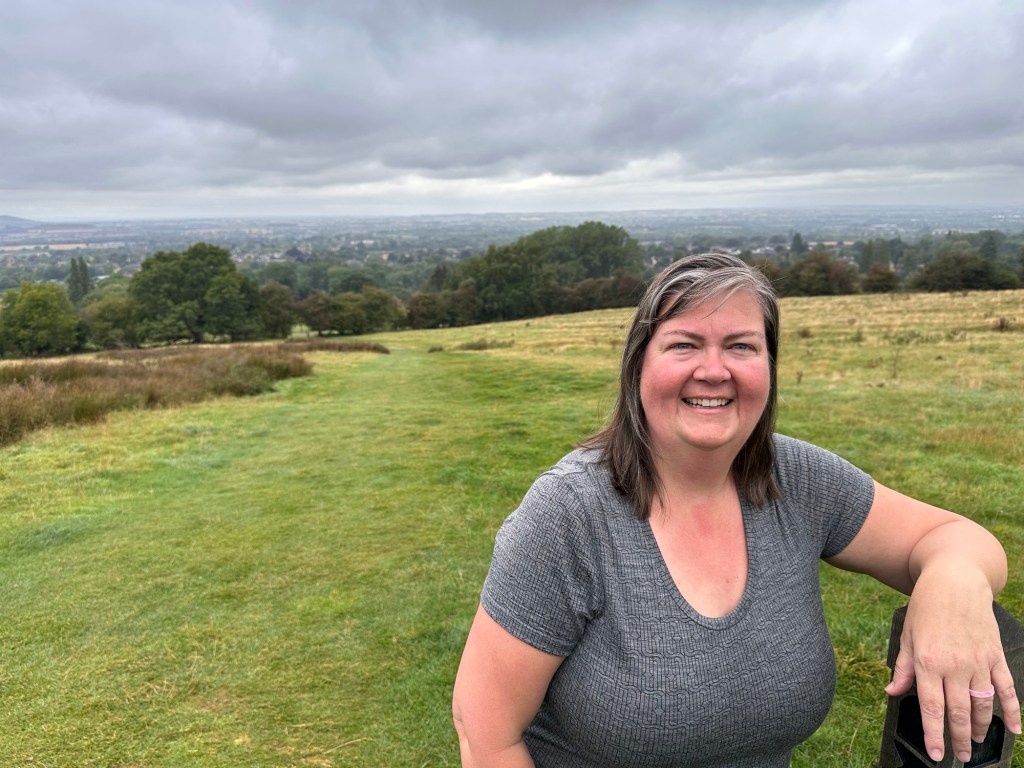
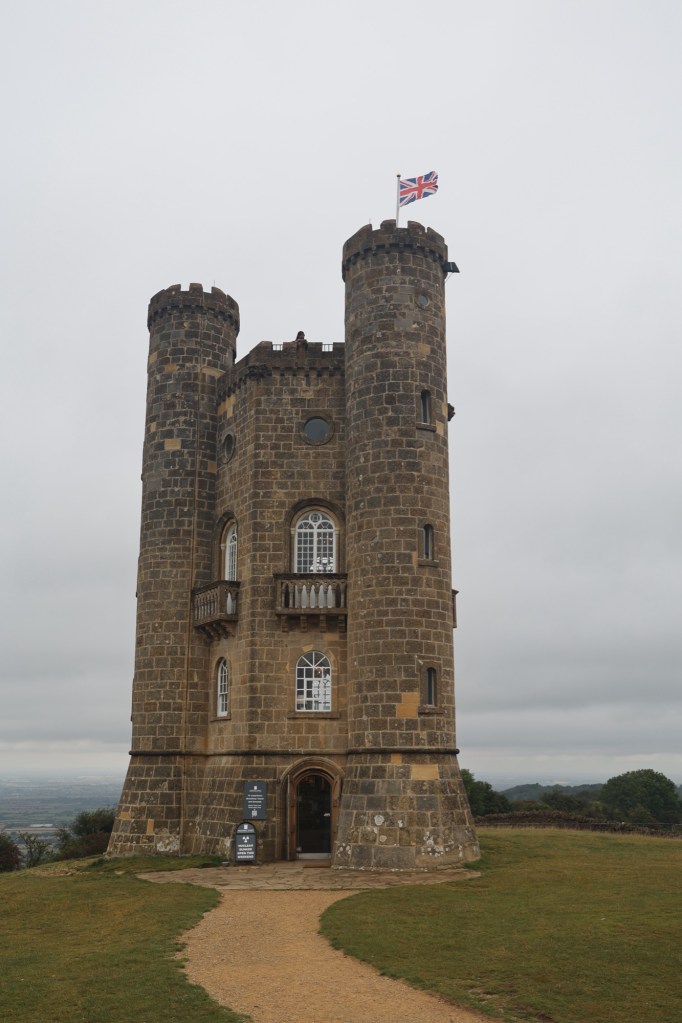
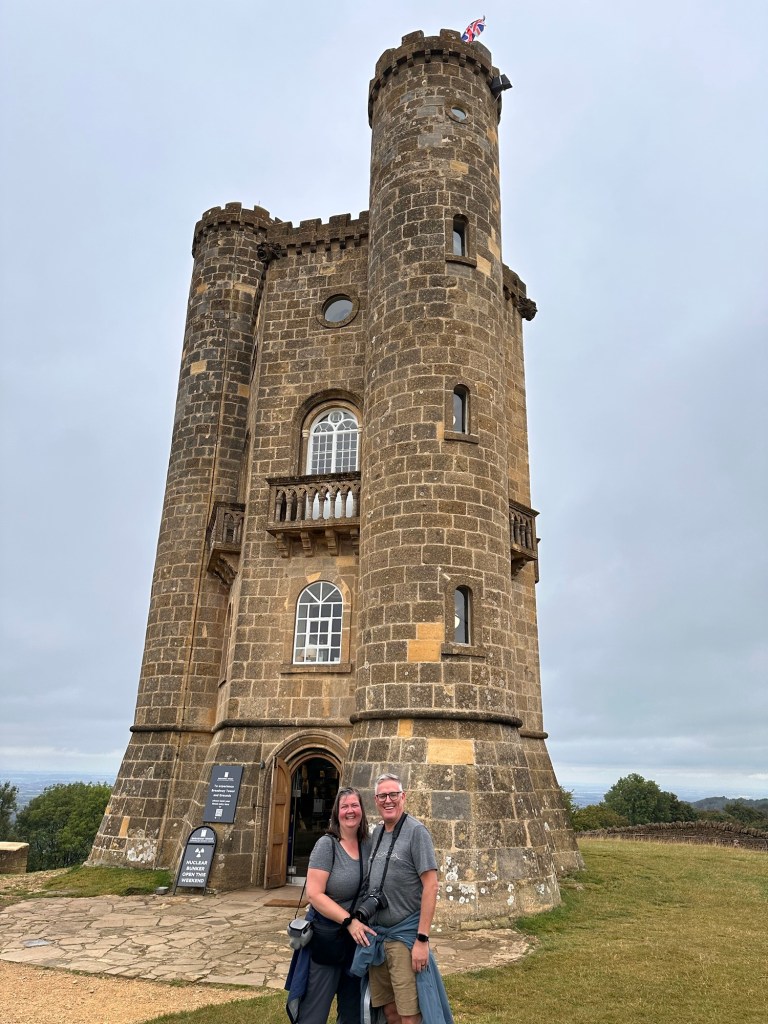
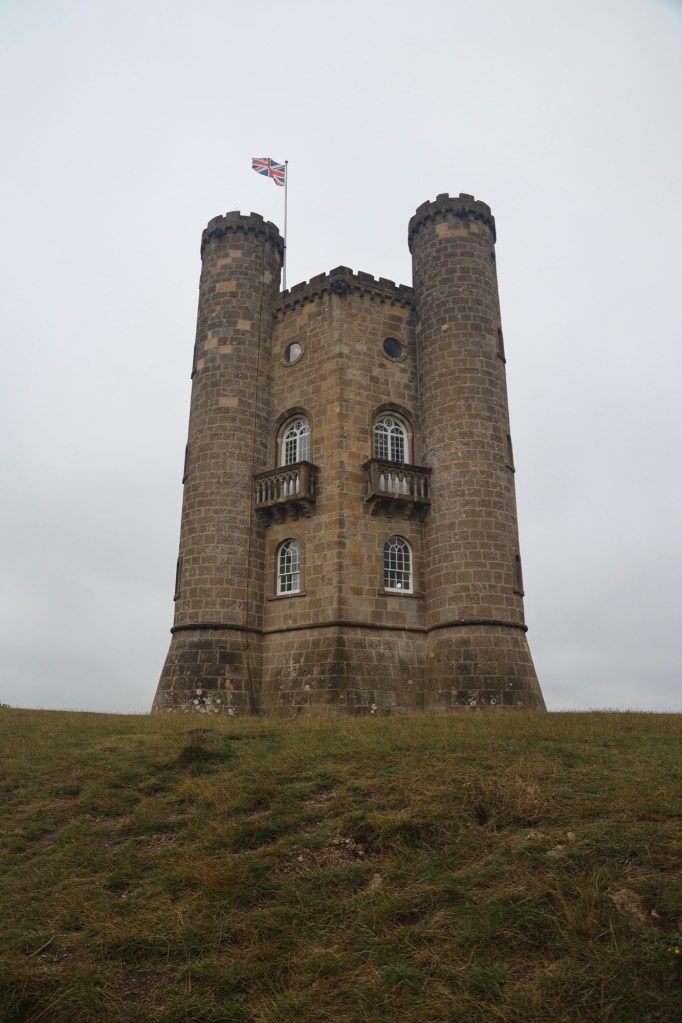
Broadway Tower is a 3-floor Saxon-style folly designed by Capability Brown in 1798. The building, with its three rounded corner towers, has been used as an artist’s retreat as well as a nuclear bunker.
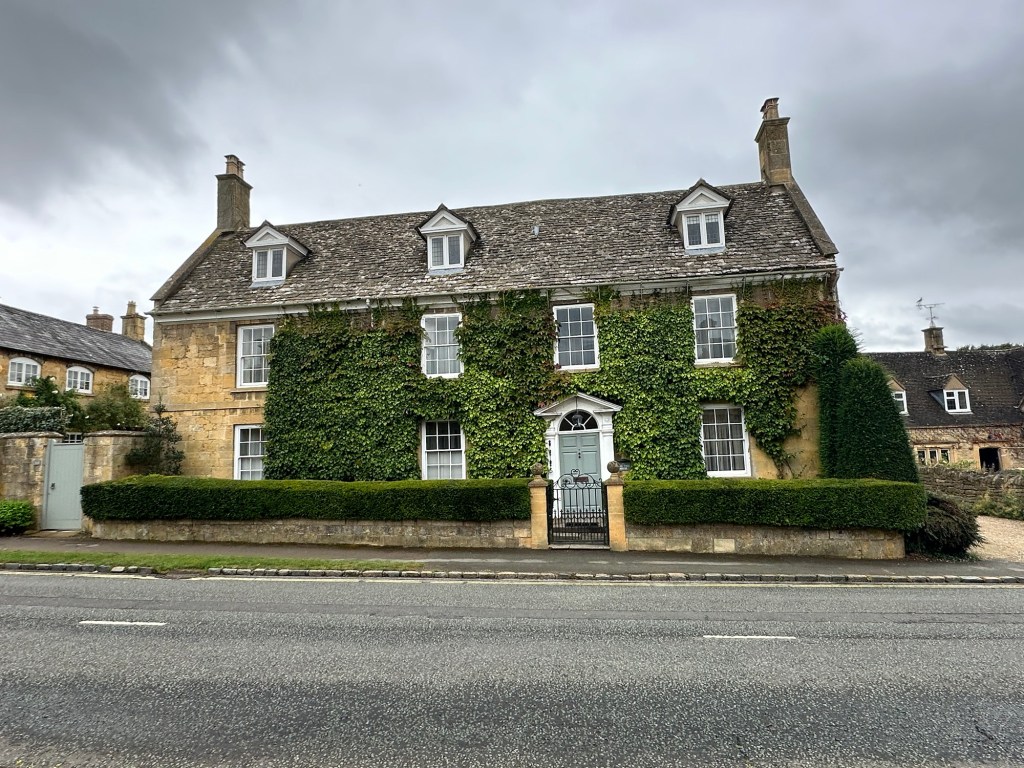
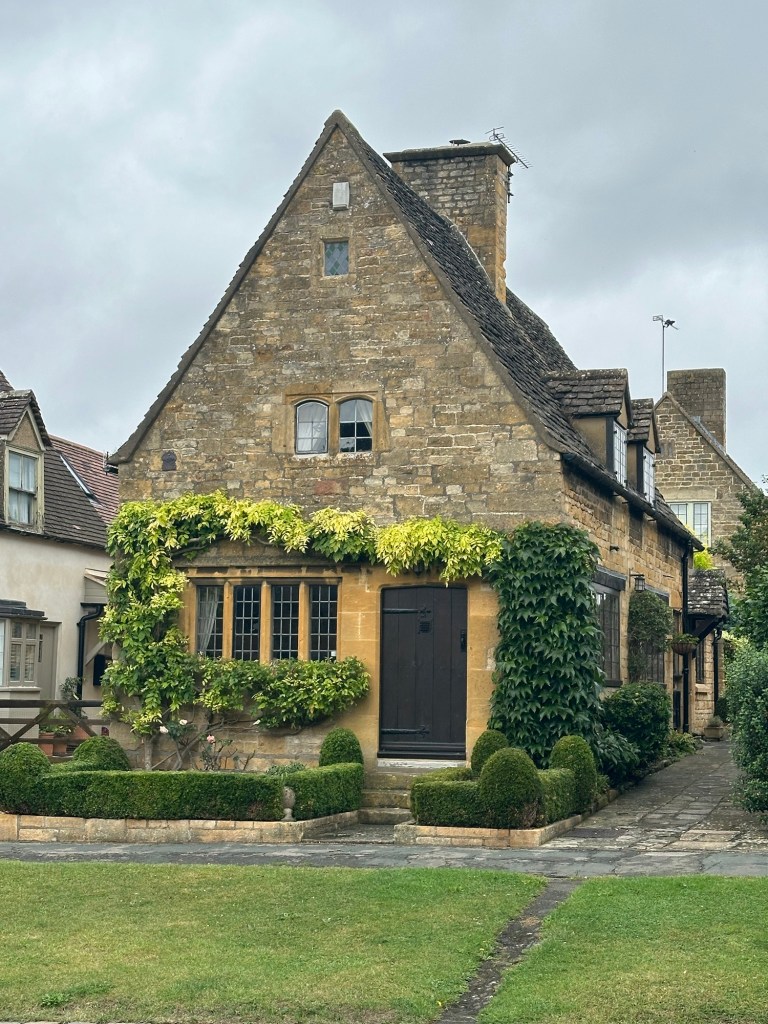
Broadway is often referred to as the Jewel of the Cotswolds. It, too, is full of beautiful ivy-covered limestone homes.
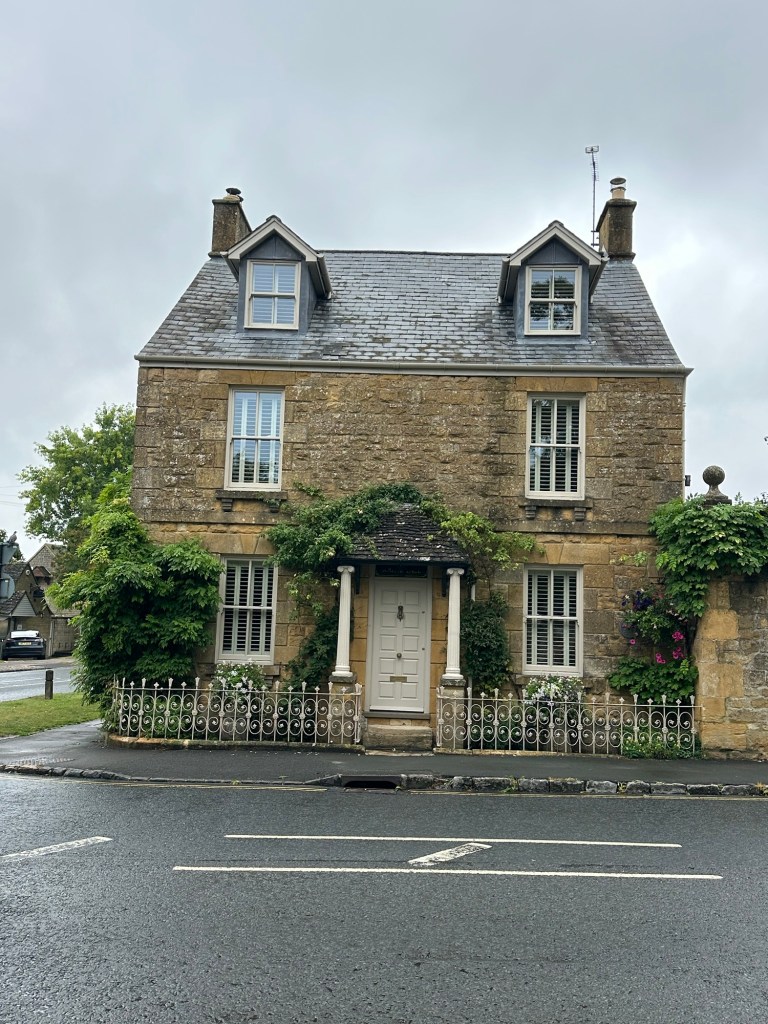
Chipping Campden was established in the 7th century and gets its name from the Saxon word ‘caumpadene’ which means enclosure, or camp in the valley. King Henry II gave the town a charter in 1175 which allowed it to hold a market, giving rise to the rest of its name – Chepping is Saxon for market. Chippings or market places often contain a market cross as a reminder to traders to deal fairly under the sight of God.
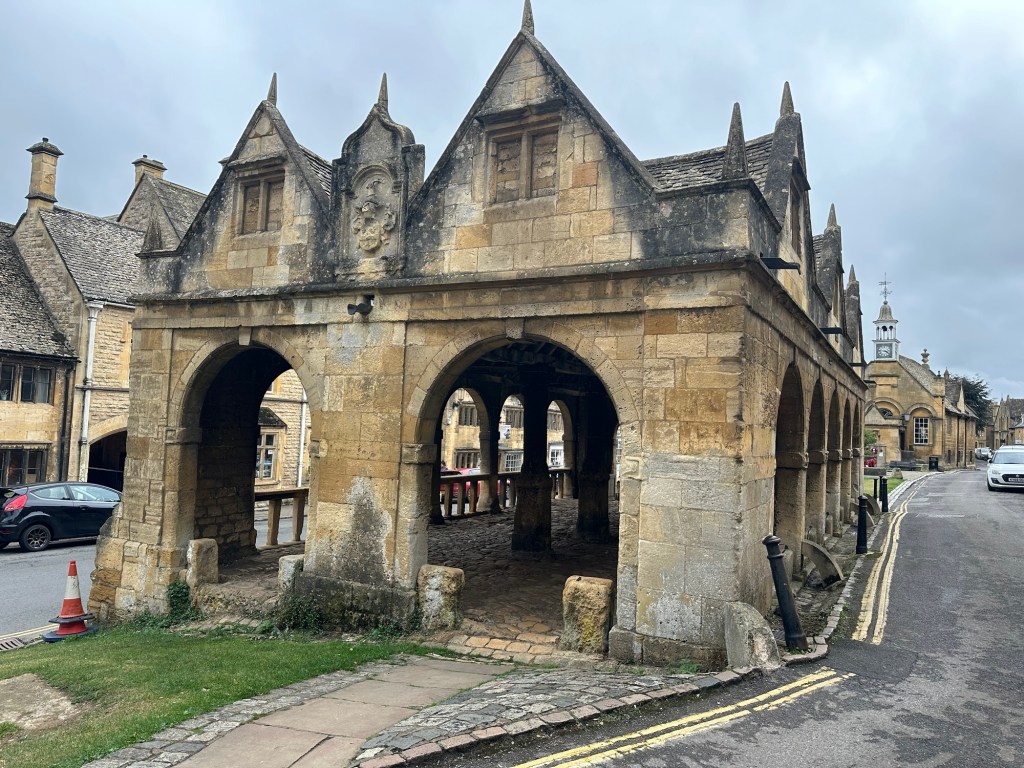
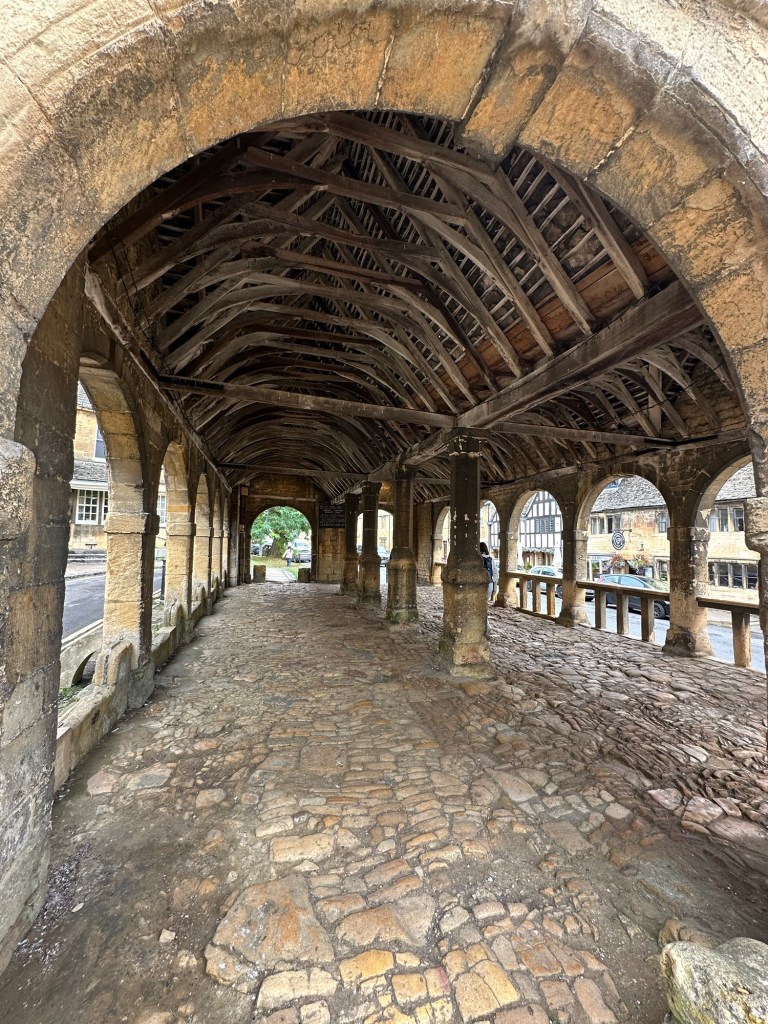
The Market Hall in Chipping Campden was built by Sir Baptist Hicks in 1627 to provide shelter from the elements for market traders who came to town to sell butter, eggs and poultry.

The original cobbled stone flooring has been worn smooth by all the people who have walked over it through the years.
The town is also either the beginning or the end of the Cotswolds Way.

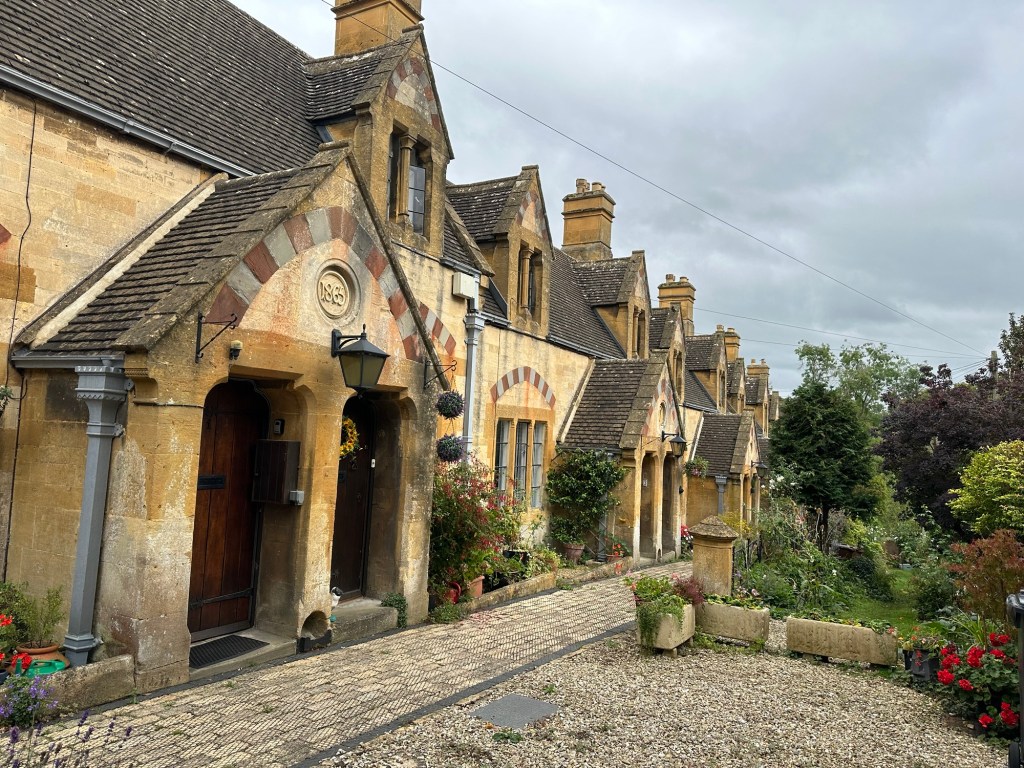
Almshouses are the oldest form of social housing in England. The first almshouses were recorded by King Athelstan in York in the 10th C. The residences (houses, apartments, townhomes) are owned by a charity and are provided for those with infirmity/disability, financial hardship or those belonging to a particular trade (eg fishermen or weaver’s cottages)
Winchcombe Pottery was established in 1926 on the site of an early 1800’s pottery, and is one of the longest running craft potteries in England.

We managed to stay mostly dry today, despite the rain in the forecast. We’re cooking chorizo and garlic pasta for dinner tonight back at the cottage.
Tomorrow we are exploring the town of Stow-on-the-Wold.


Leave a Reply