

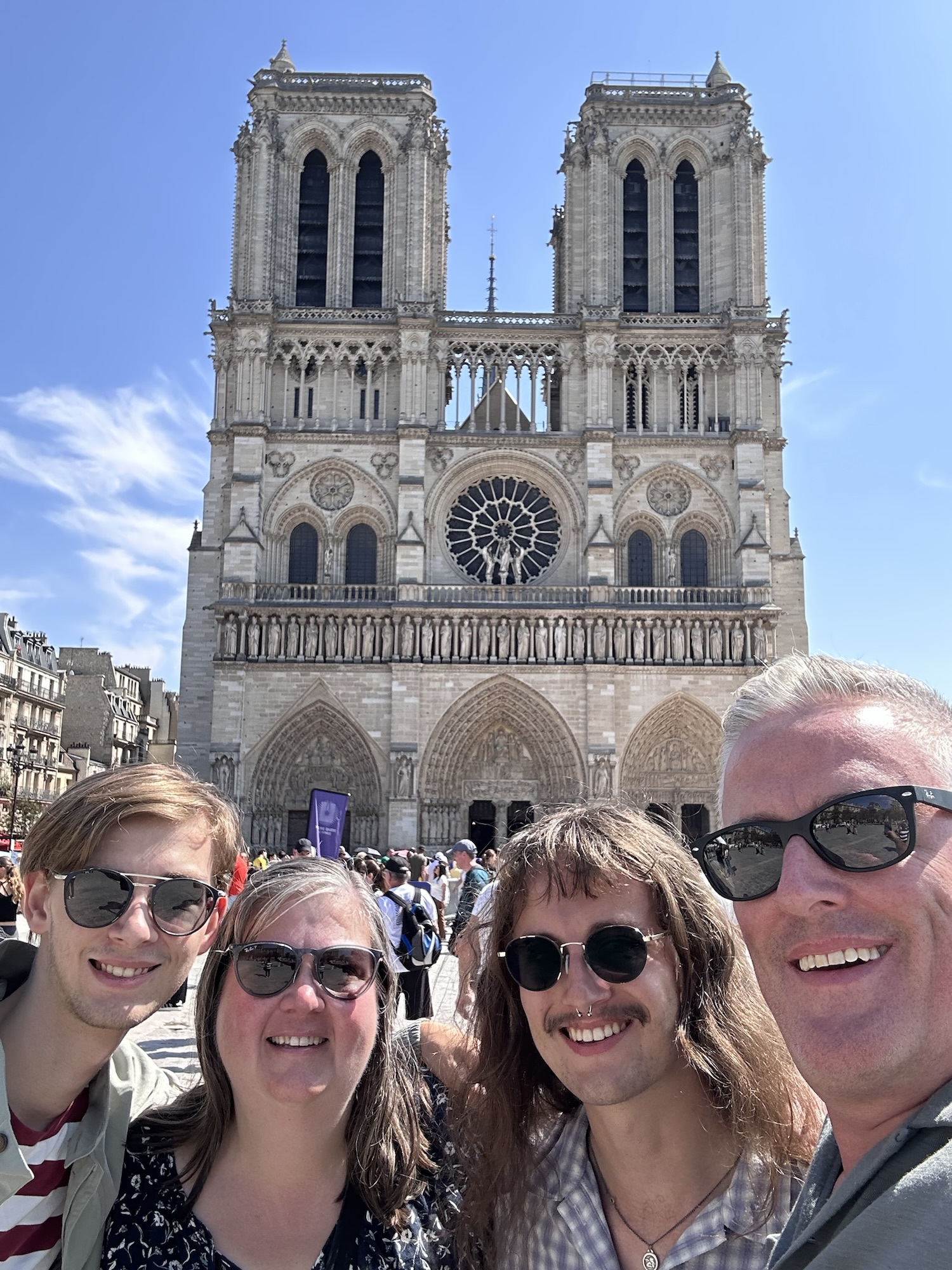
Early this morning we reserved our timed entry ticket for Notre Dame Cathedral on Ile de la Cite. Established in 1163 on the site of an ancient Roman temple, the church took 170 years to build and has a long important history.
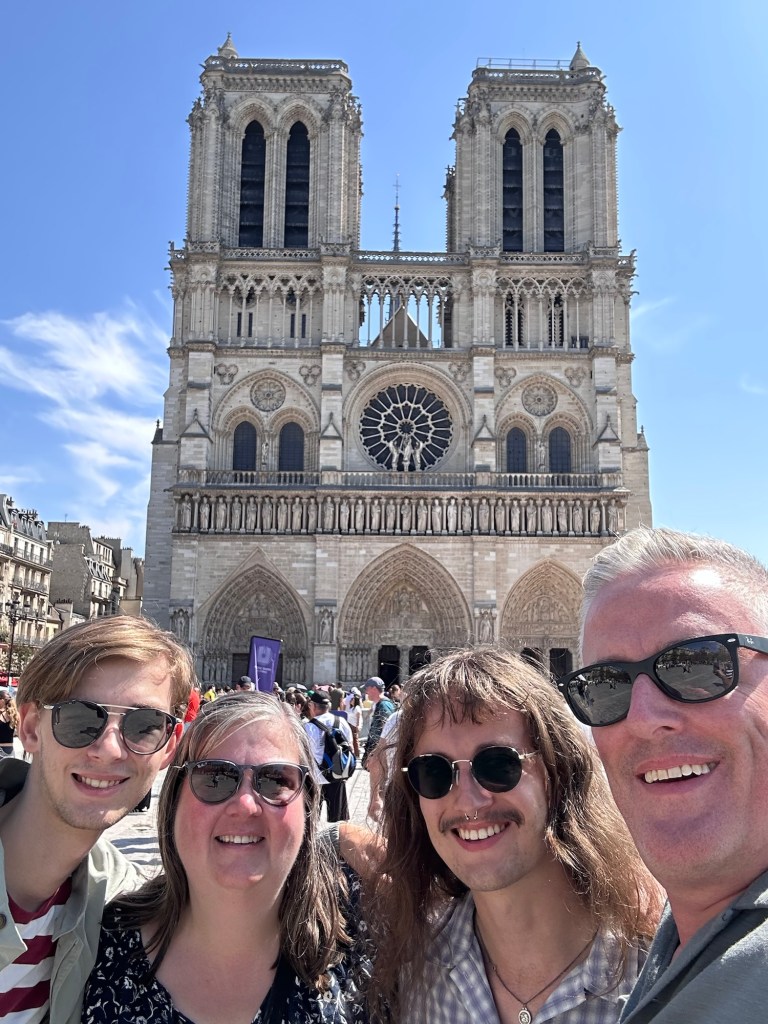
The first stone was laid by Pope Alexander III. Henry VI was crowned here in 1430. Napoleon was crowned emperor of France in Notre Dame in 1804.

When we visited Paris in 2019, Notre Dame Cathedral had just been struck by fire and was closed. The fire destroyed the roof and the main spire. The church reopened at the end of 2024 and is still undergoing some reconstruction.
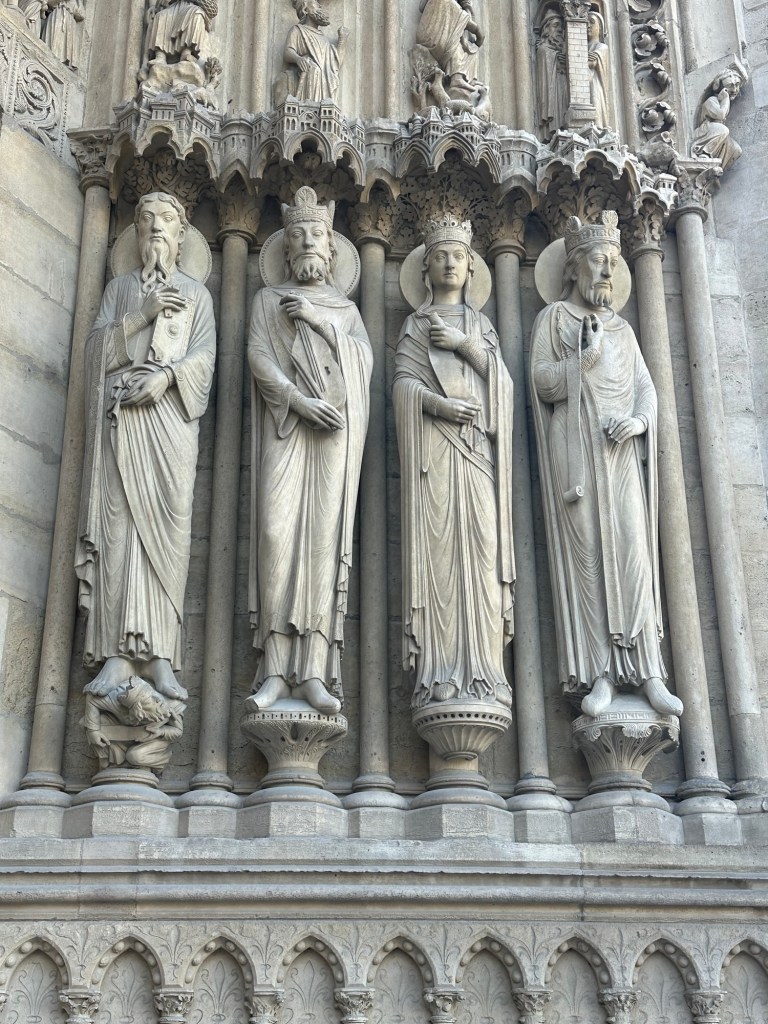
This is Saint Denis, holding his own head. He was beheaded in 250 AD by local pagan priests for preaching Christianity. According to legend, after his death, he picked up his severed head and walked for several miles while preaching about repentance.

The three huge rose windows within the church contain their original glass dating from 1225, 1250, and 1260.


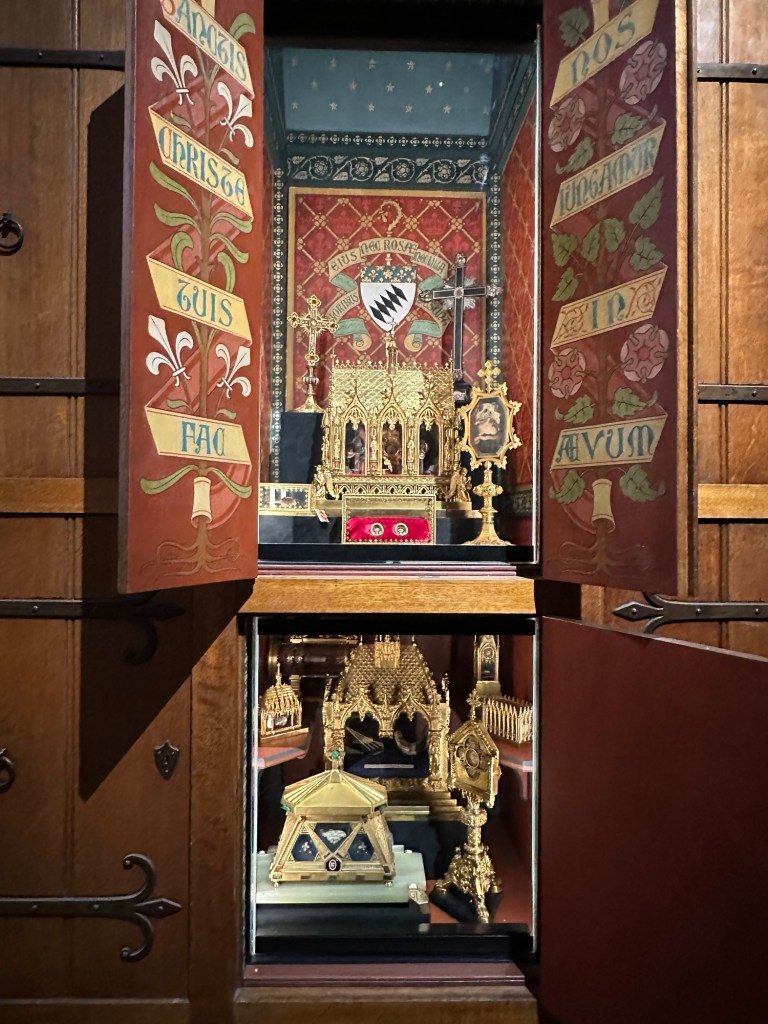
The cathedral houses the crown of thorns allegedly worn by Jesus during his crucifixion. The crown is displayed in a gold and glass reliquary, a sacred box specifically created to house relics. The crown was housed in Sainte-Chapelle for over 500 years before it was moved to Notre Dame in 1806 during the French Revolution.
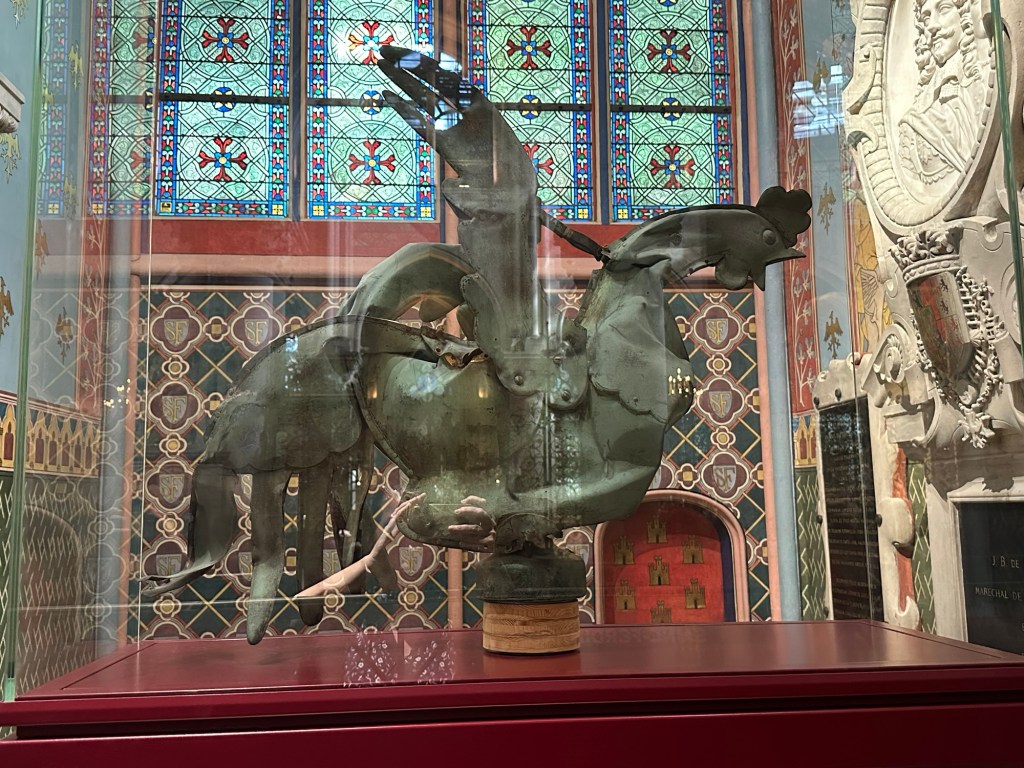
The original rooster weathervane that perched atop the old church spire survived the fire in 2019 and is now displayed in a dedicated chapel.
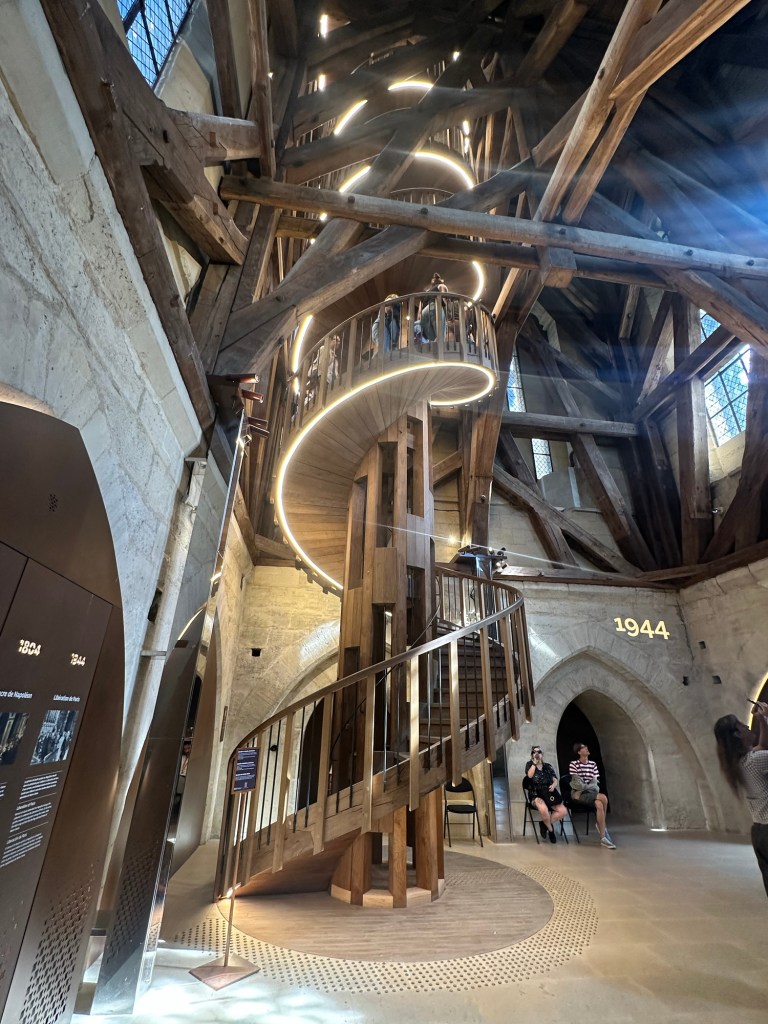
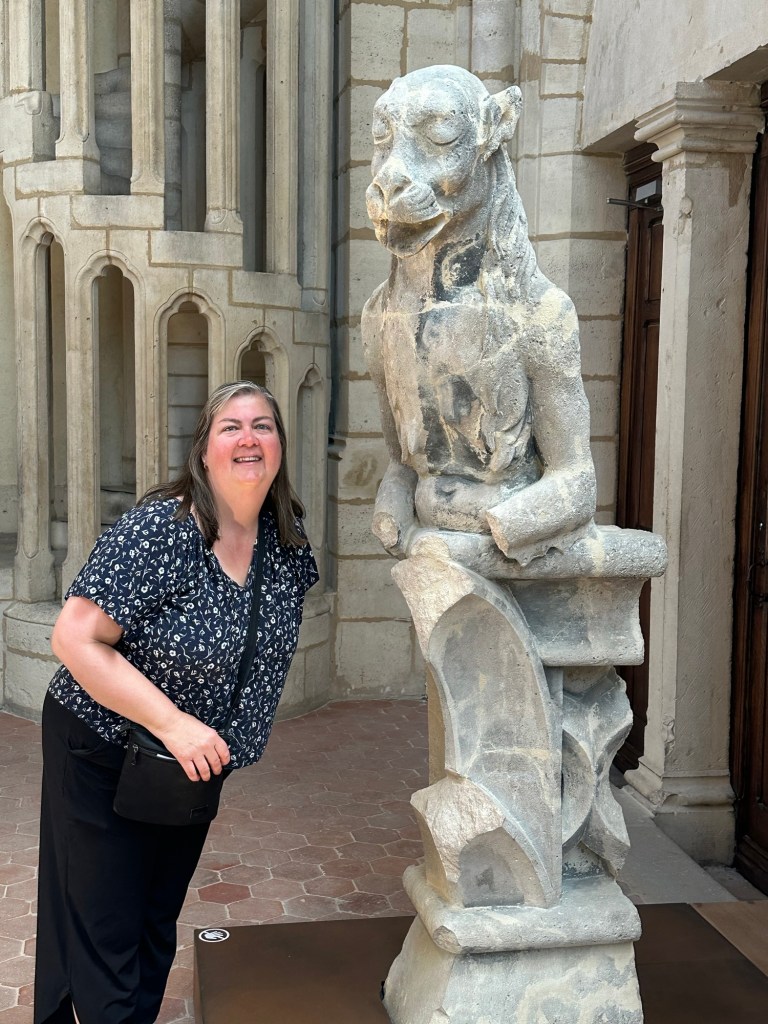
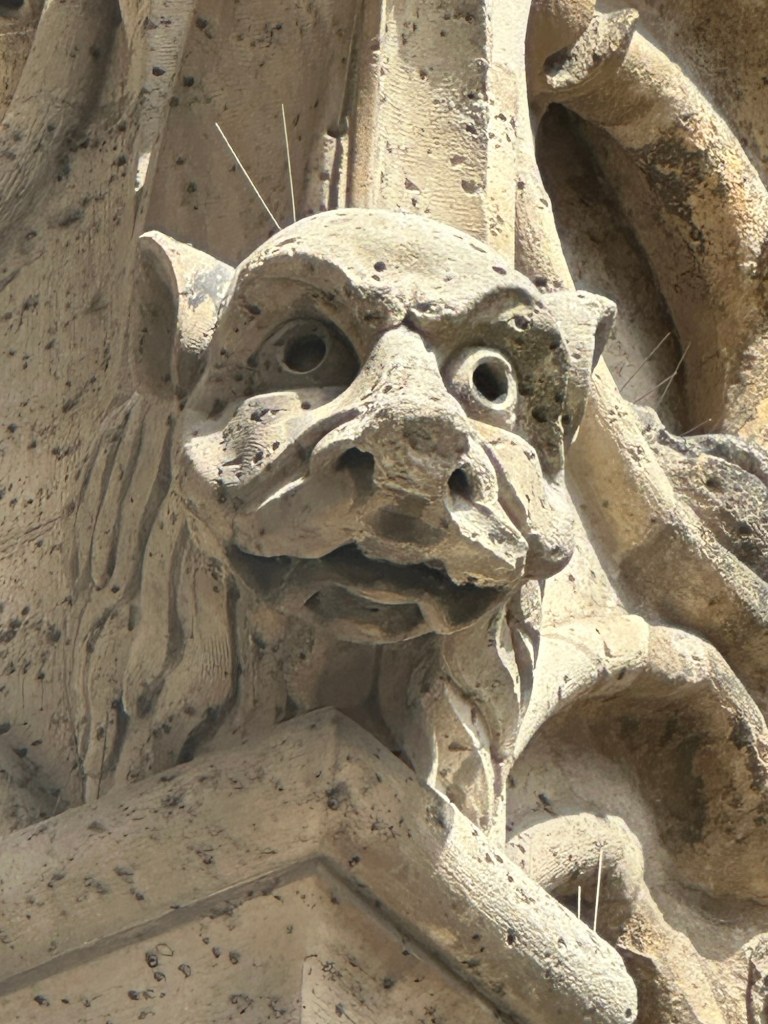
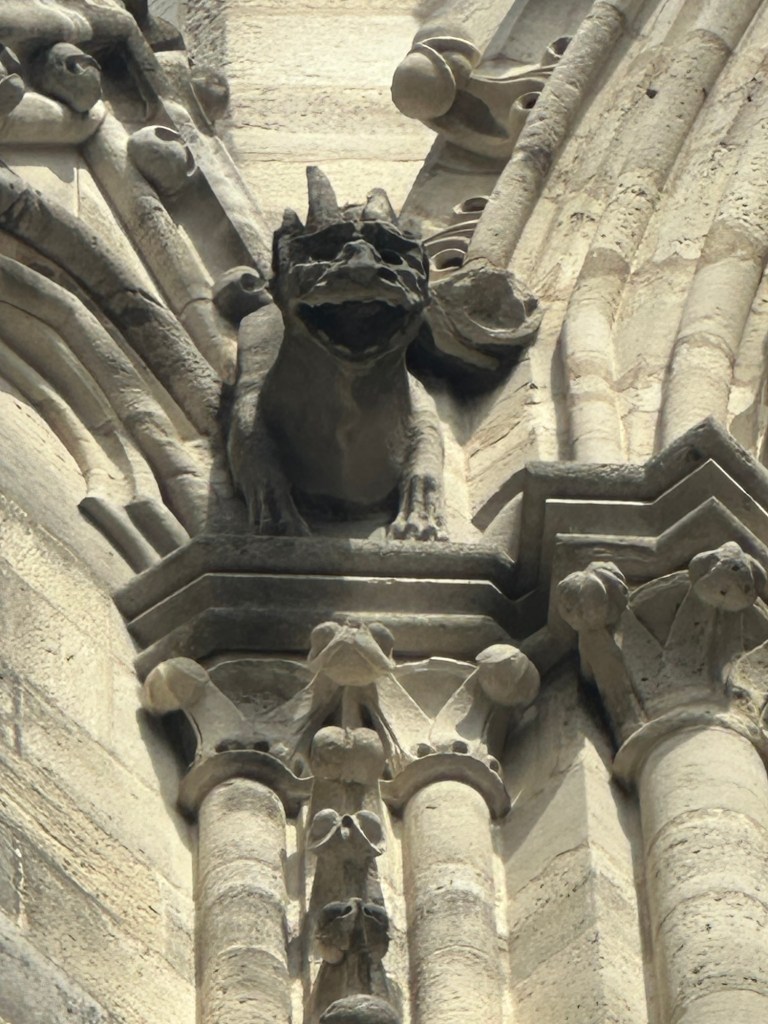
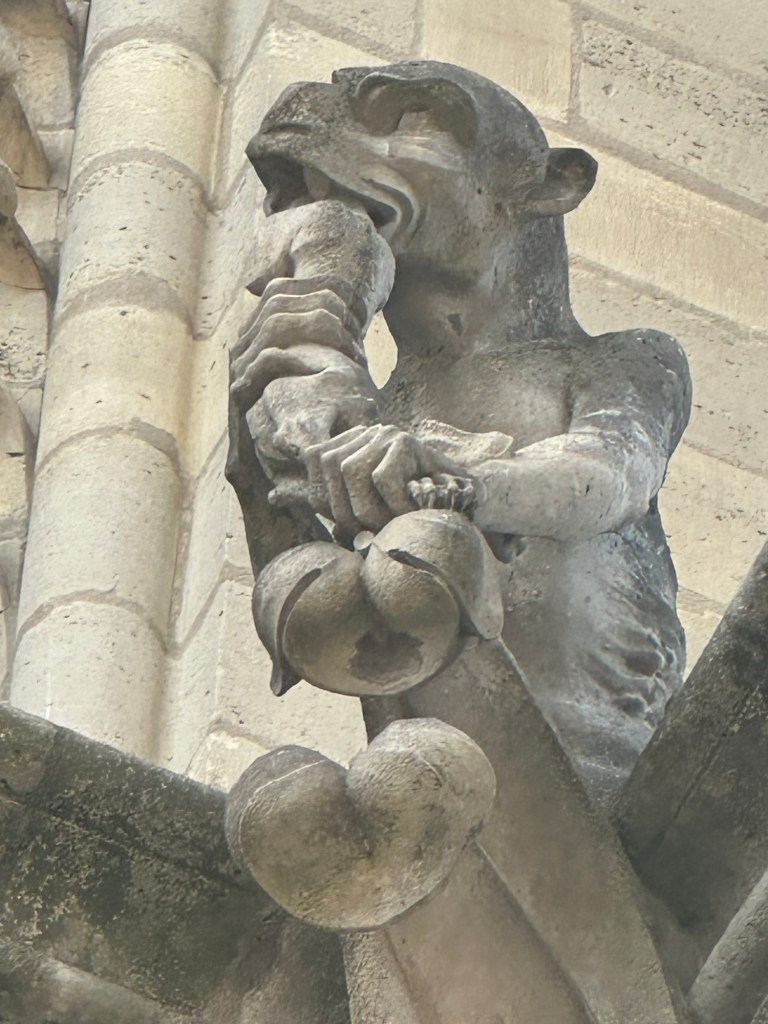
We bought our tickets for the north tower and climbed 424 steps up to view the gargoyles up close.
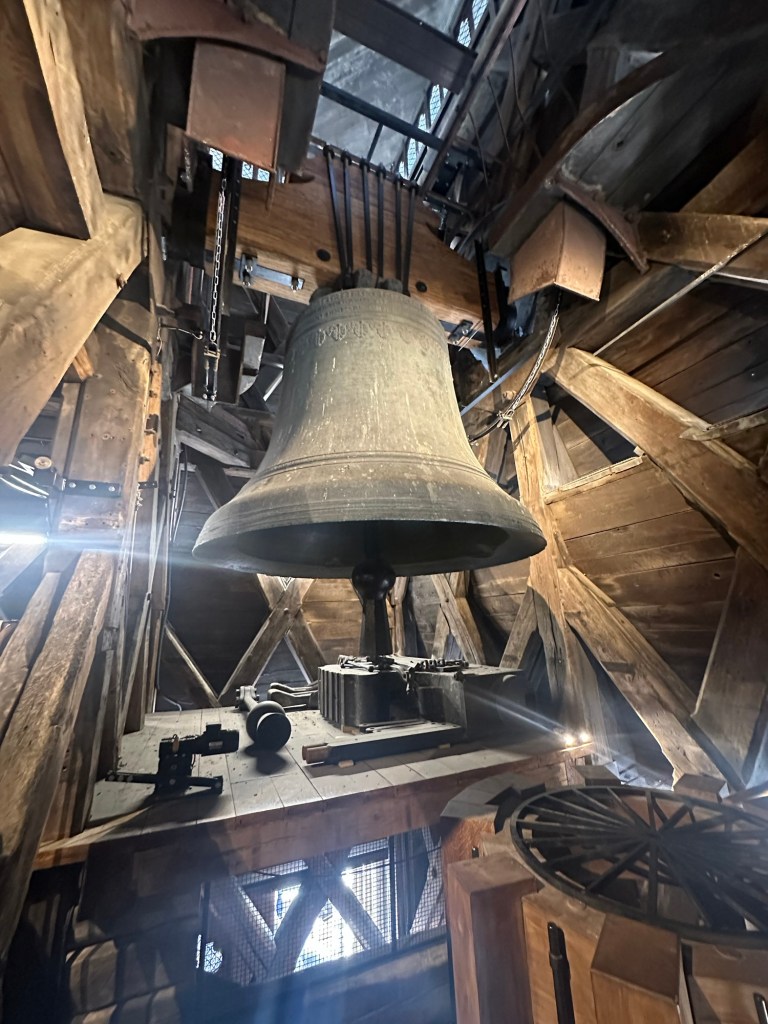
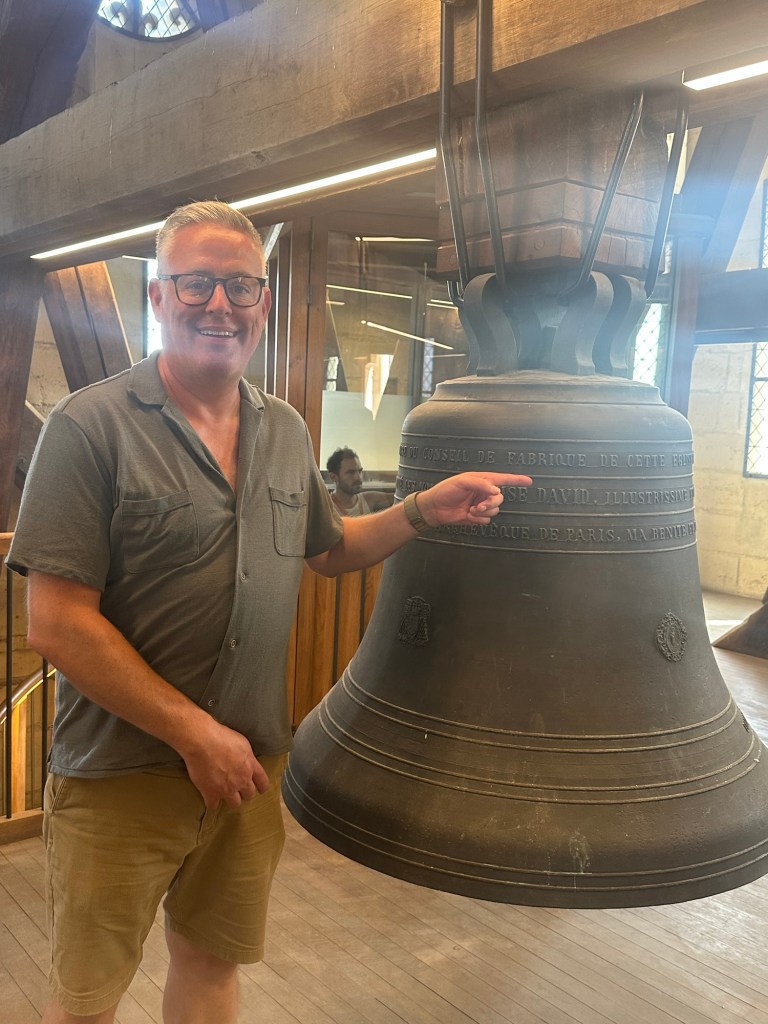
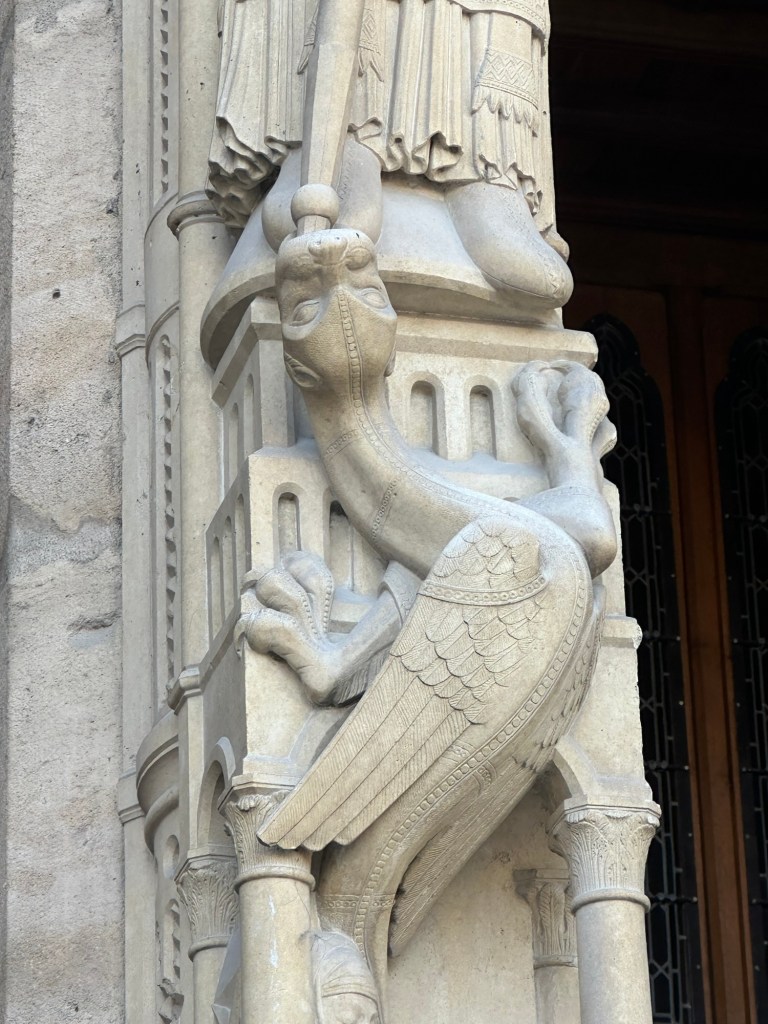
Most of the gargoyles are functional water spouts designed to drain water away from the church’s walls. Other chimeras or grotesques were added to the towers and transepts in the 19th C during a restoration.


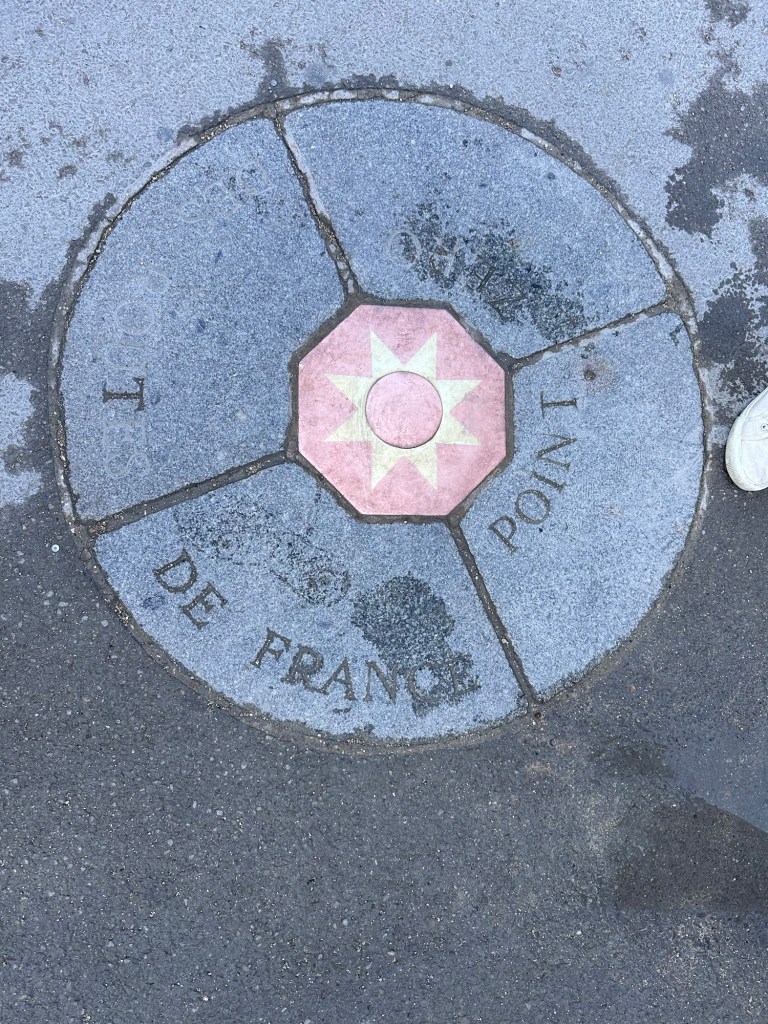
The Point Zero monument is a bronze star paving stone in the ground in front of Notre Dame signifying the exact centre of Paris. All distance markers from Paris are measured from this spot.

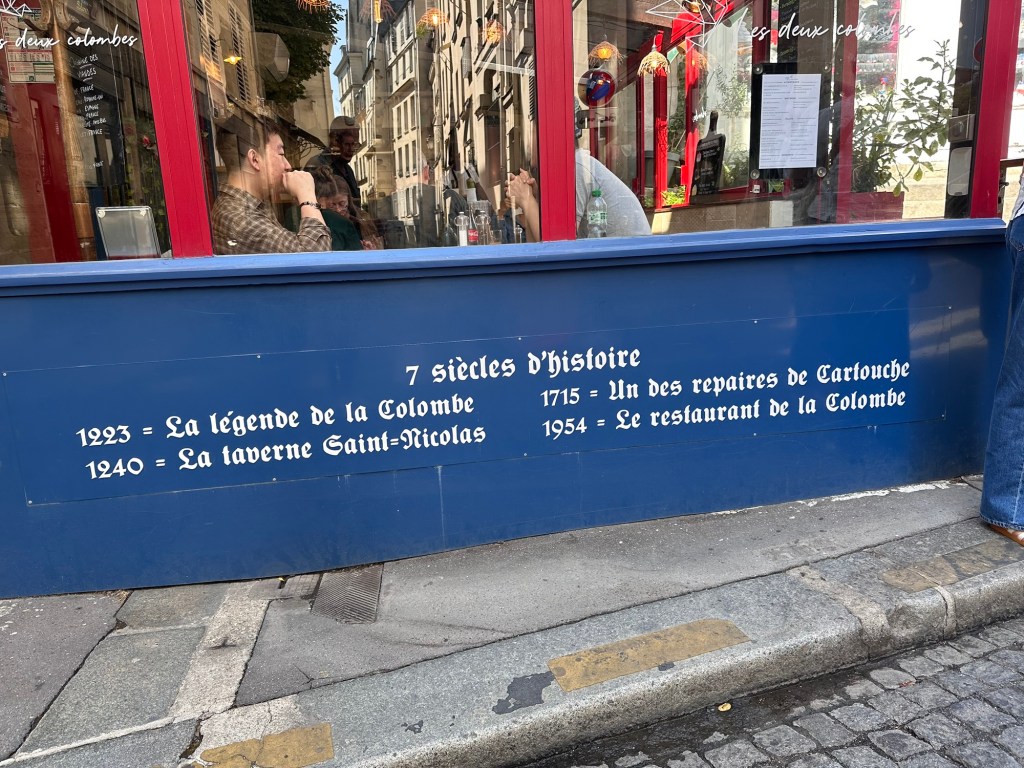
Lunch was at Les Deux Colombes, a small cafe on the Ile de Cite that can claim 700 years of history as a tavern, printer’s guild pub and restaurant.
Maison d’Isabelle claims to have the best croissant in Paris, so we had to try. They were pretty good!
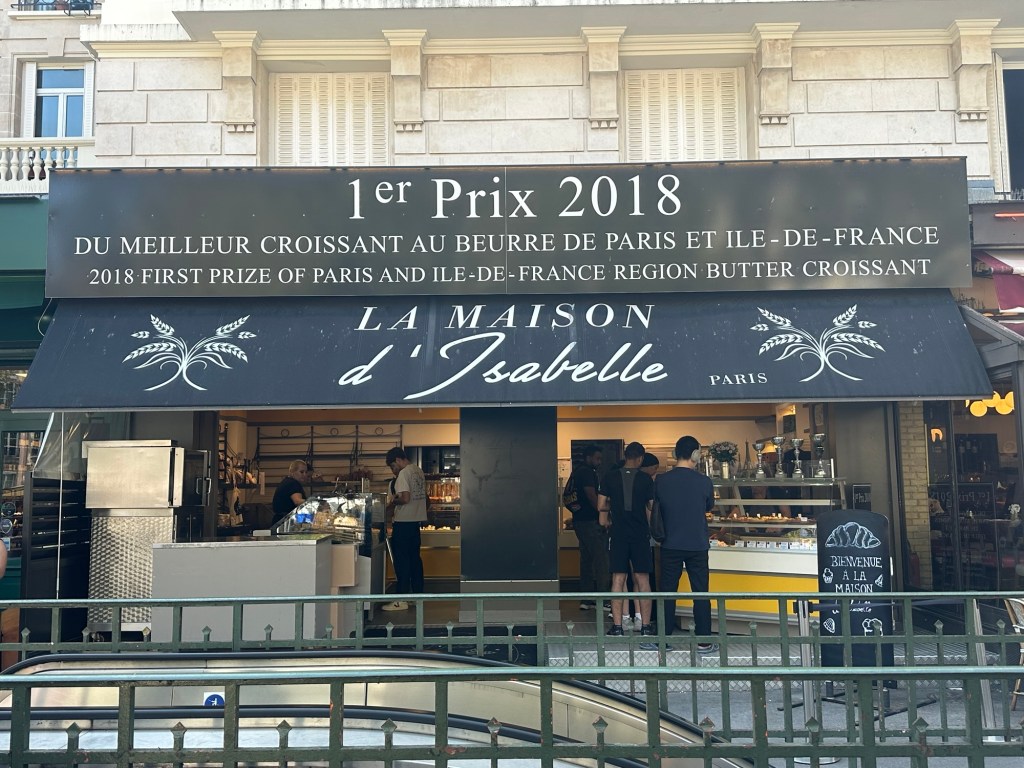
Food historians trace the origins of the croissant to Austria, where small pastries called Kipferl have been made since at least the 13th C. The croissant was likely introduced in France by Austrian-born bakers at a Paris bakery called Boulangerie Viennoise in 1837
The Wallace Fountains, public drinking fountains designed and named for Sir Richard Wallace, are scattered around busy sidewalks in Paris. Like the nasoni in Rome, they provide a nice refreshing drink on a hot day!

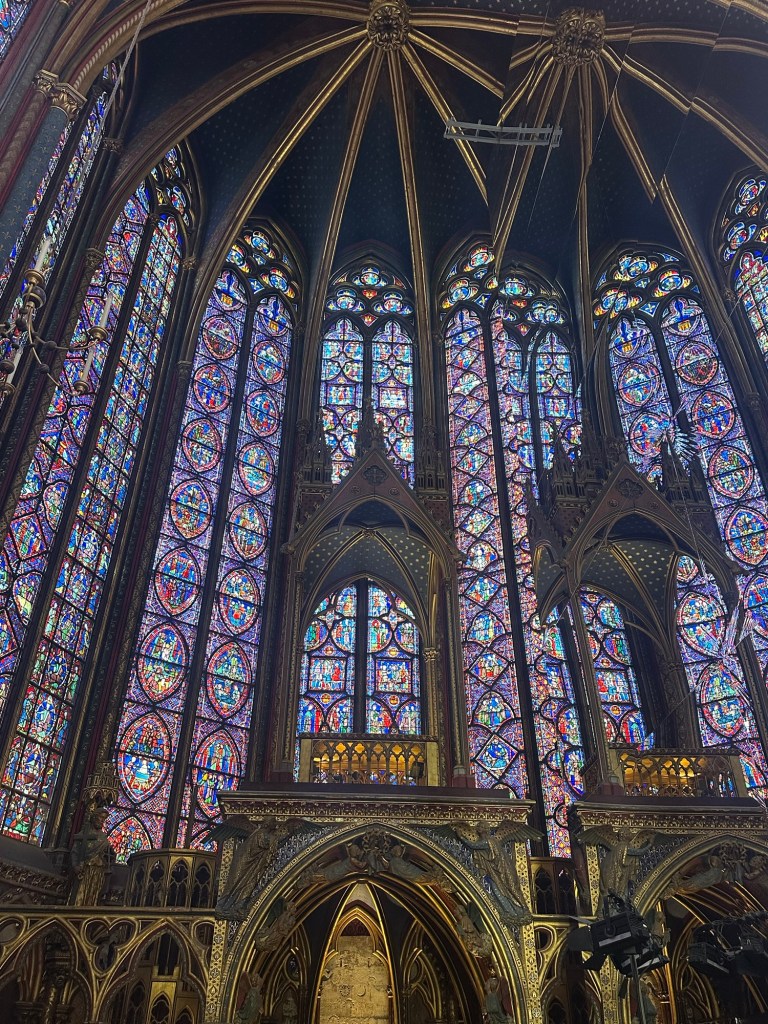
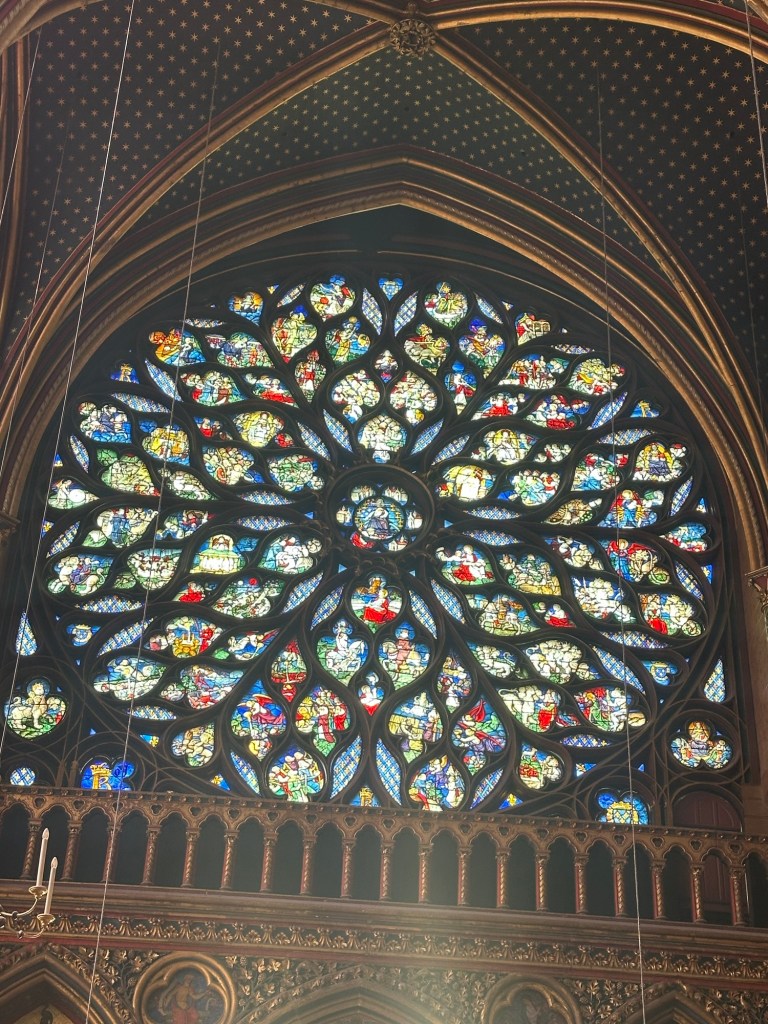
Sainte-Chapelle was built in the middle of the 13th C by Louis IX to house the most prestigious relics of the Passion of Christ, the crown of thorns (that is now in Notre Dame) and a fragment of the True Cross. The relics were purchased from the Latin Emperor of Constantinople in 1239 and brought to Paris.
Distributed across 15 stained glass windows, each 15 meters high, the 1113 scenes from the Old and New Testaments tell the story of the world, according to the bible, up to the arrival of the relics in Paris in the 13th C.

Dinner was at another gluten free restaurant, Little Nonna’s where we all indulged in amazing pizza at a sidewalk table.


Leave a Reply