


Early this morning we left Cahersiveen on the Iveragh peninsula and headed further north onto the Dingle peninsula. The weather on the Dingle Peninsula has been described as ‘loud’. It usually rains a lot and there is not much to stop the crazy wind on the coast. Today not so much. In fact we needed to reapply sunscreen. We are not complaining!
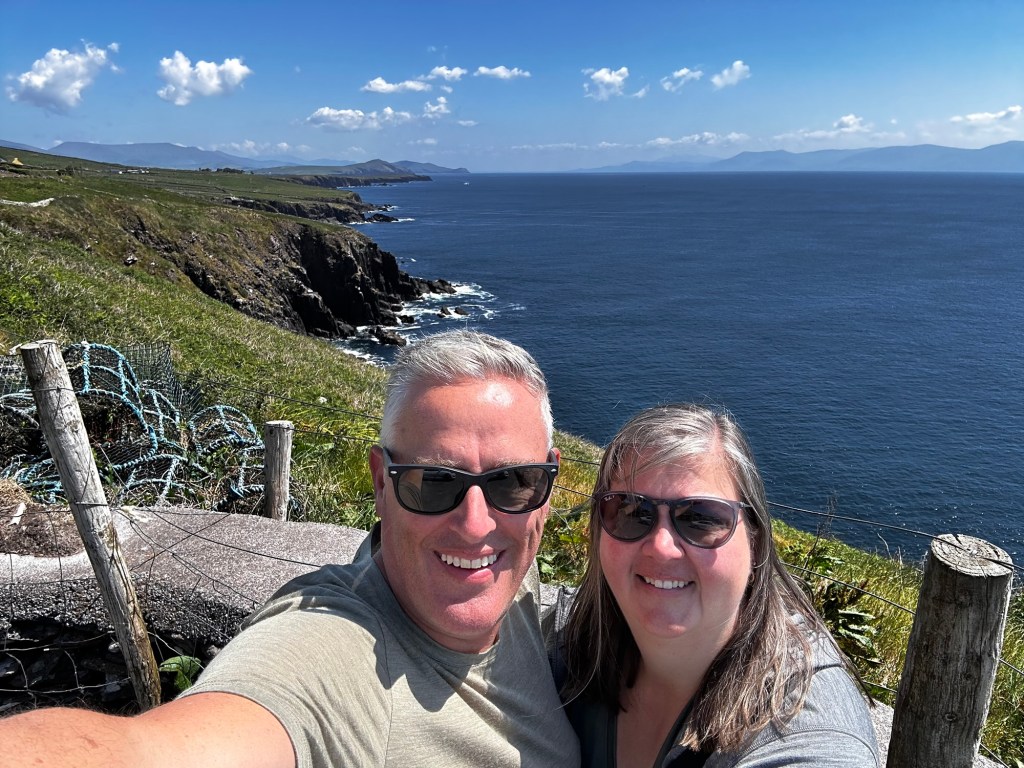
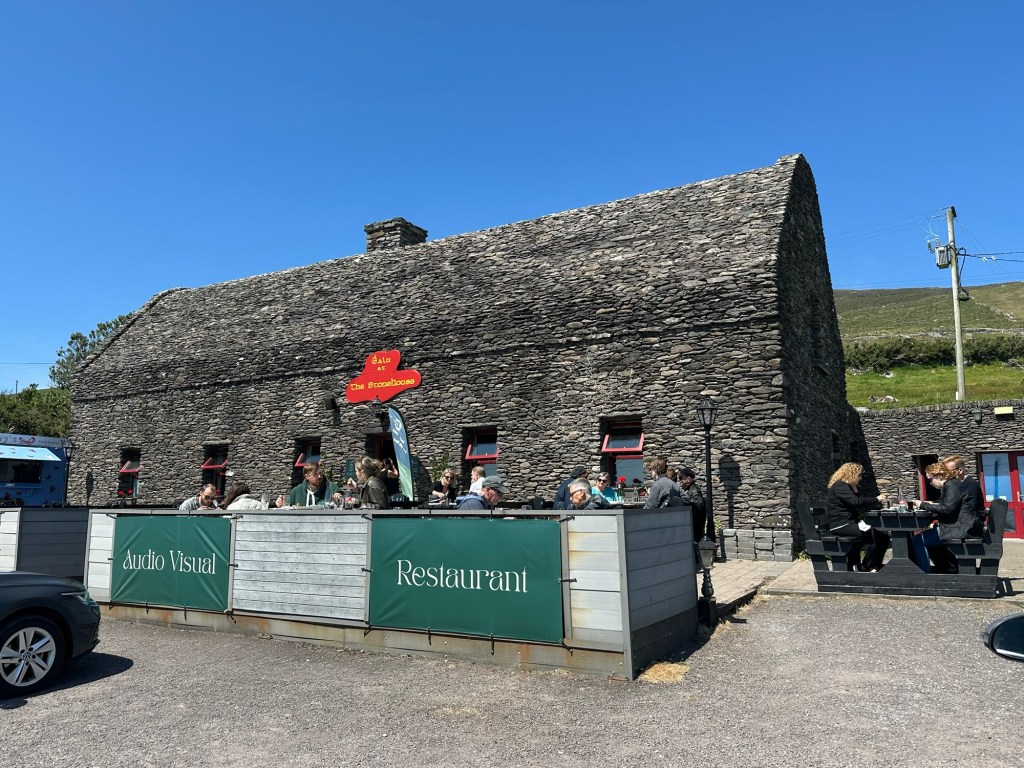
At the town of Dingle we joined the Slea Head Drive, travelling around the very west edge of the peninsula. Lunch was at the unique Stonehouse Restaurant, a genuine Irish stone house, constructed completely of stone in the time-honoured tradition of the area.
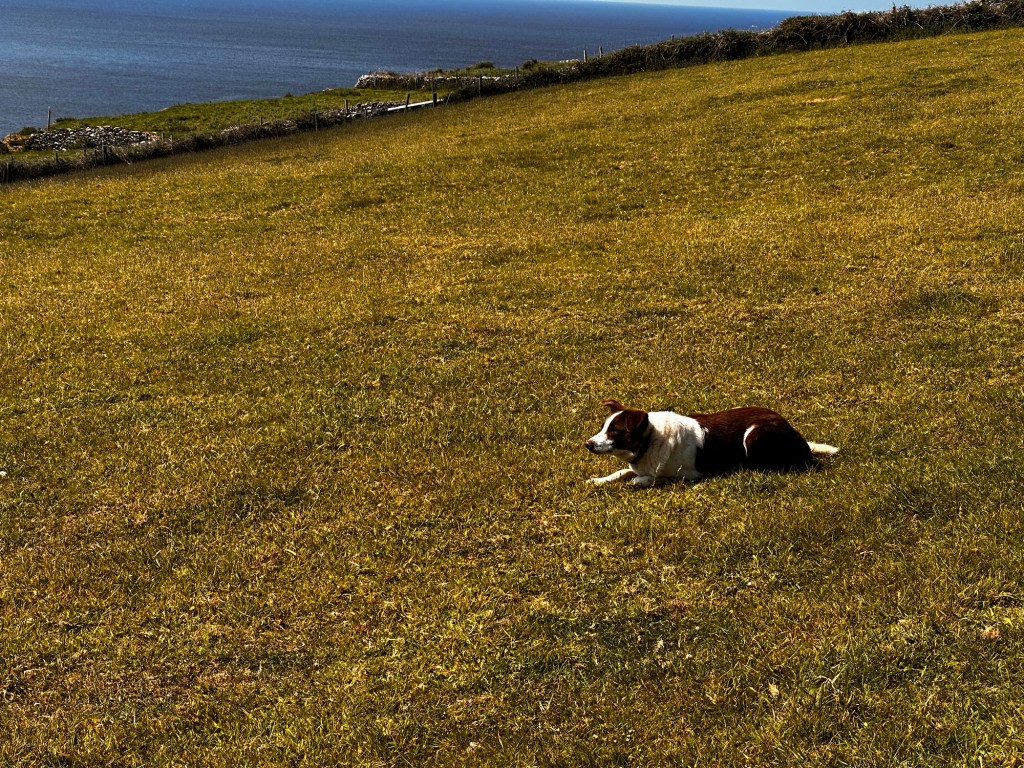
At the Famine Cottages next door, we watched a sheepdog trial. All the commands from farmer Gabriel to Cooper were in Irish and to Max in English. Gabriel showed off his skill controlling two dogs at once.
The Famine Cottages are the ancestral home of the Kavanagh family & were built in the early 1800’s.

This is what the family homes would have looked like during the Irish Potato Famine.

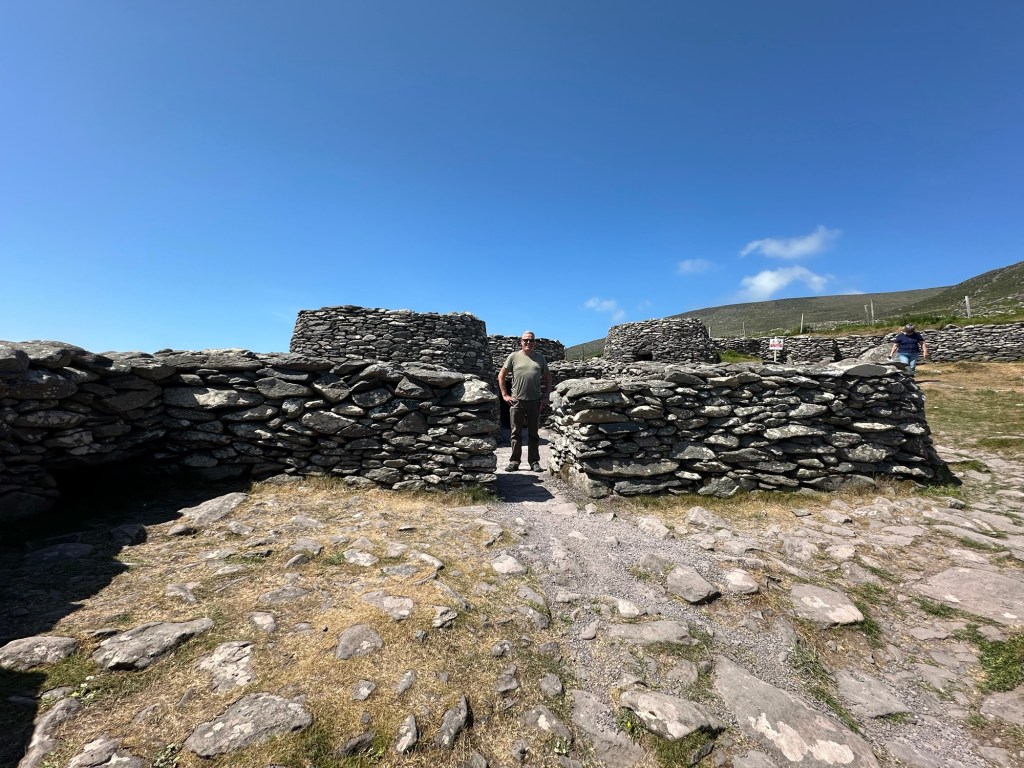
Clusters of cone-shaped huts speckle the sides of the Slea Head Drive.
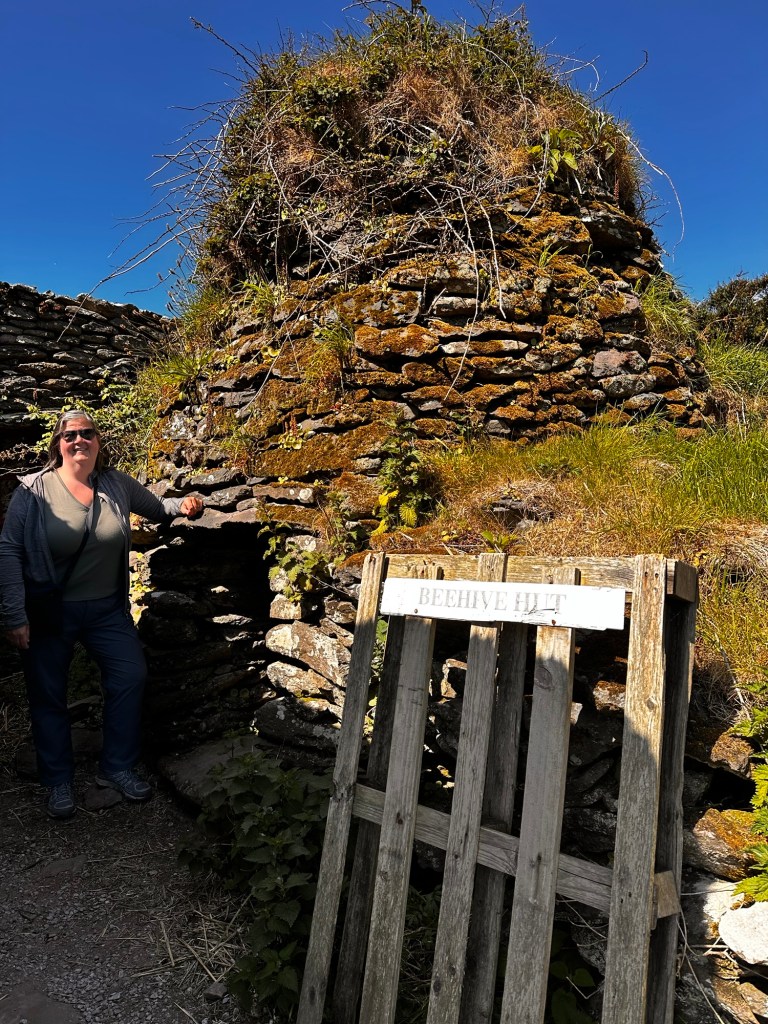
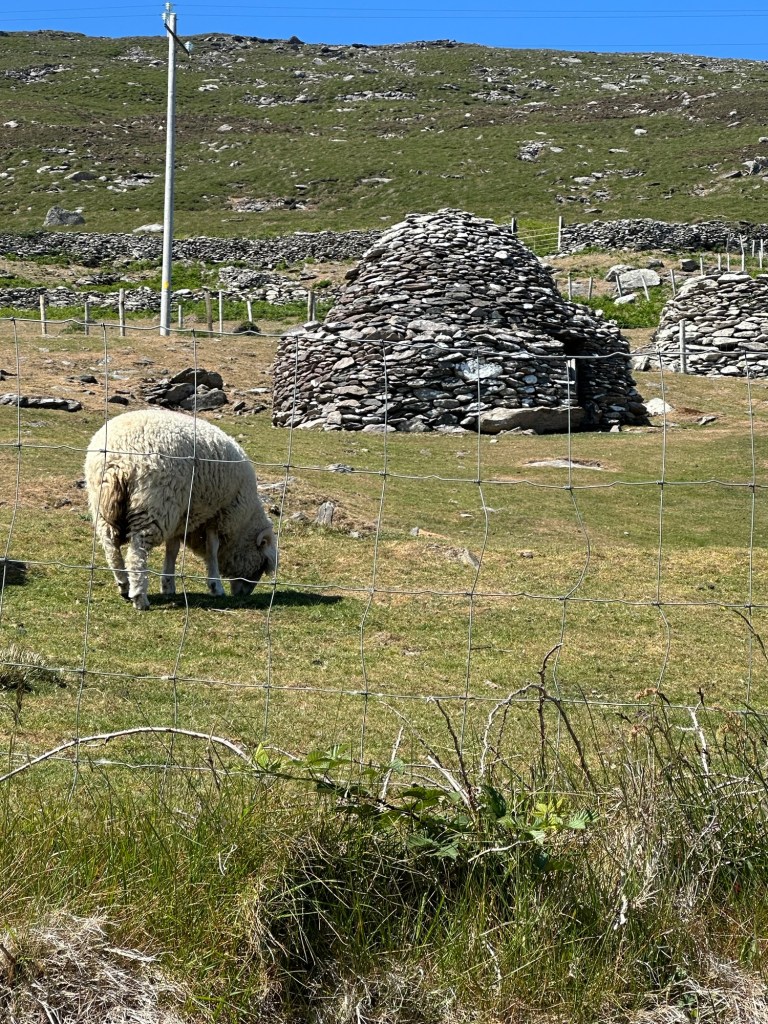
Called beehive huts or ‘clochan’, they are stone houses with a ‘false dome’ roof, created by corbelling, meticulously stacking rings of stone on top of each other, positing each layer a little further inward until a pointed roof is formed.

The exact date of the huts is uncertain; different theories date them anywhere from the 8th to the 12th Centuries. It is likely that hermit monks and followers of St Peter once lived in them, though pagans may also have called them home much earlier.


The Blasket Islands are a group of 6 currently uninhabited islands off the coast of the Dingle peninsula. One of these islands is known locally as An Fear Marbh, the Sleeping Giant. According to legend, this rocky giant will only rouse himself at Ireland’s call. When will that be, do you think?
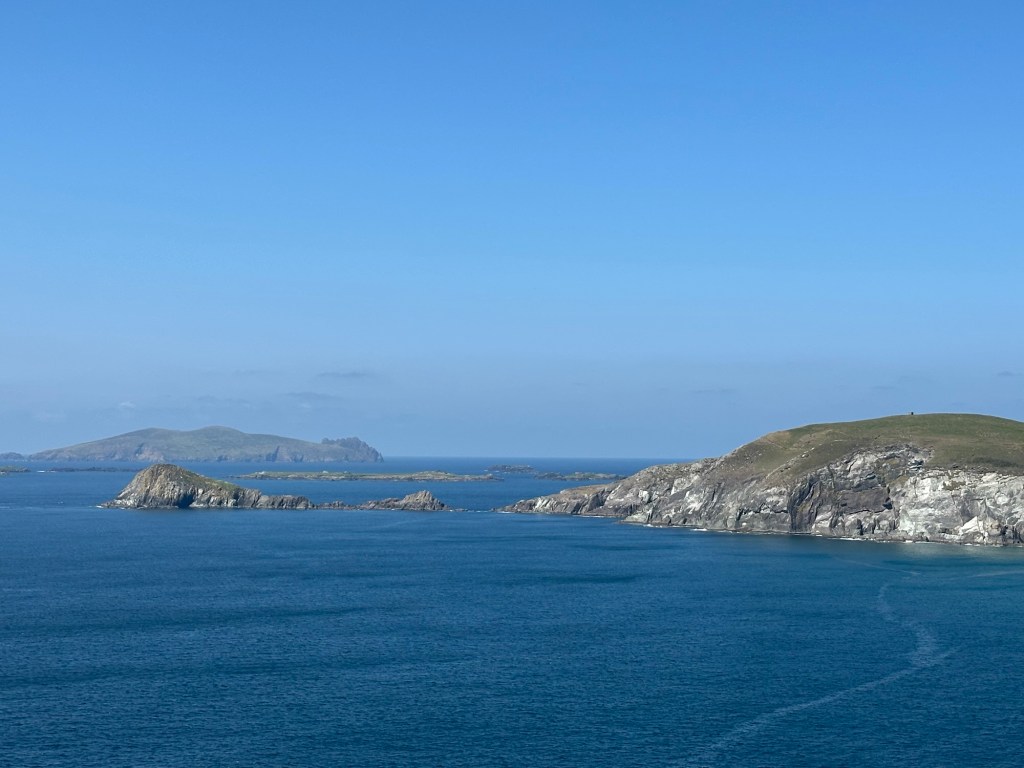
We travelled as far as Dunquin (Dun Chaoin) today, the westernmost village in Ireland.
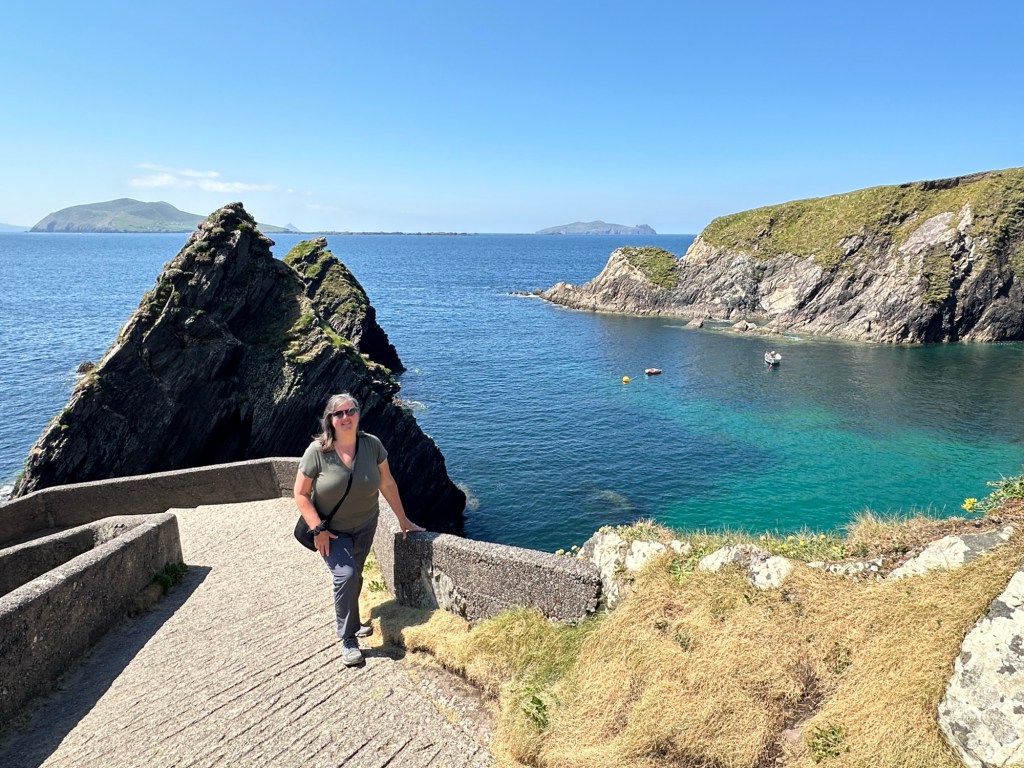
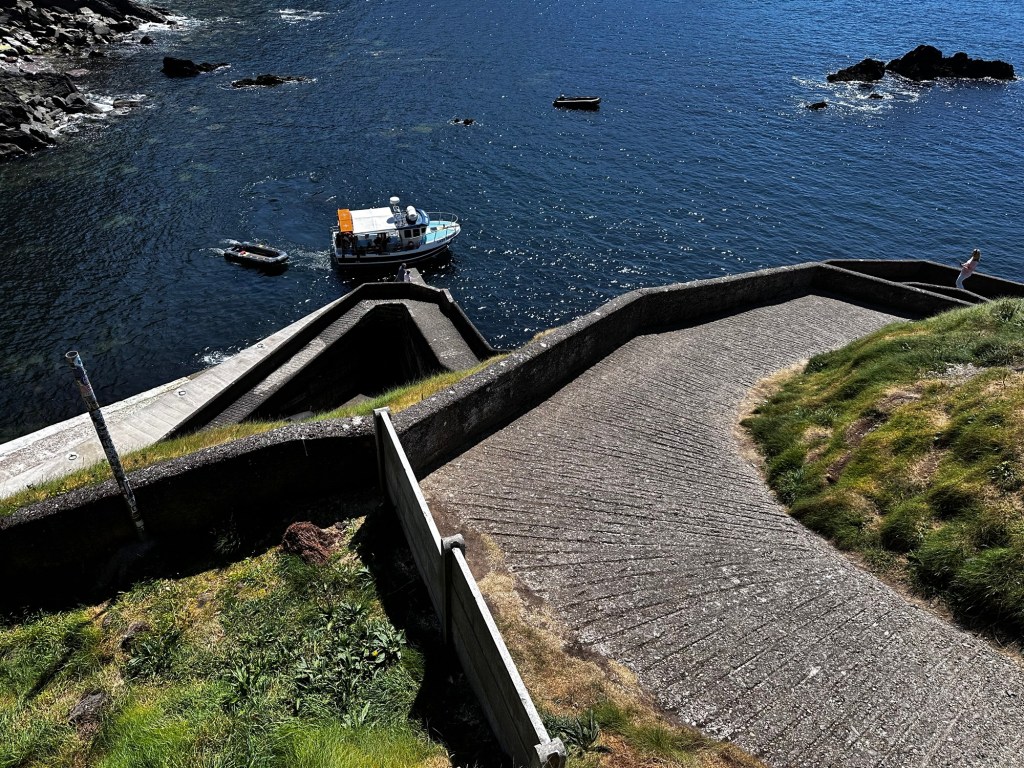

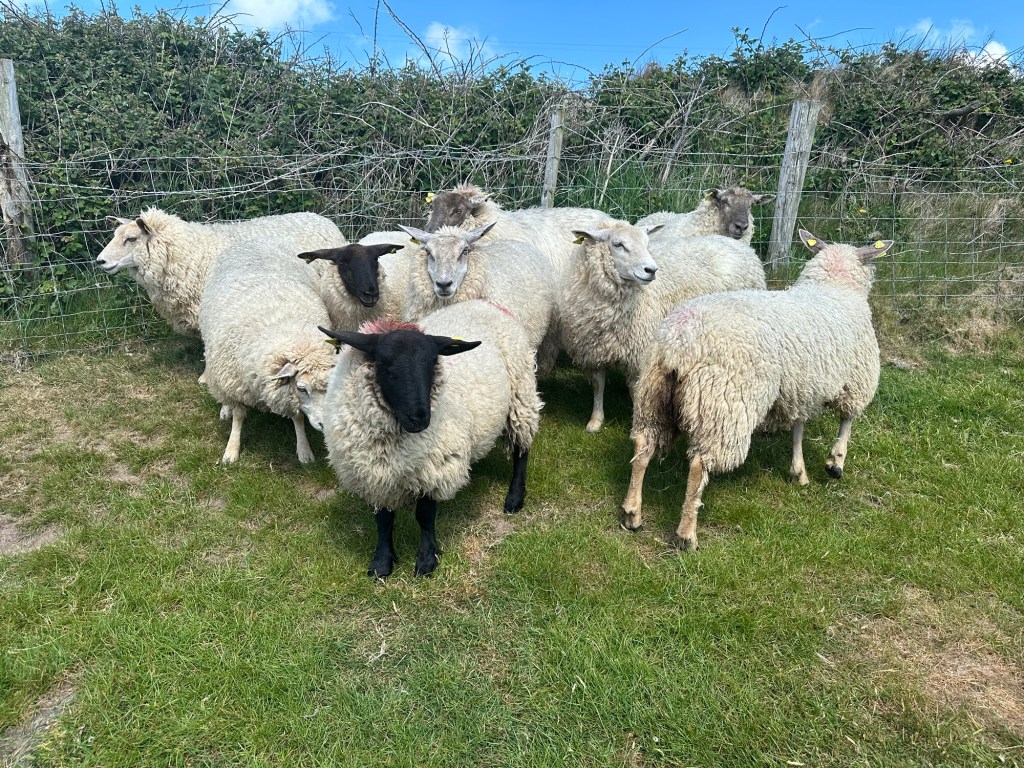
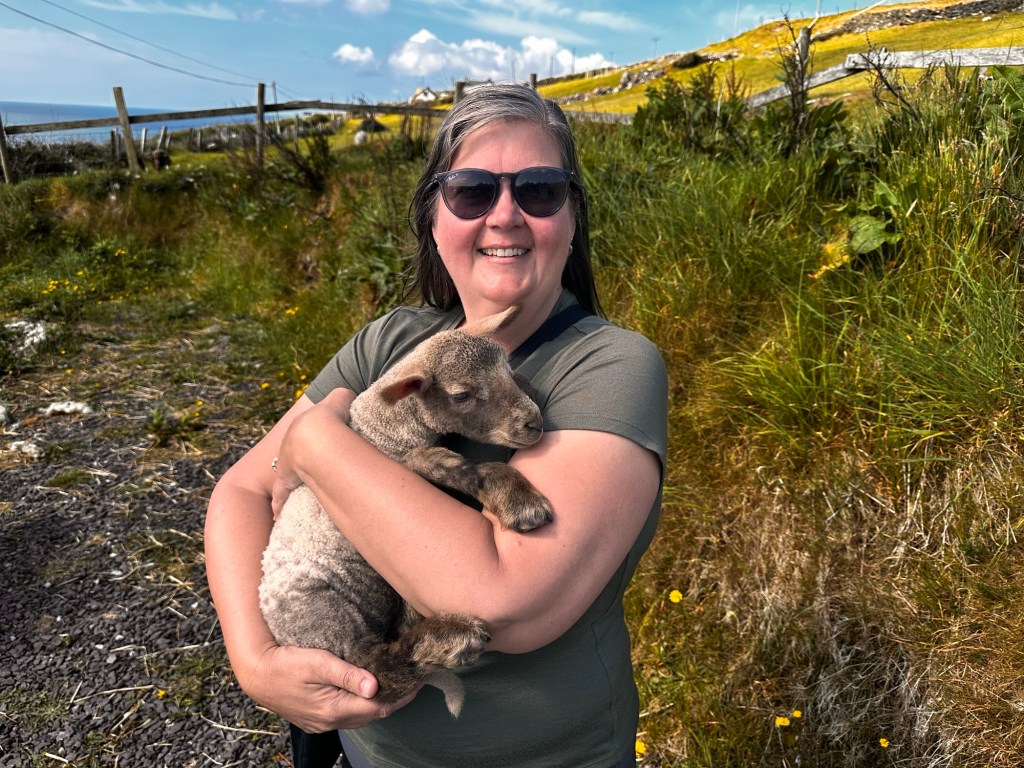
Our home for the night is The Old Irish Farmhouse where we got the opportunity to hold a baby lamb again.

Rustic-looking on the outside, this B&B is quite lovely inside. We were warmly welcomed by Aedan our host and his dog Dave. We had the opportunity to use the well-stocked shared kitchen to prepare our last self cooked dinner of the trip.



Leave a Reply