

with cool cloths after each cruise!
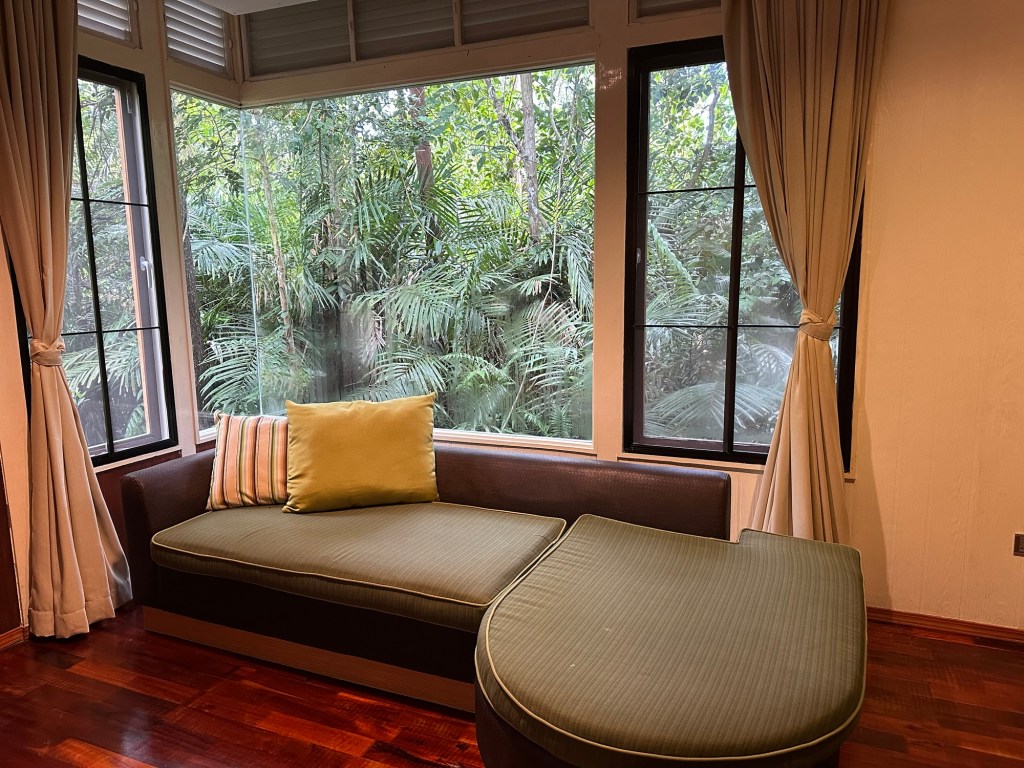
Over the last three days, we have had good weather in the morning followed by an incredible rain squall in the early afternoon which clears by the time we head out on the boat for our afternoon cruise!
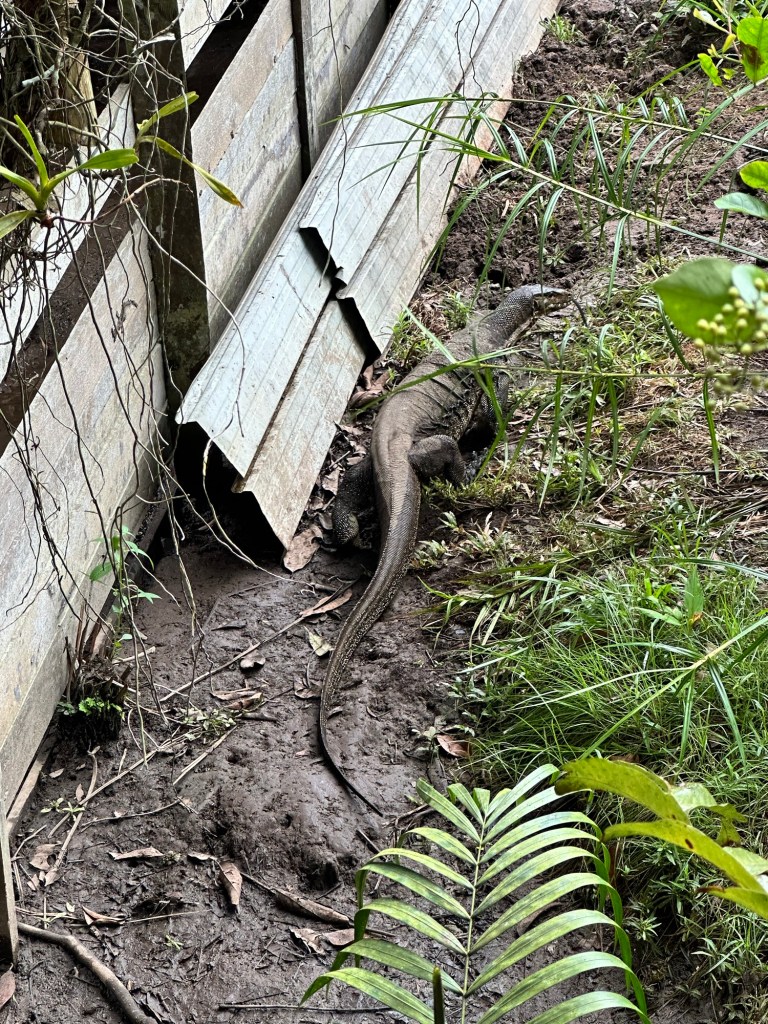
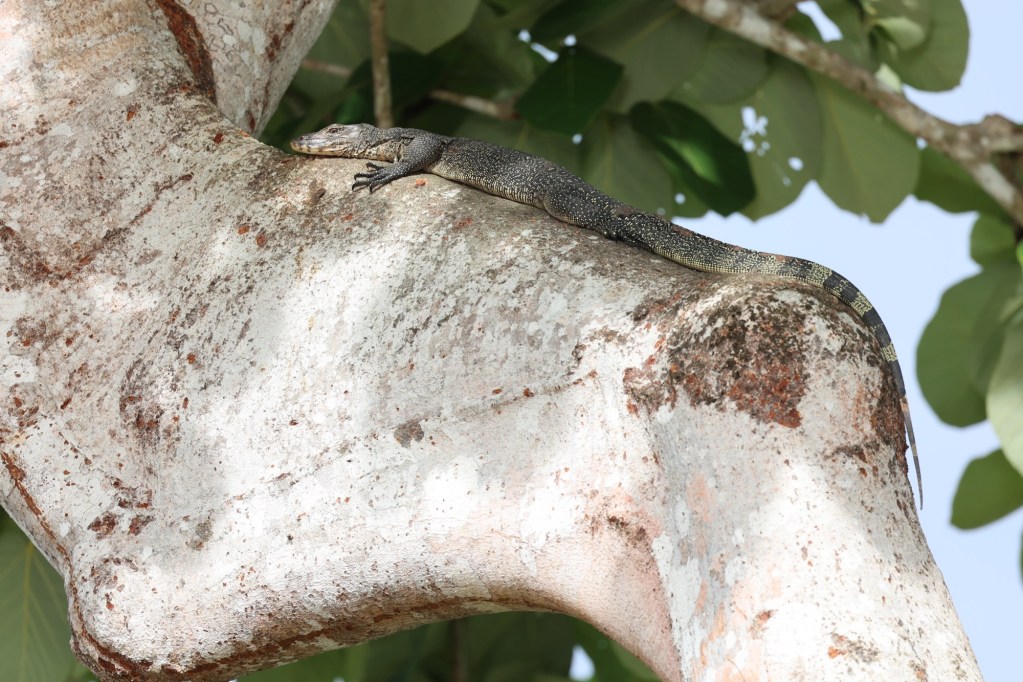
Our second full day on the Kinabatangan River proved to be great for wildlife spotting.
Proboscis monkeys, or Dutch monkeys, are endemic to the island of Borneo. Their name in Malay is orang belanda, or Dutchman, as the local people thought this red faced, big-nosed, pot-bellied monkey resembled the Dutch colonists!
Proboscis monkeys typically inhabit forests with new(er) coastal swamps, rivers or lakes.

Sexual dimorphism is pronounced in these monkeys; the male has a distinctive long pendulous nose and a particular mix of colours – gray legs, white belly and tail, orange coat.

His nose can be up to 4 inches long and often hangs lower than his mouth!

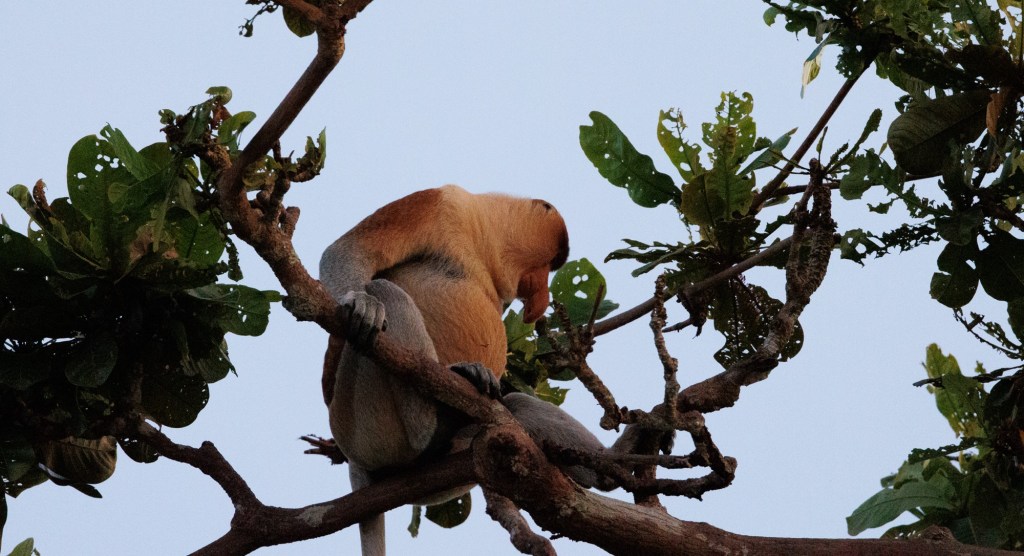
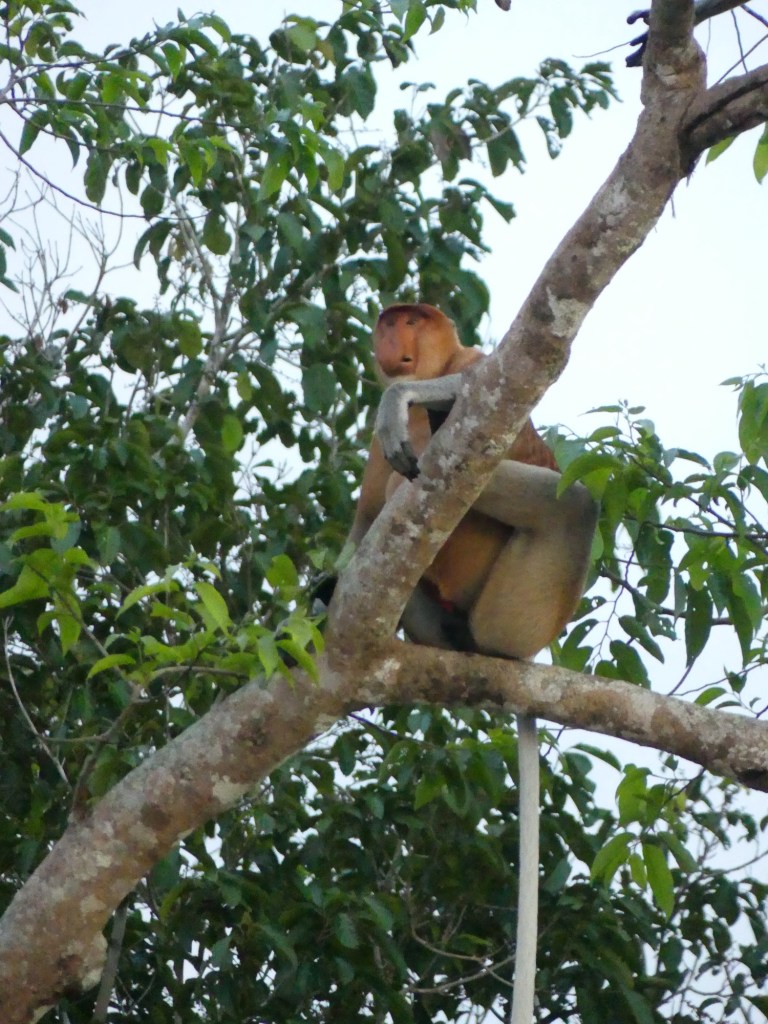
The female is half the size of the male with a shorter and more upturned nose.


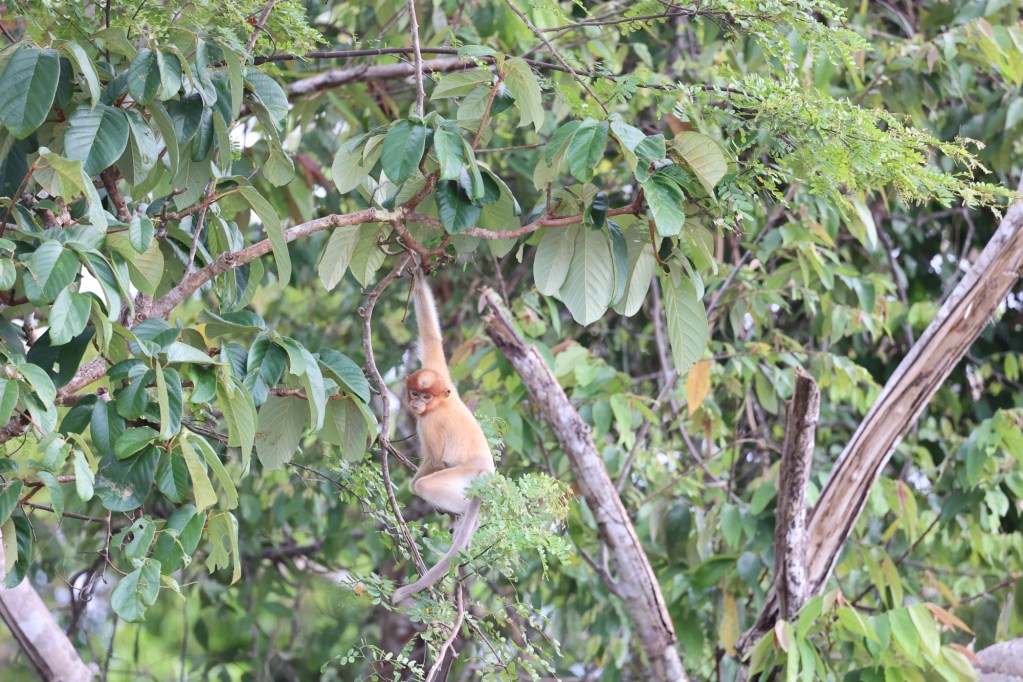
Proboscis monkeys are known to make various vocalizations, made louder by the increased size of their nose.
The Silver Langur or Silvery Leaf Monkey is found commonly in coastal, mangrove and riverine forests. They have grey-tipped, dark brown or black fur, giving a uniform silvery appearance. Their tails are longer than their bodies, but non-prehensile.

The white morph of the Silver Leaf Monkey is a genetic anomaly that appears in less than 15% of the population, almost all of those along the Kinabatangan River.
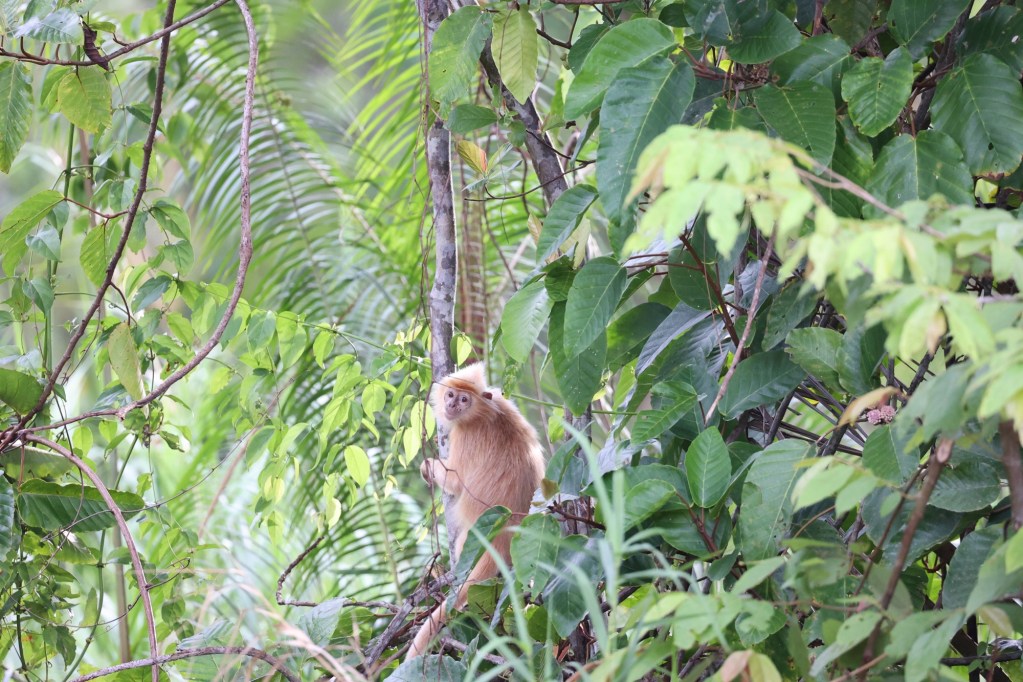
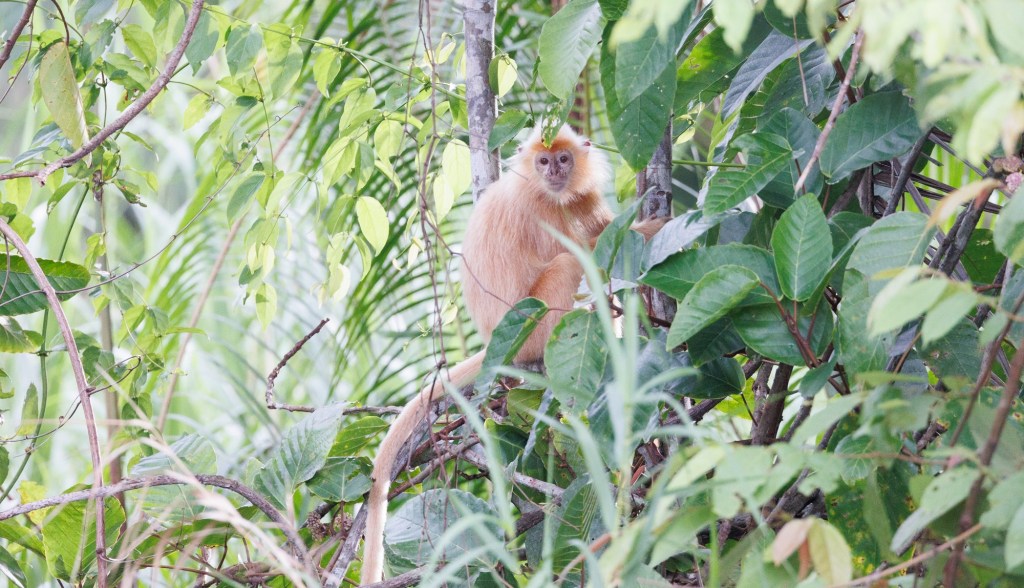
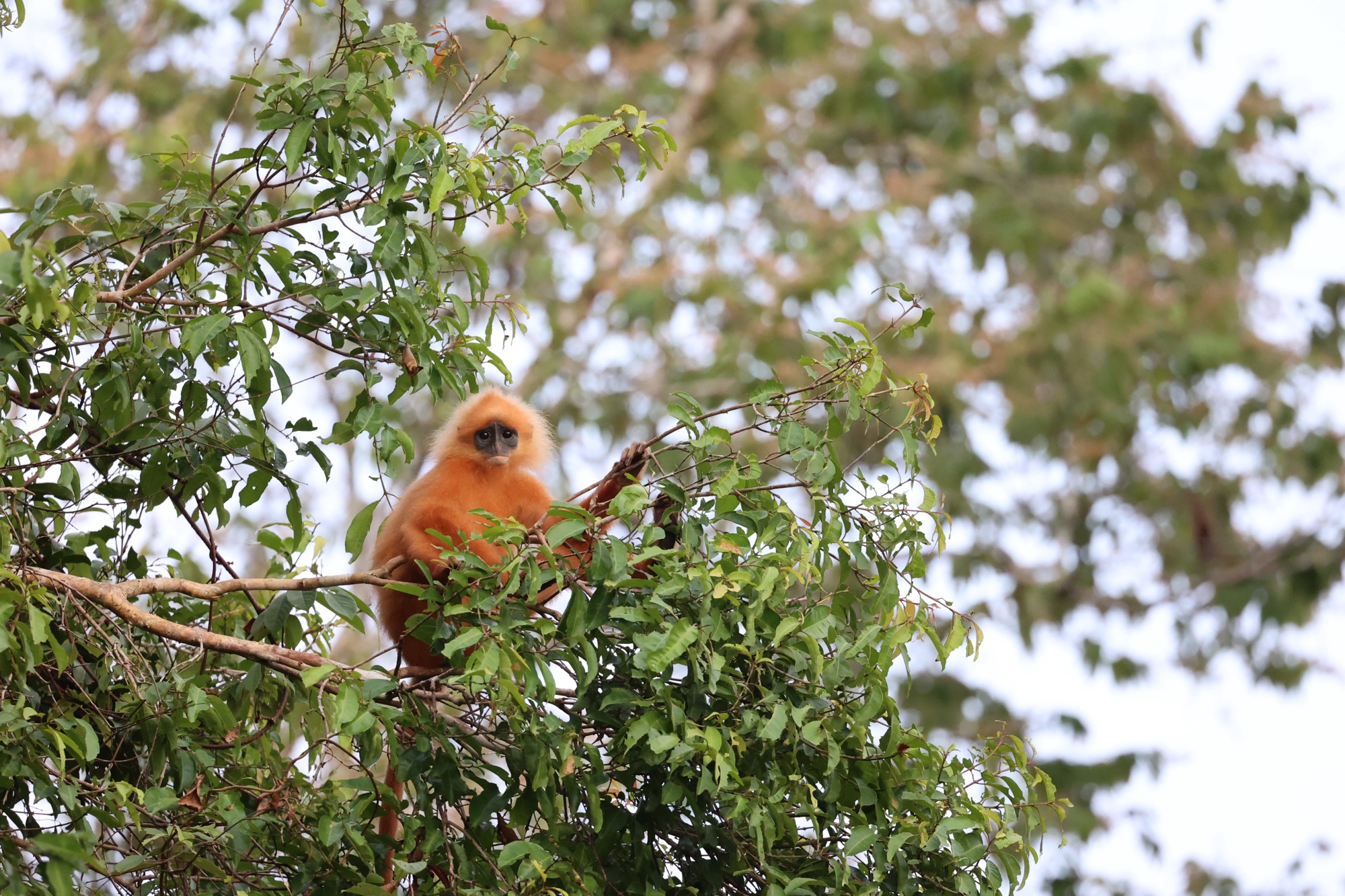
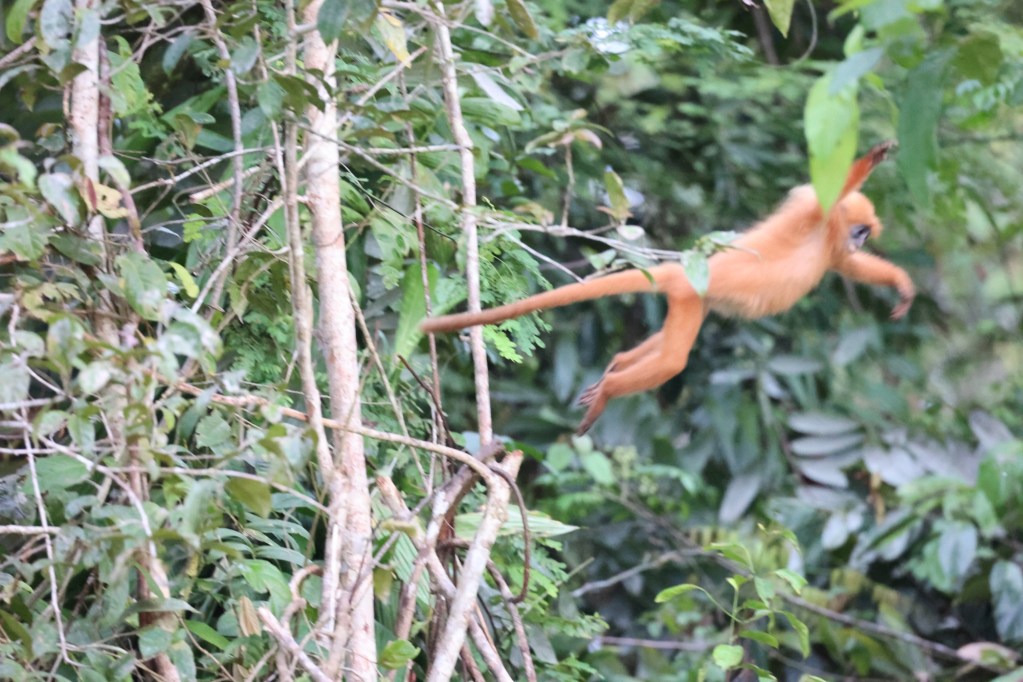
The Maroon Langur or Red Leaf Monkey is endemic to the island of Borneo.
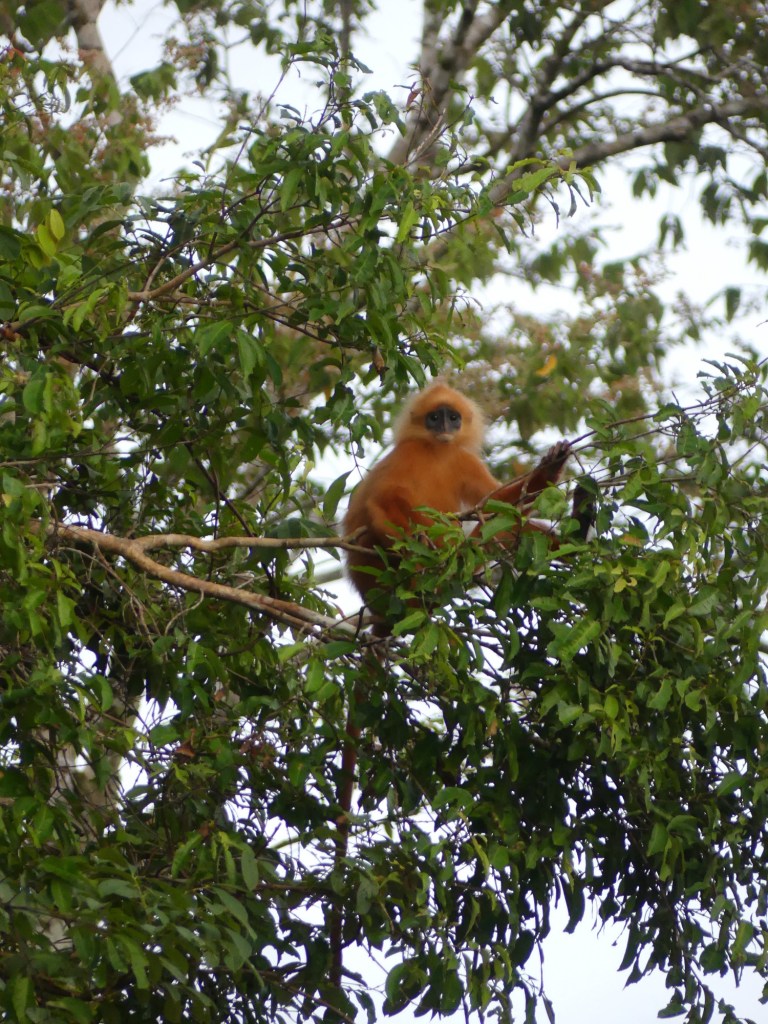
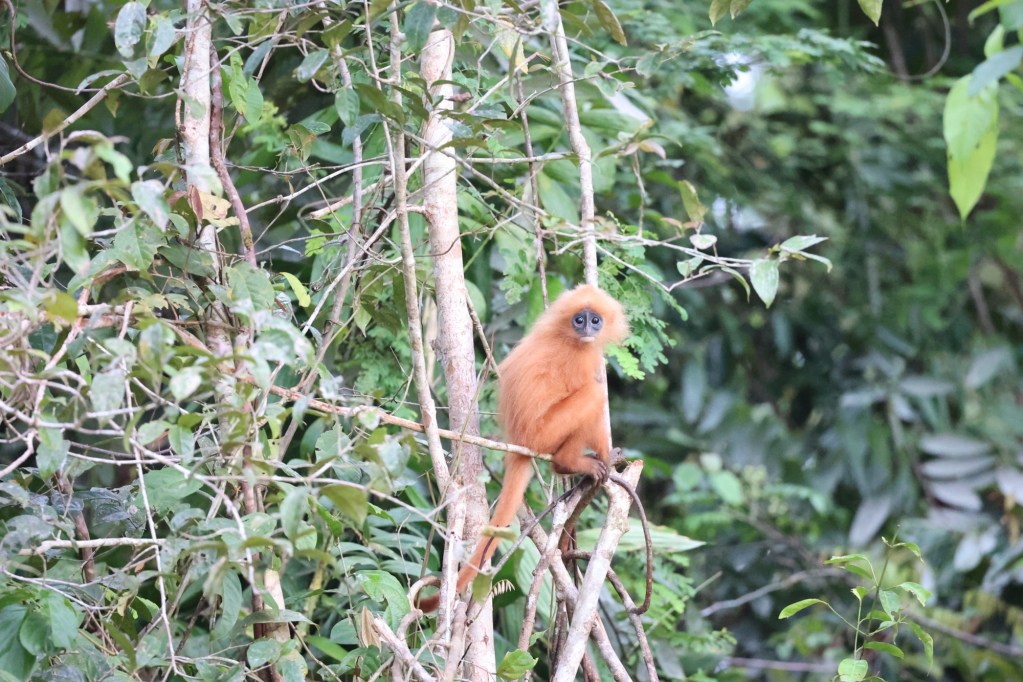
These guys put on quite a show for us, leaping from tree to tree.

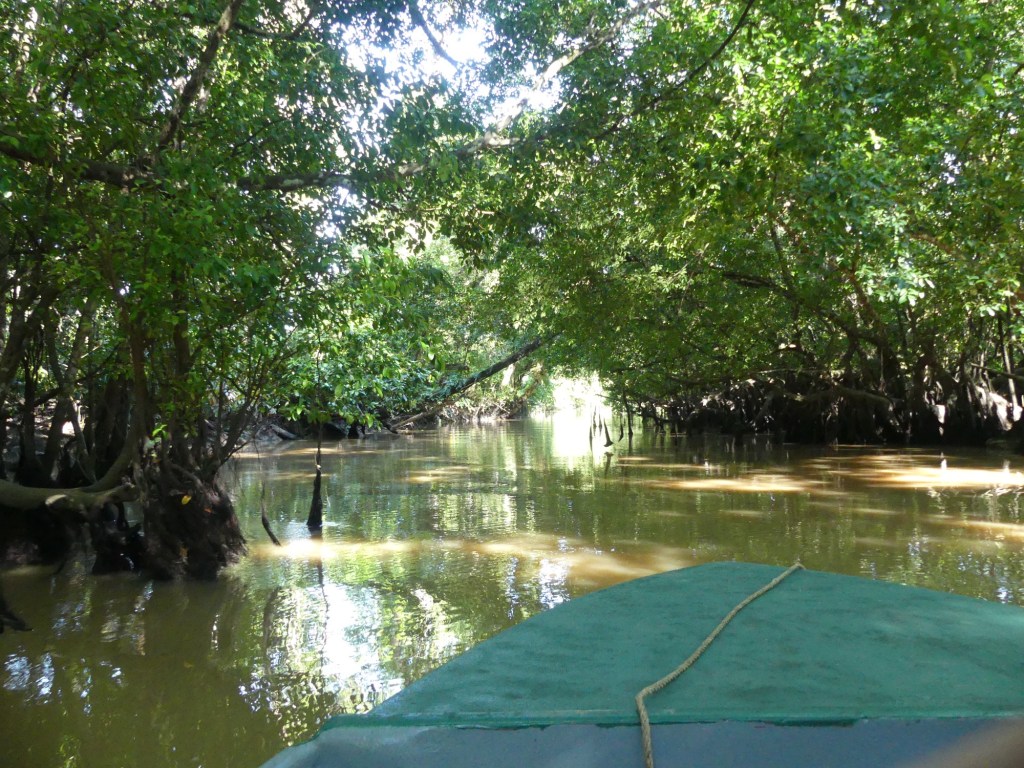
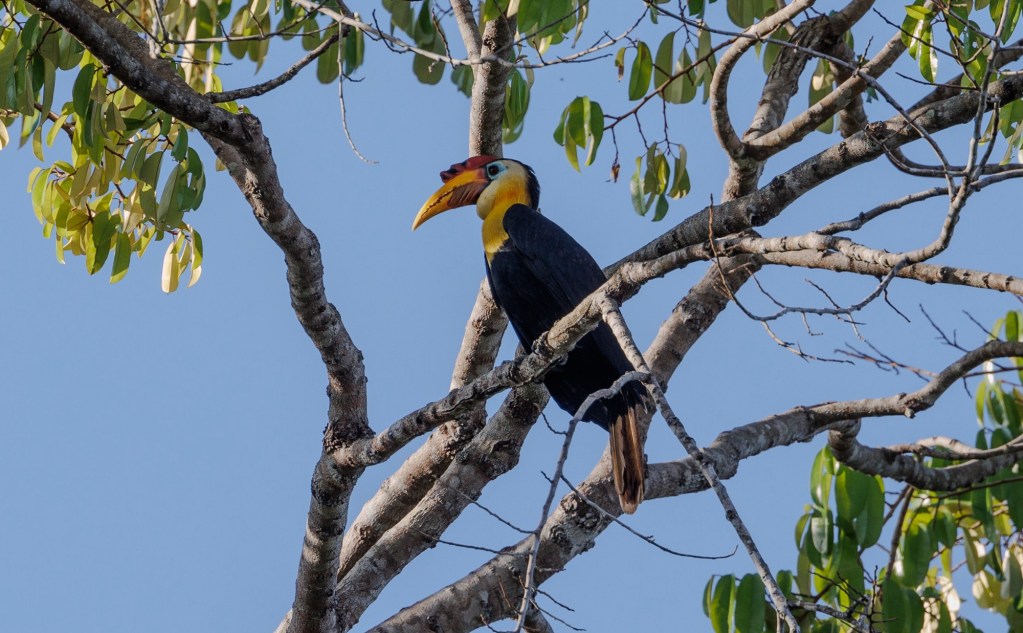
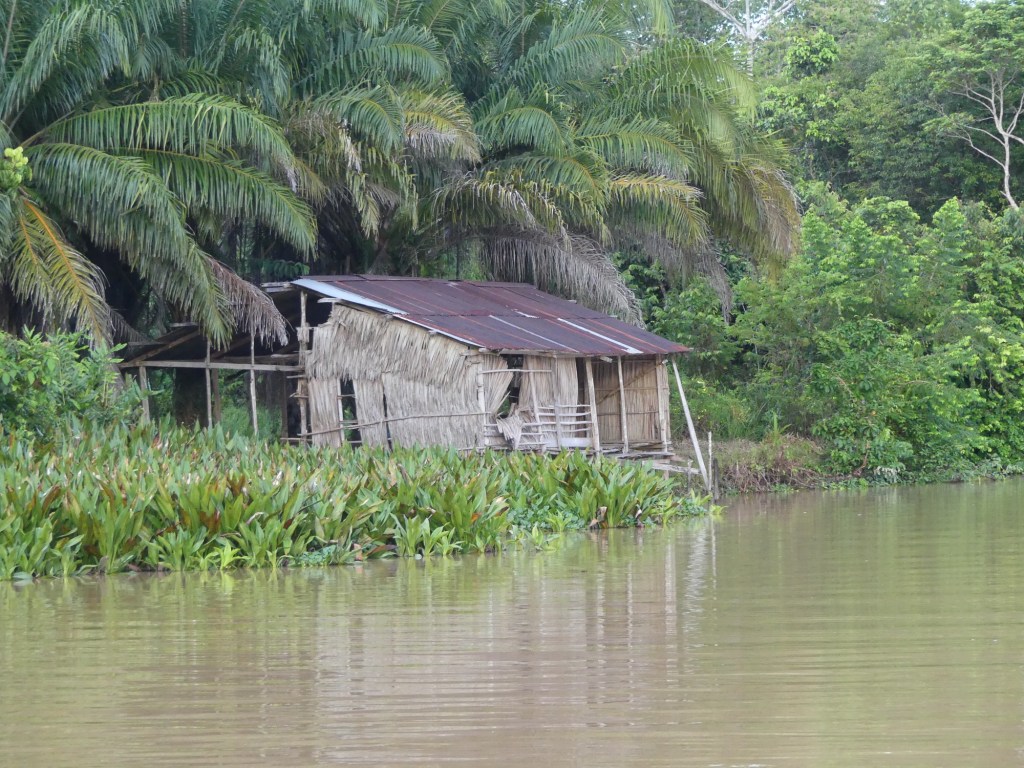
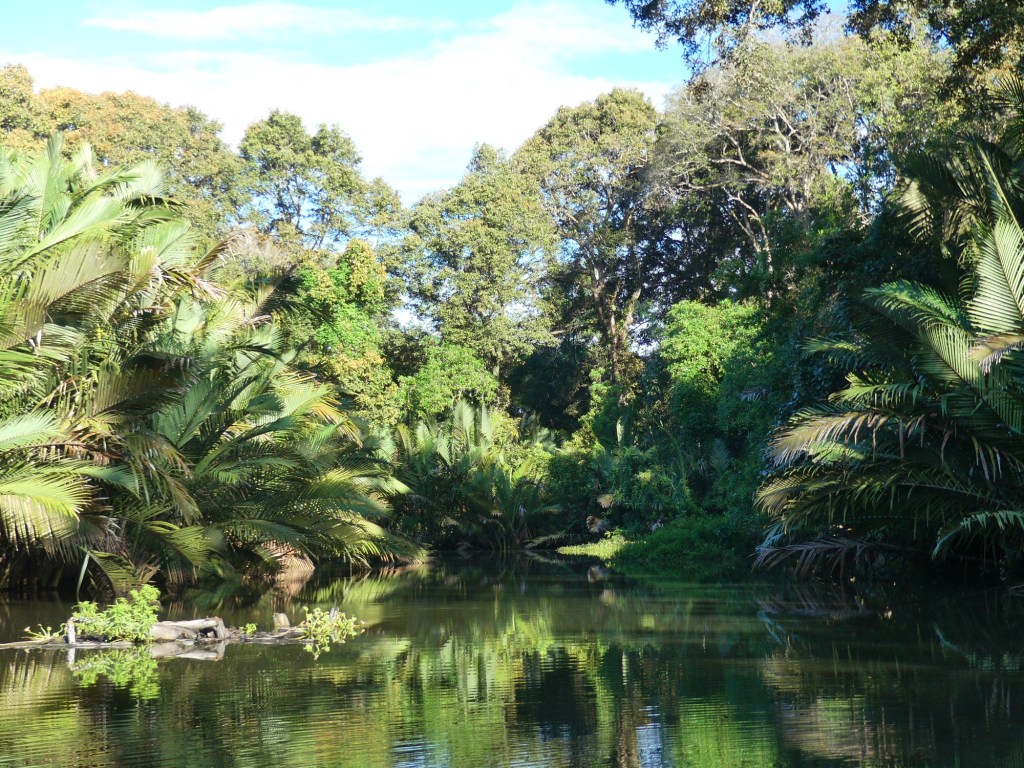
In the afternoon, we explored a few small river palm-lined tributaries and a large oxbow lake in search of a variety of animals.
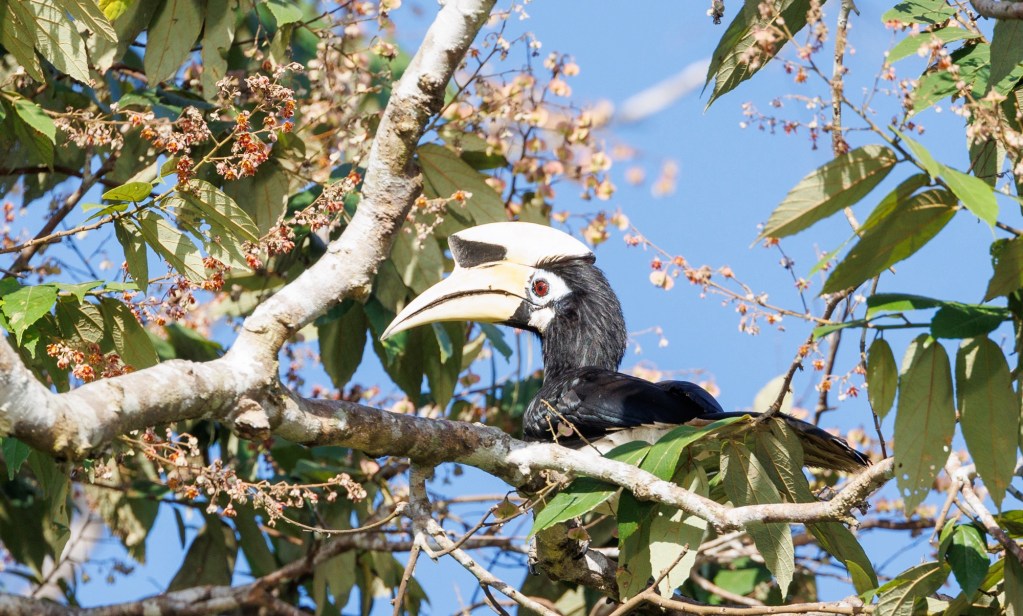
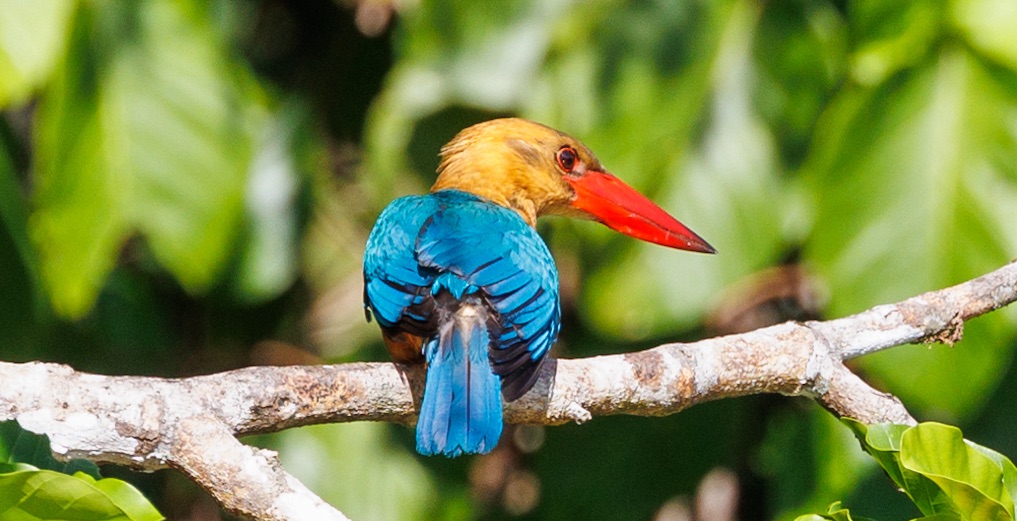
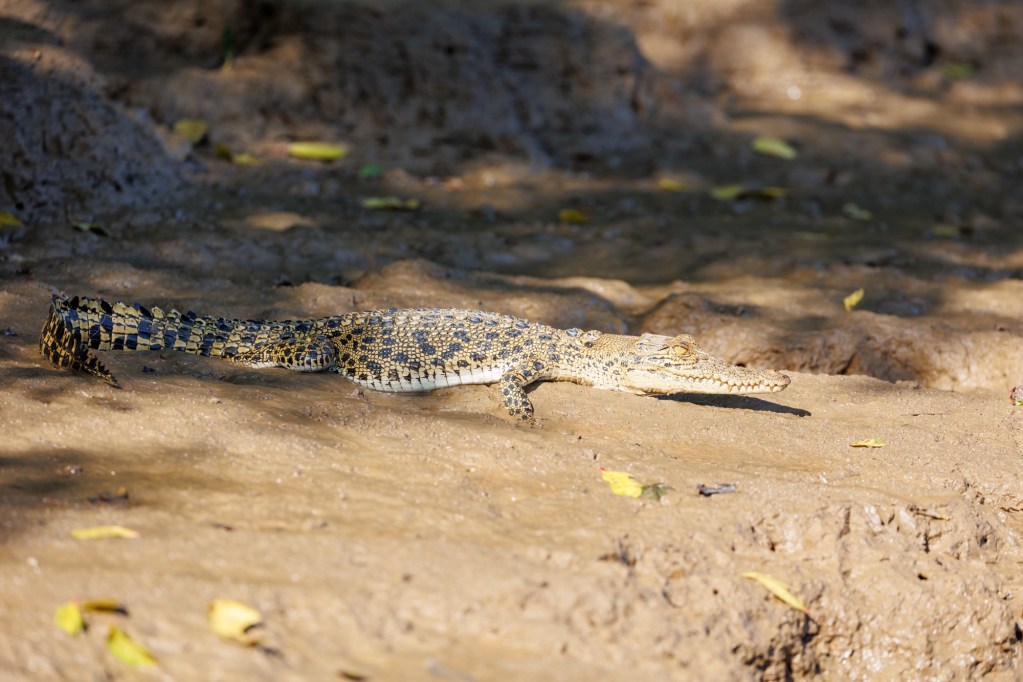
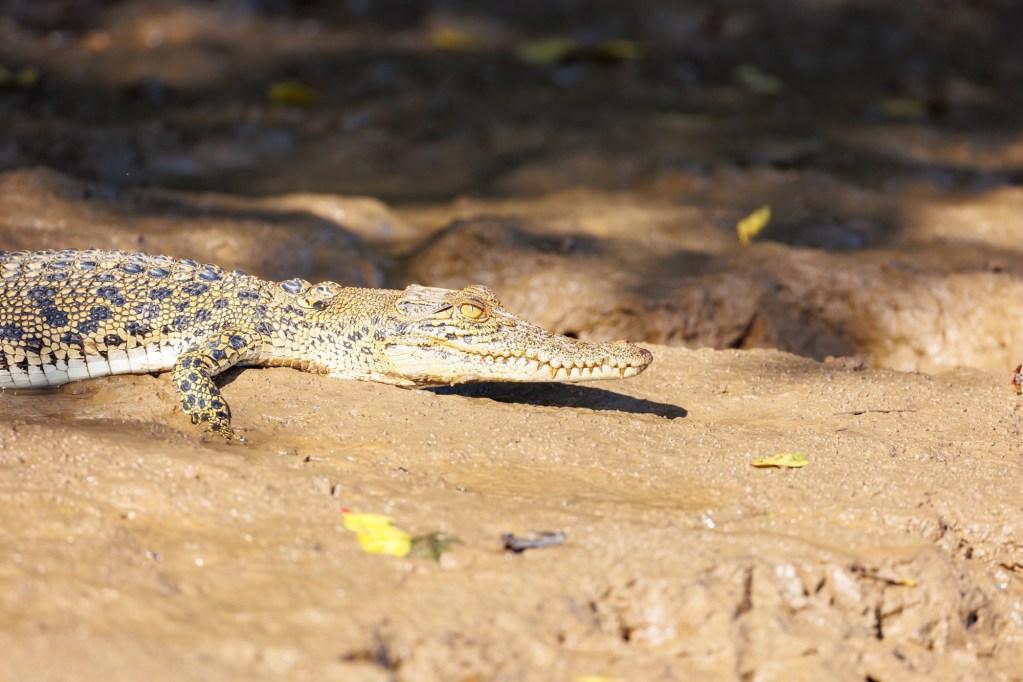
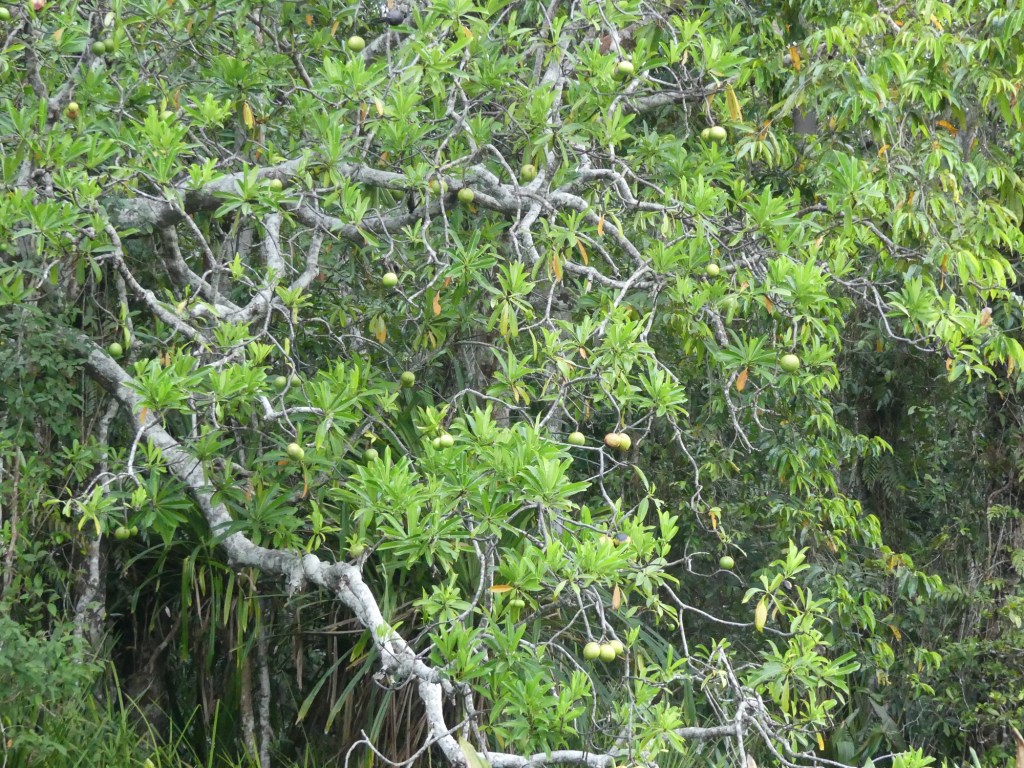
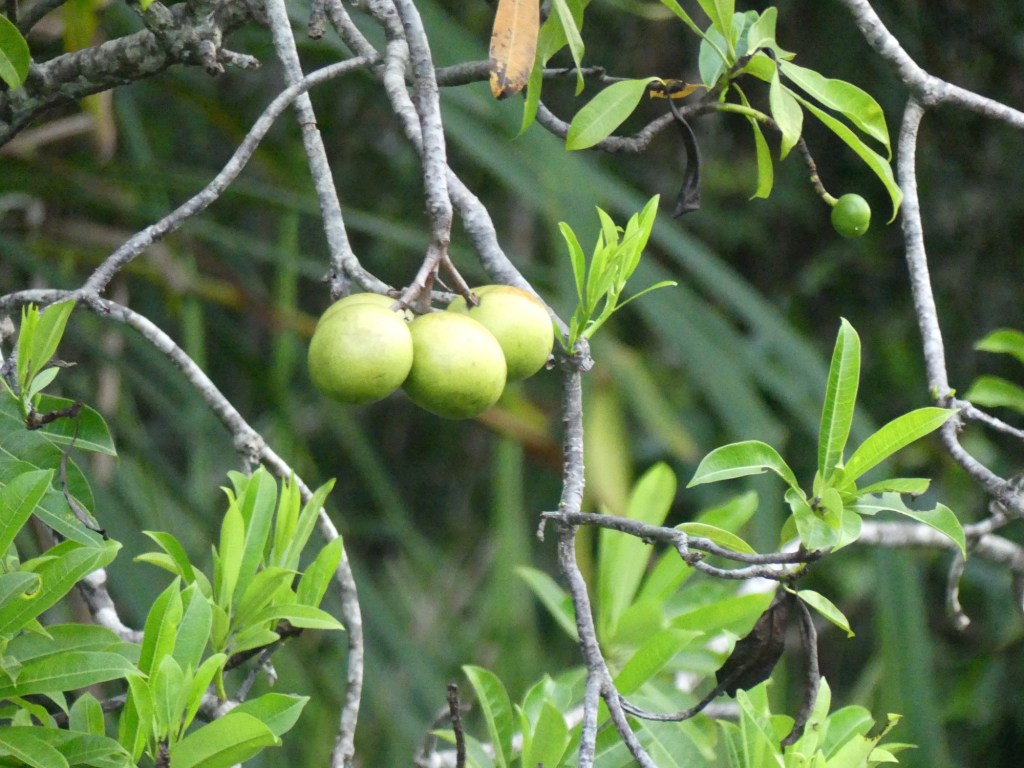
Cerbera manghas or Sea Mango is a type of rubber tree. The fruit contains a poisonous chemical called Cerberus. Often called the suicide apple, it has been eaten throughout SouthEast Asia as a method of suicide.

with afternoon tea and coffee
Tomorrow we leave the river and head to Tabin Wildlife Reserve.



Leave a Reply