

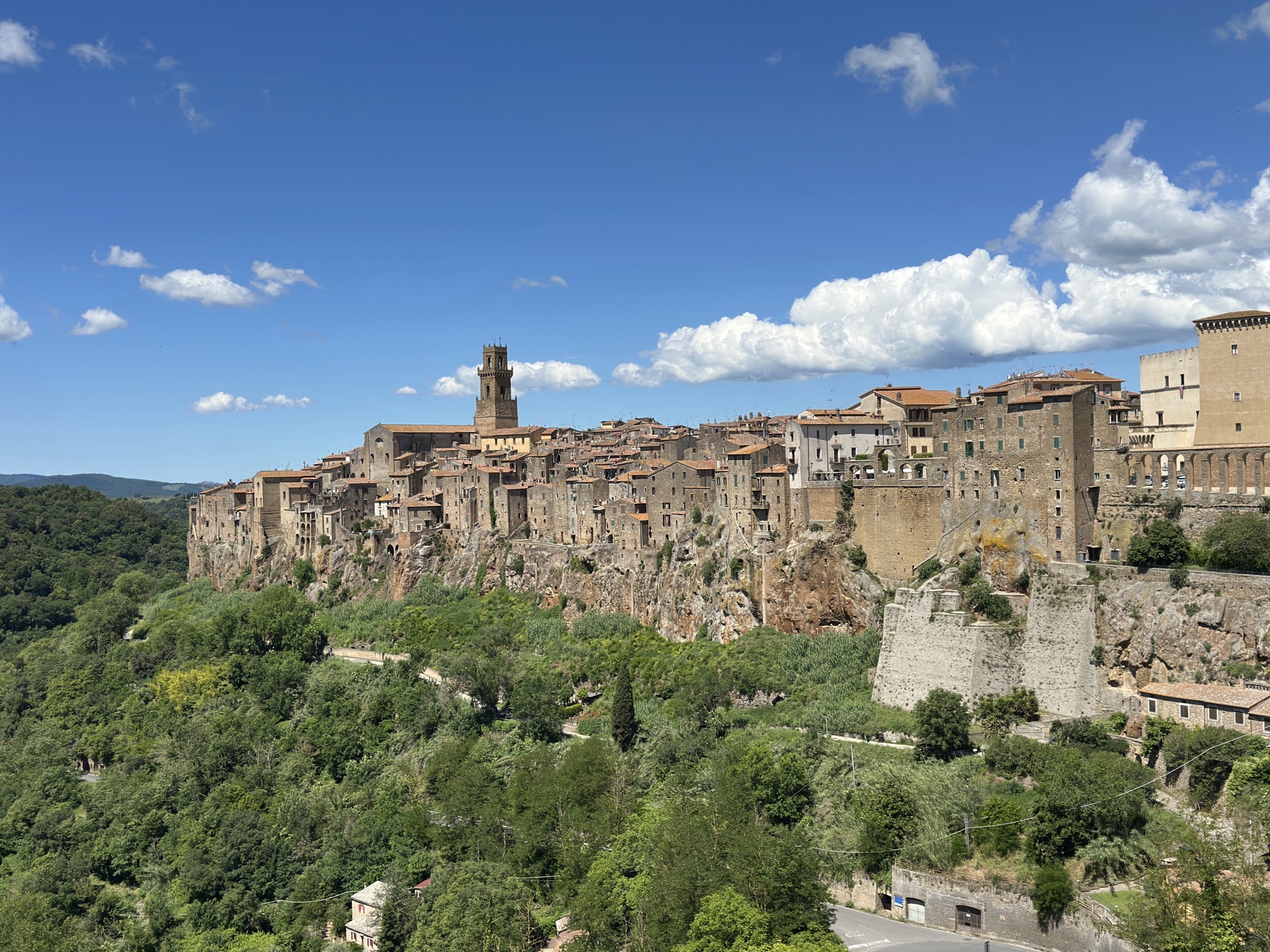
Pitigliano is a walled clifftop town partially carved out of volcanic tufo rock.

The town is best known as “the little Jerusalem” due to the historical presence of a Jewish community (mostly people fleeing Rome during persecution).
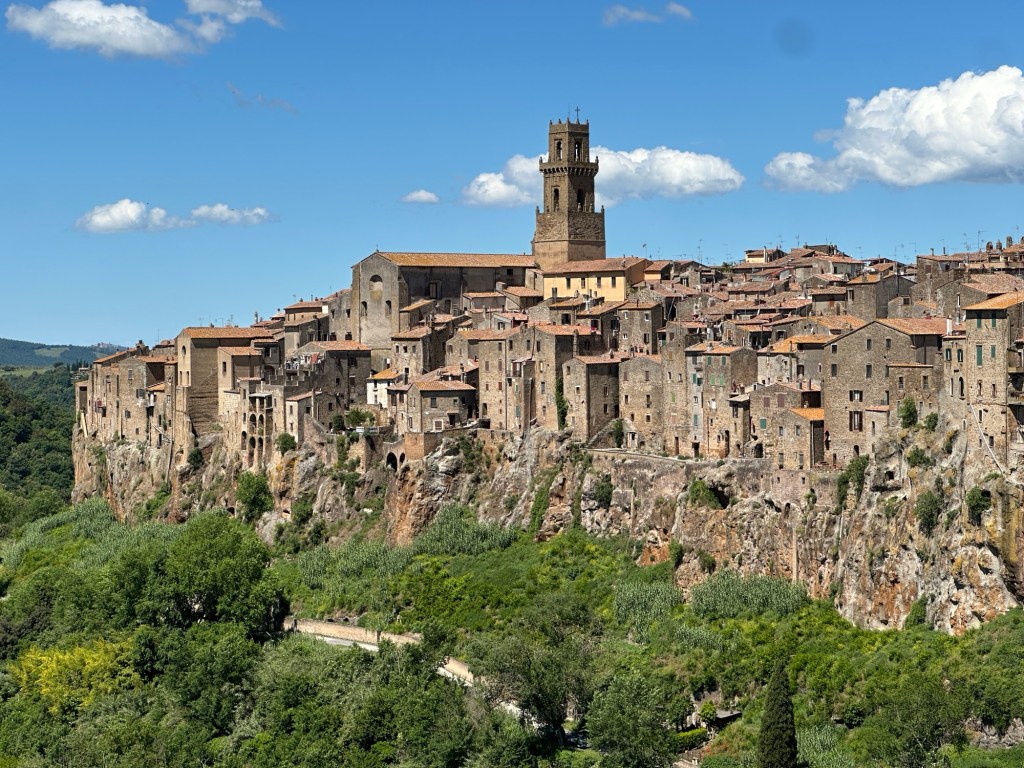
There is evidence the town was occupied in 1061 AD but was likely inhabited during the Etruscan times (8th C BC)
The walls around the town are very well preserved

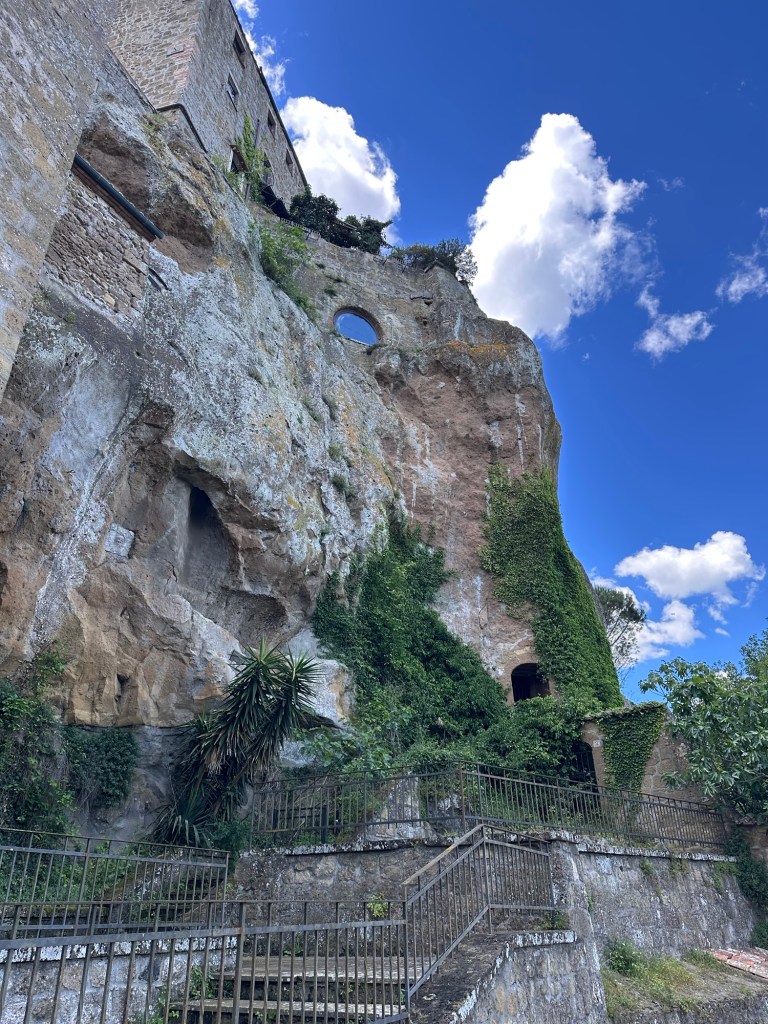
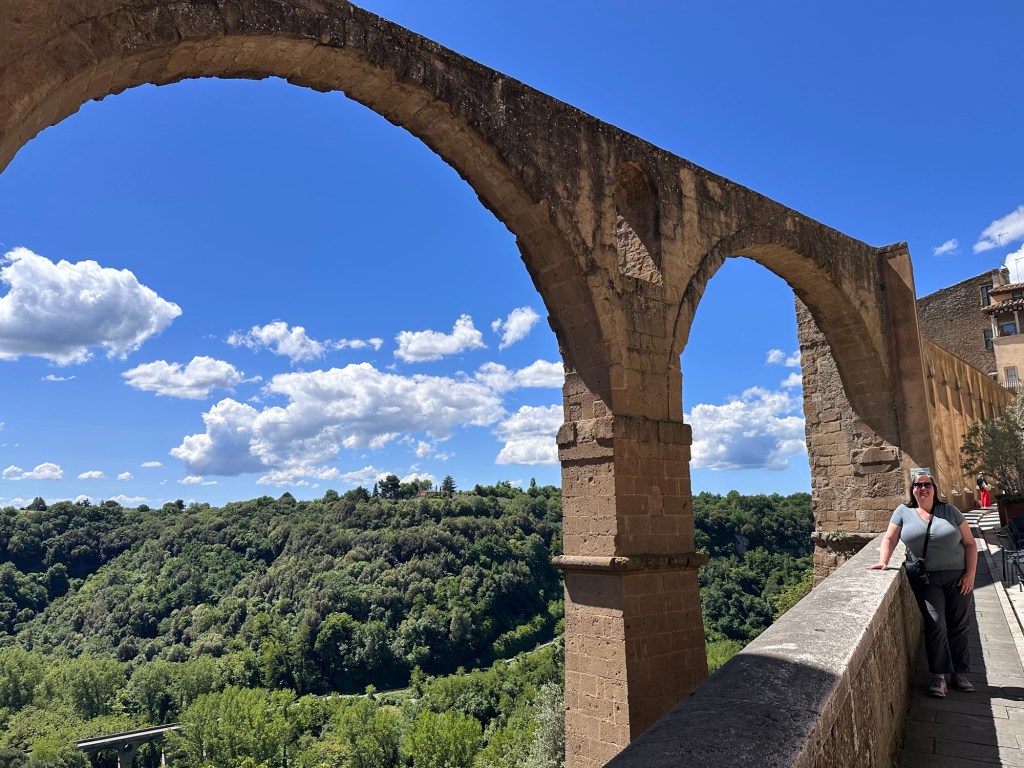
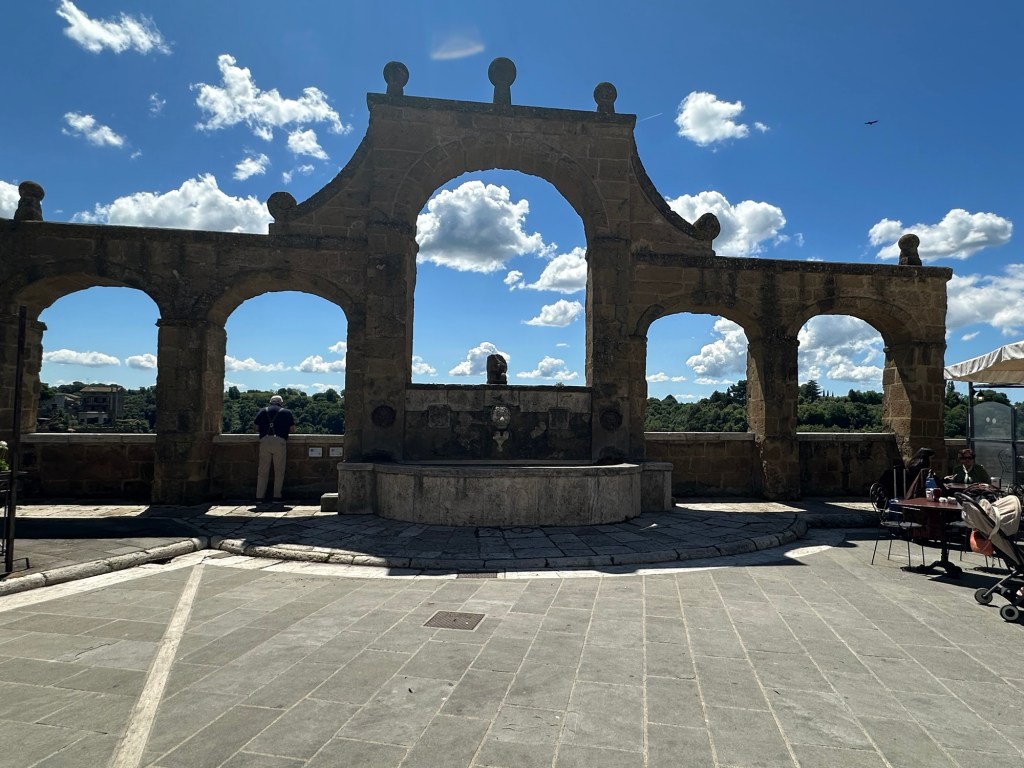
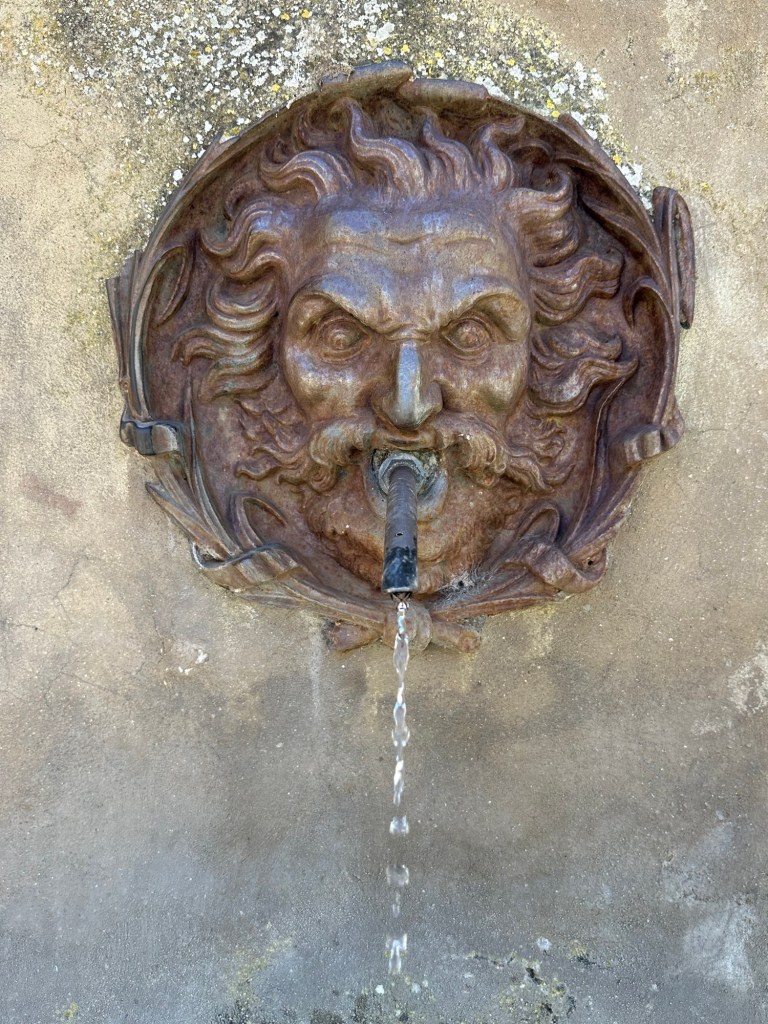
The Medici aqueduct at the centre of the town was built in the mid 16th C to supply fresh water, and prevent the need to constantly carry water up the hill


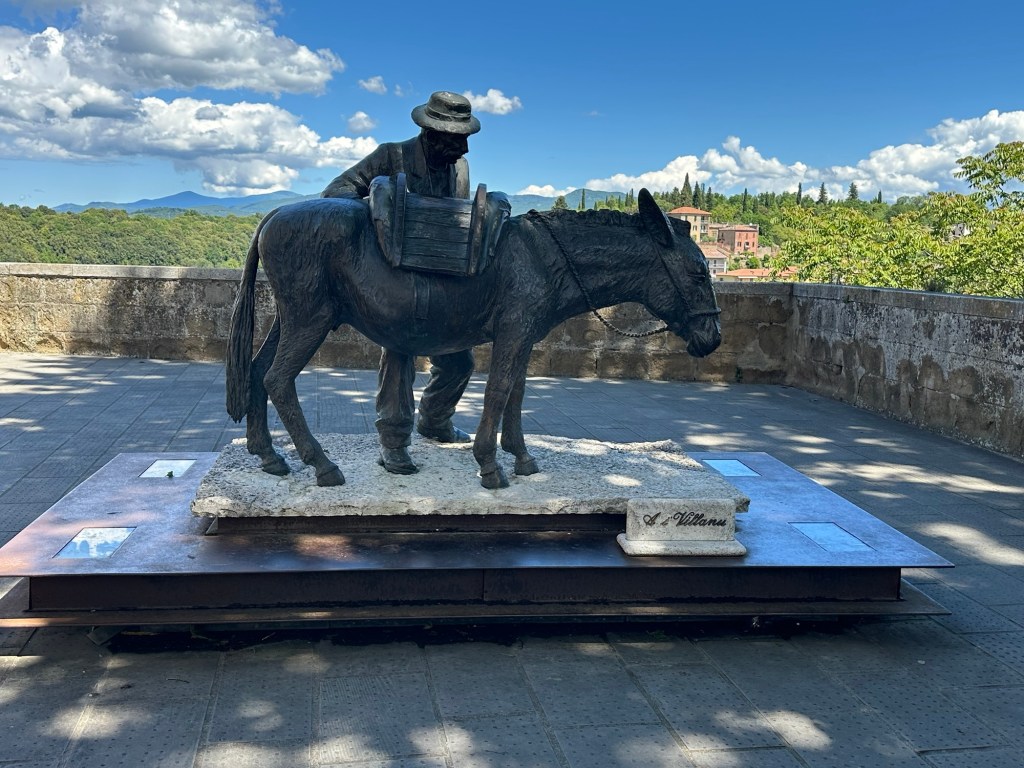
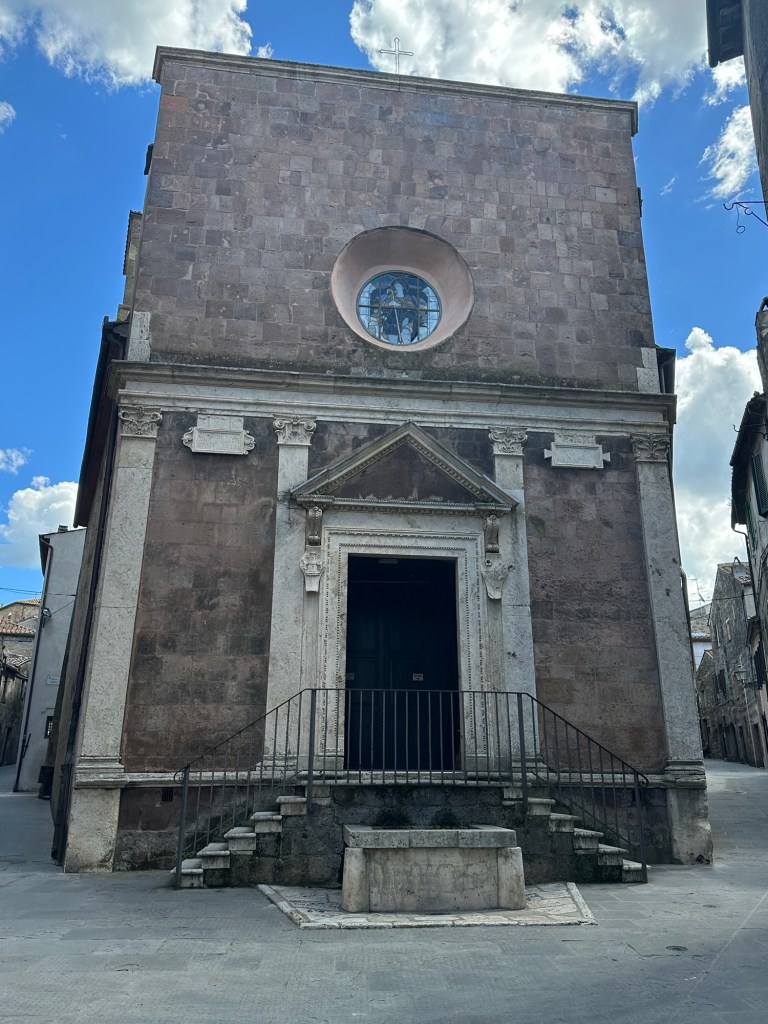
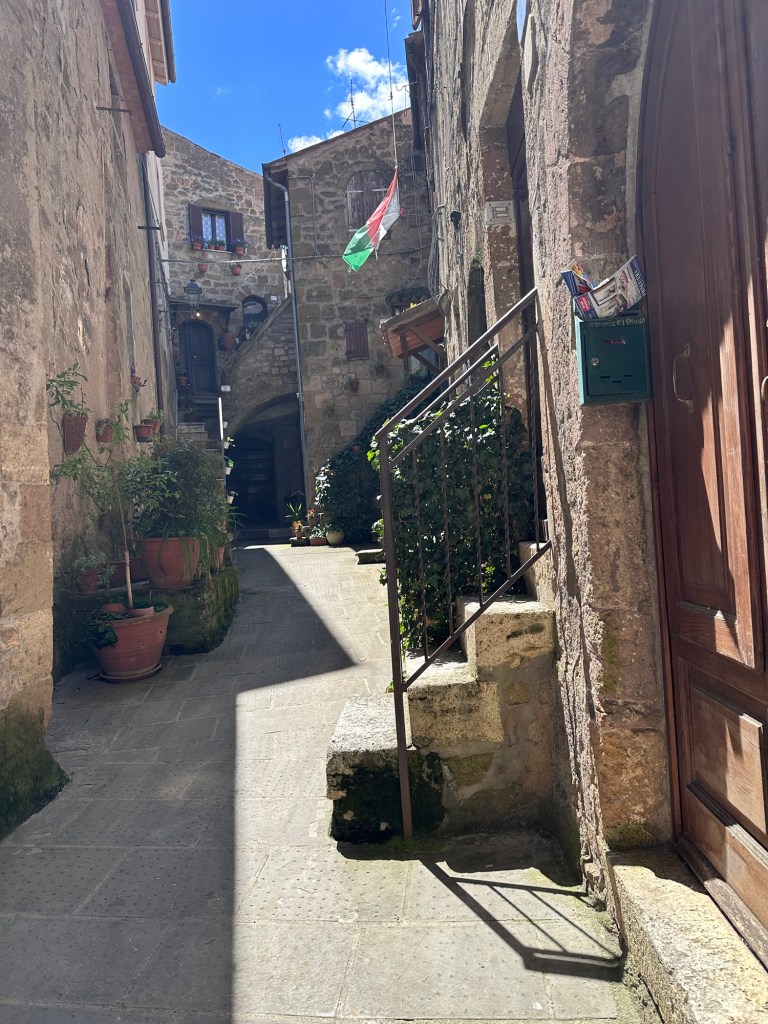
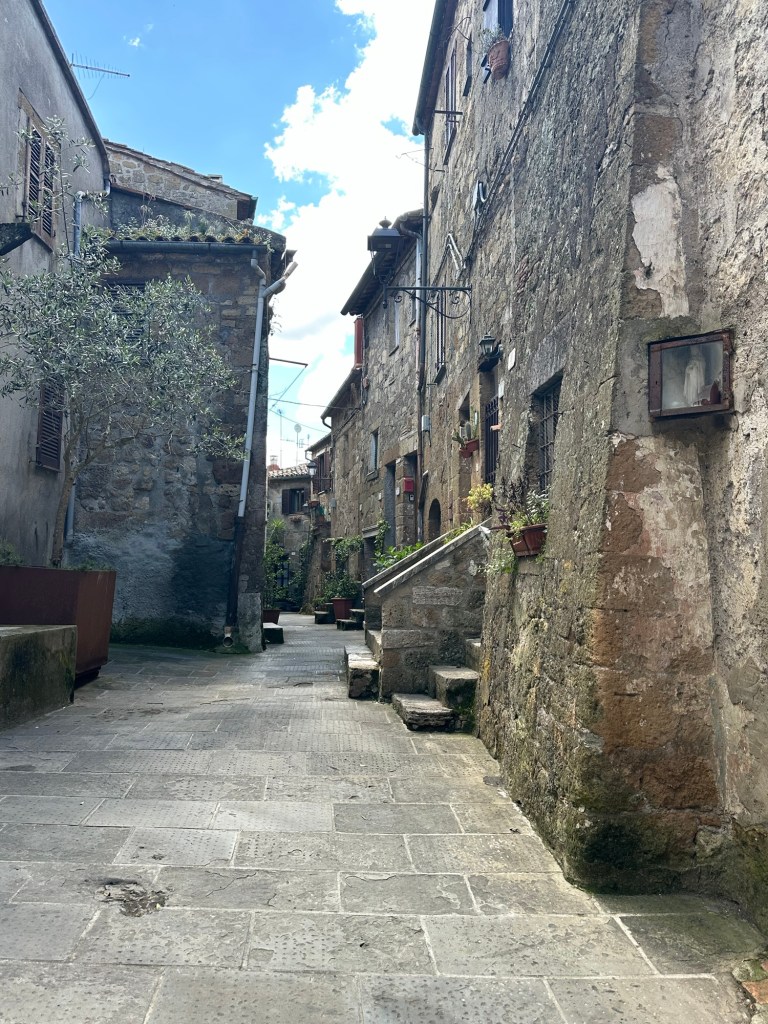
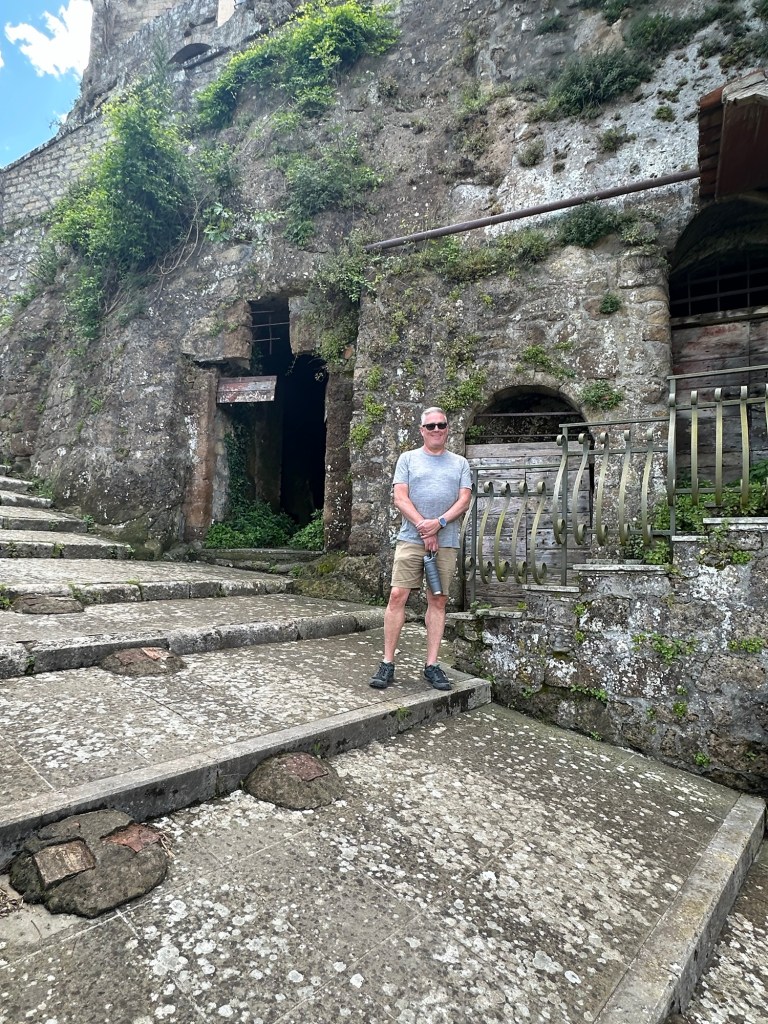
From the far end of town, a staircase leads out the Porta Sovana down to the foot of the mesa.


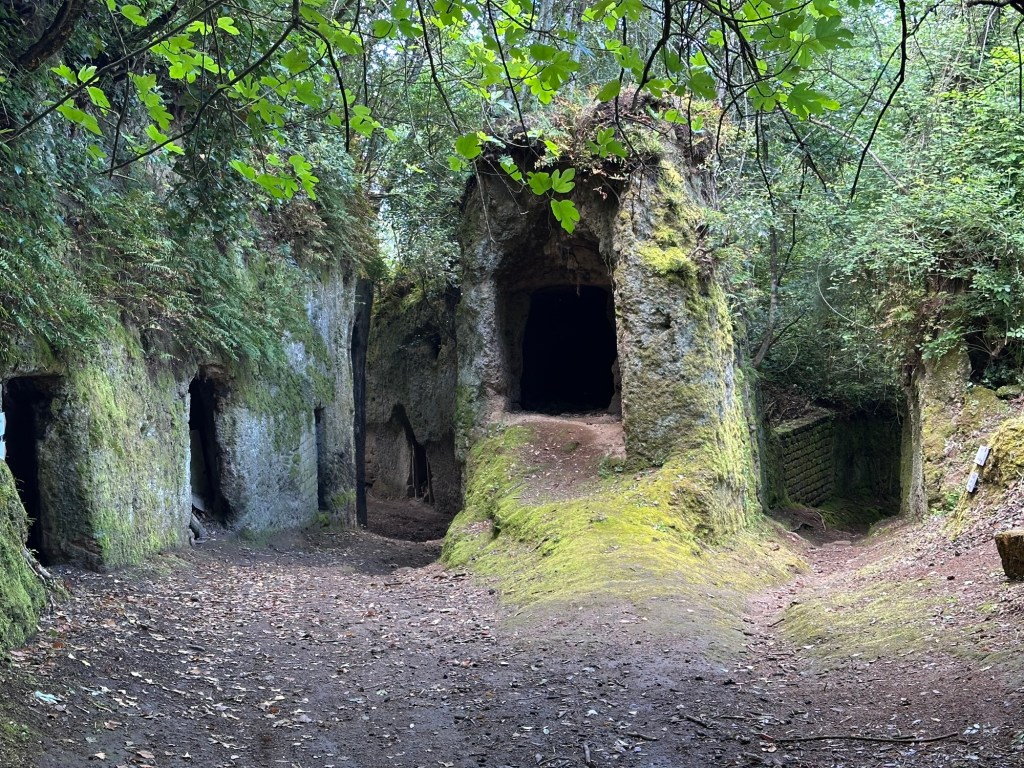
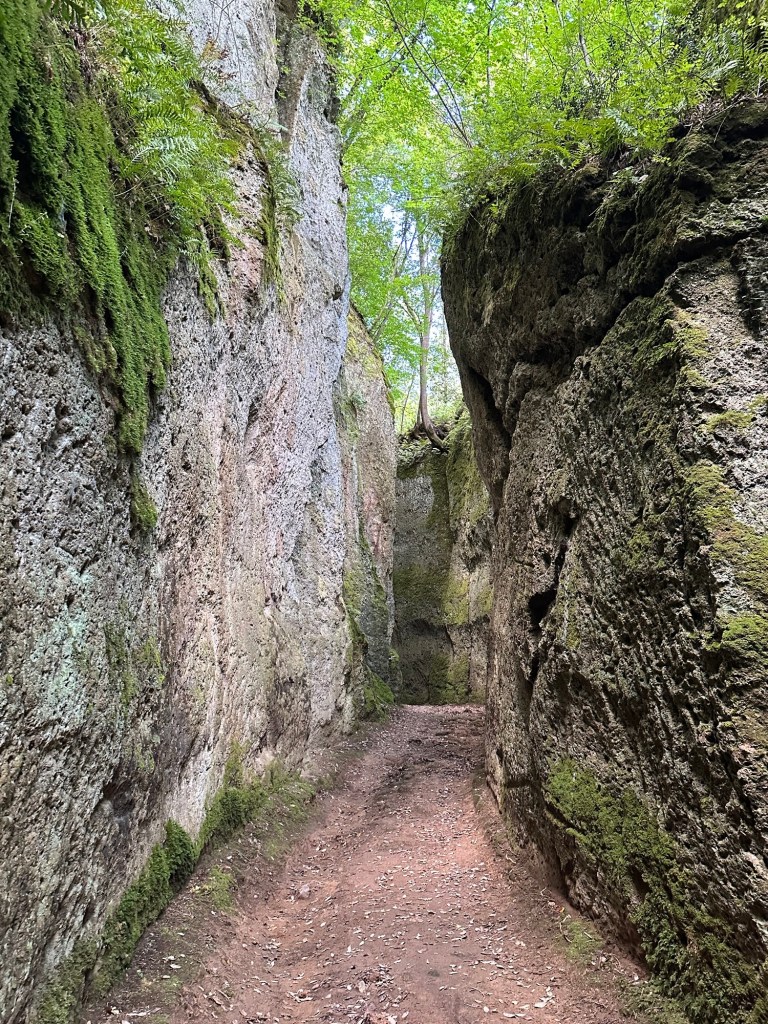
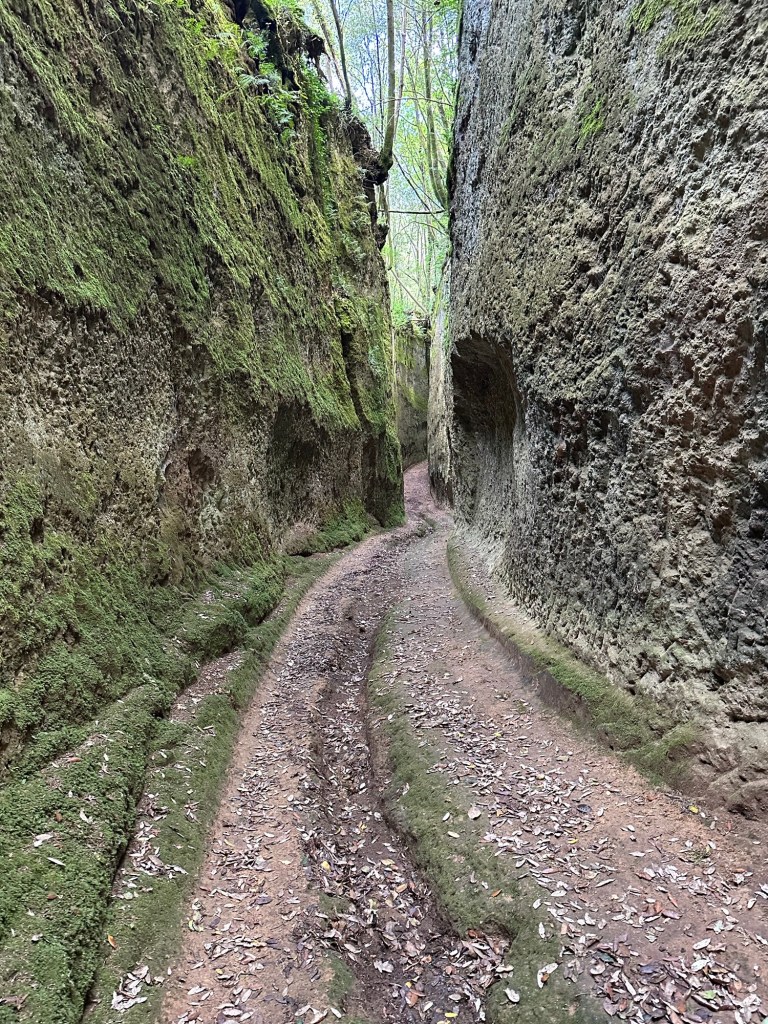
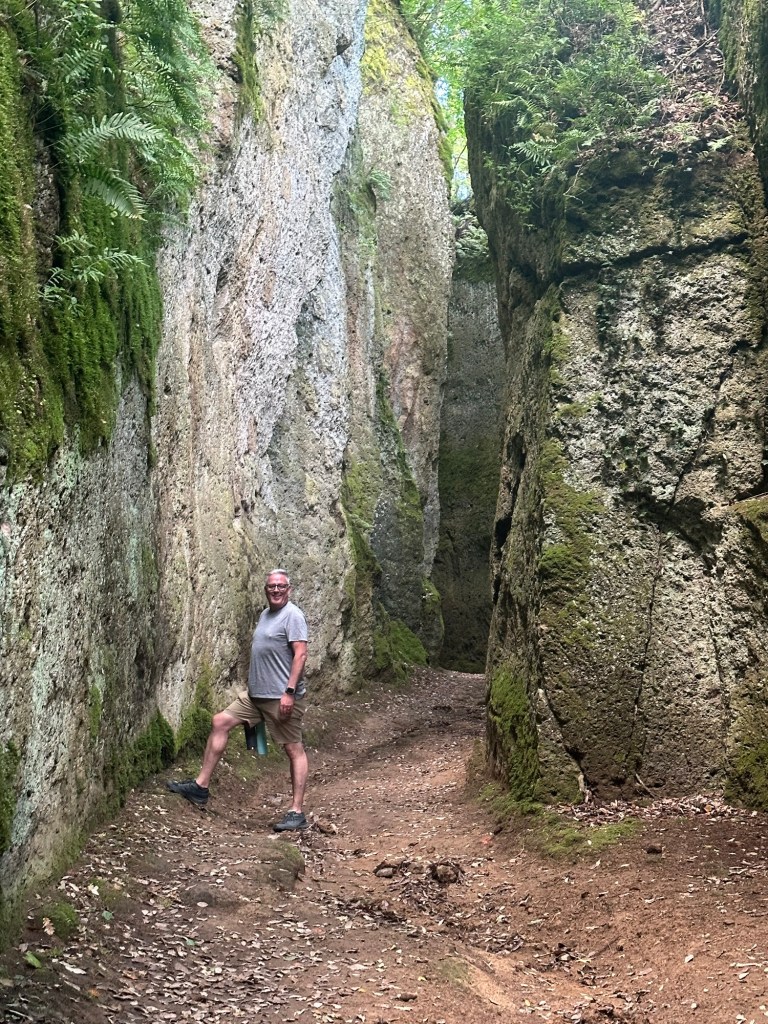
The Etruscan Via Cava (Cave or Sunken Roads) are 2000 year old pre-Roman roads hand cut into the limestone.
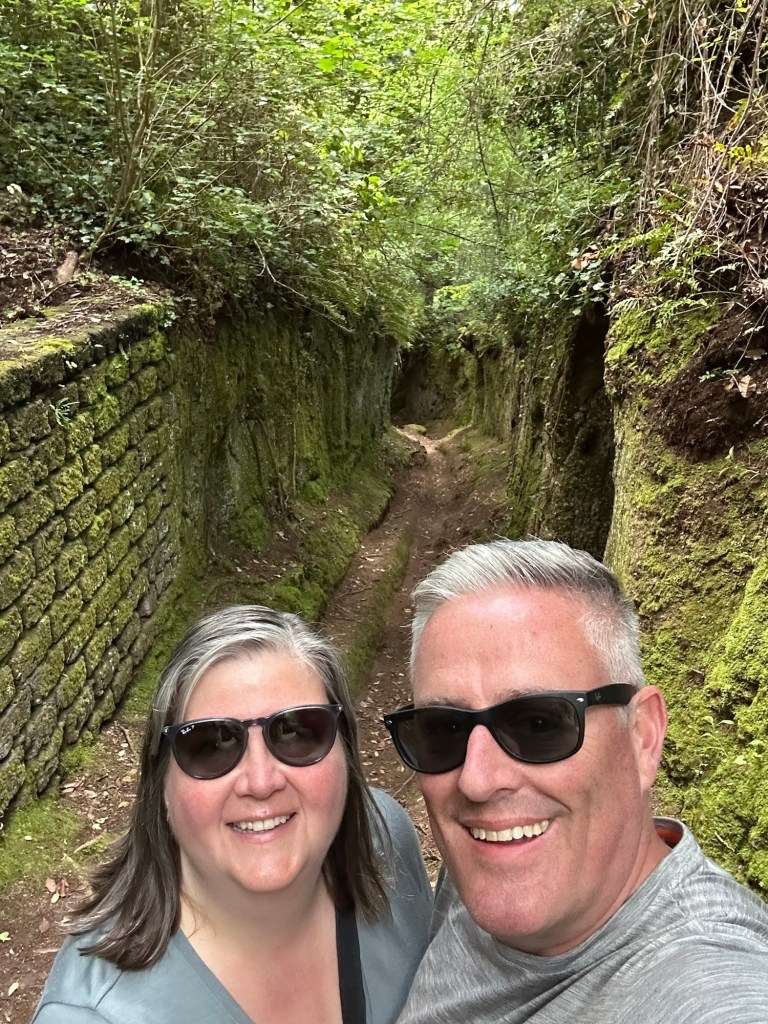

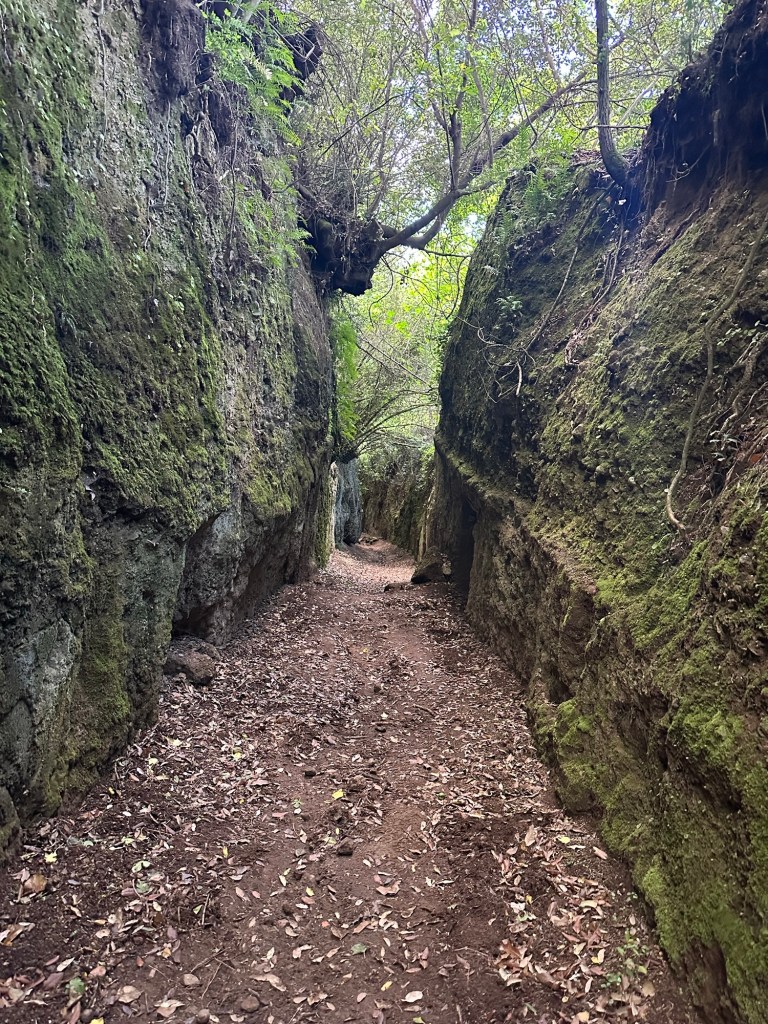
The Via Cava are up to 20 feet deep often containing caves and temple ruins.

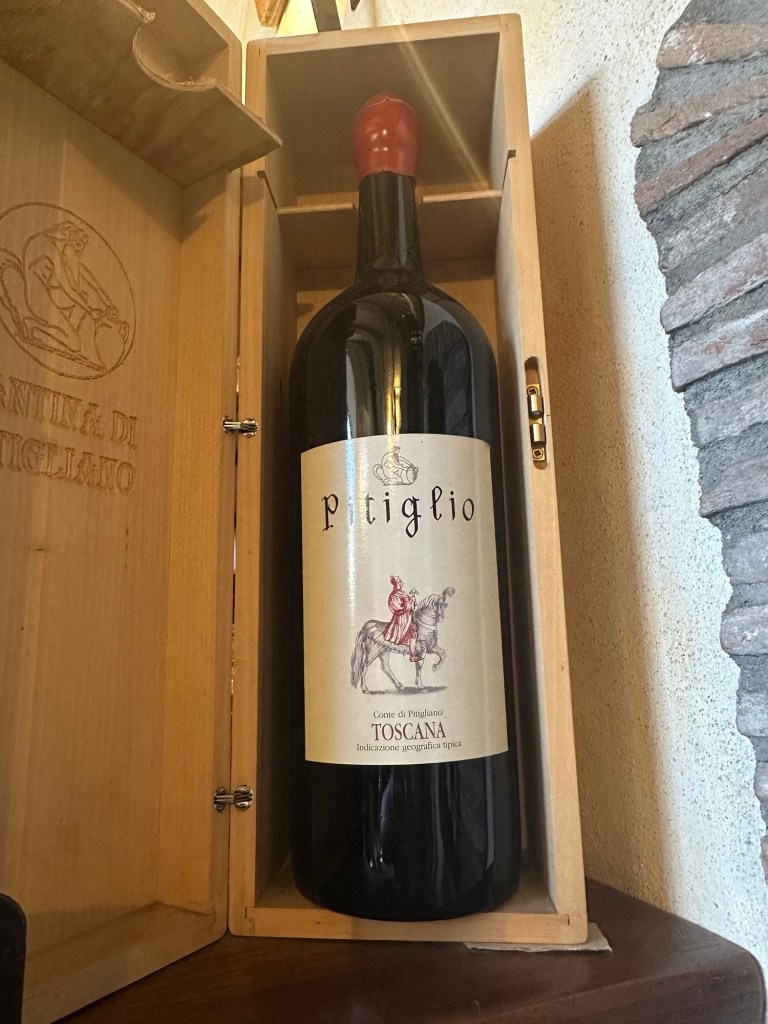
At lunch in town, we sampled a degustazione of local Maremma cheese with wild boar sausage, olives and artichokes and a bottle of local red wine.
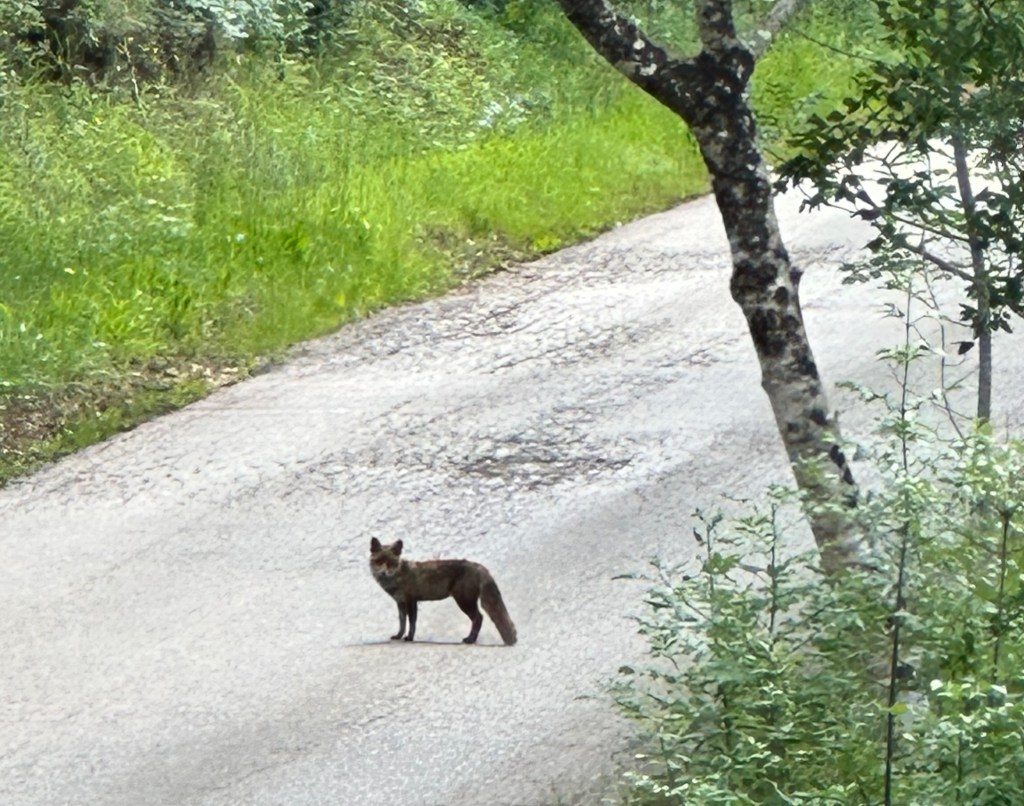
Along the tiny roads outside of Poggio Muralla we met a sweet little fox trotting toward us. It was the first time either of us has seen a ‘volpe’ in the wild.
Back at the hotel, we asked the reception for two glasses for our leftover wine. The manager noted the bottle and gleefully shouted out “Fabrizzio” – he is apparently close friends with the vintner. Italian wine tends to be designated by region, not grape variety. Most of wineries are small family run and therefore locally very important.
Our hotel is home to seven resort cats, outdoor ‘pets’ but not feral. They hang out at the terrace outside the restaurant and in a make-shift catio near the parking lot. This guy was sitting up in a tree when we arrived for our daily pats.

We had our last Saturnia dinner at the hotel’s restaurant. Designated AIC (the Italian Celiac society), they had not one but two fresh gluten free pastas for Dave to choose from. We capped off the night with a local Vin Santo fortified wine and headed off to bed.


Leave a Reply