


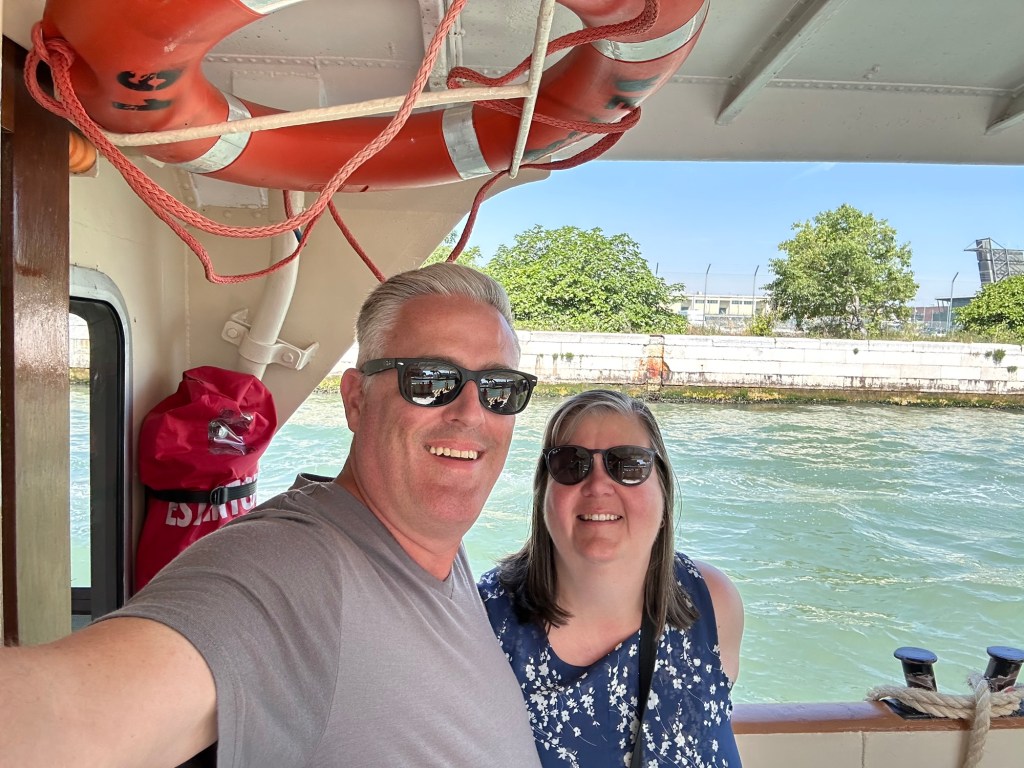
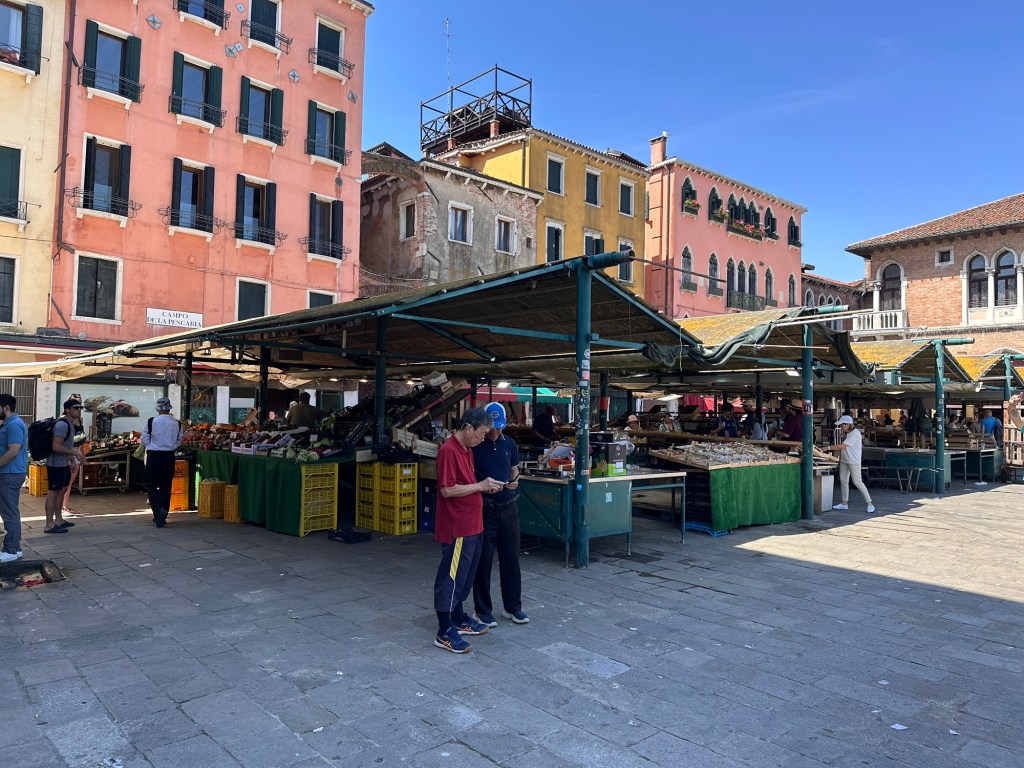
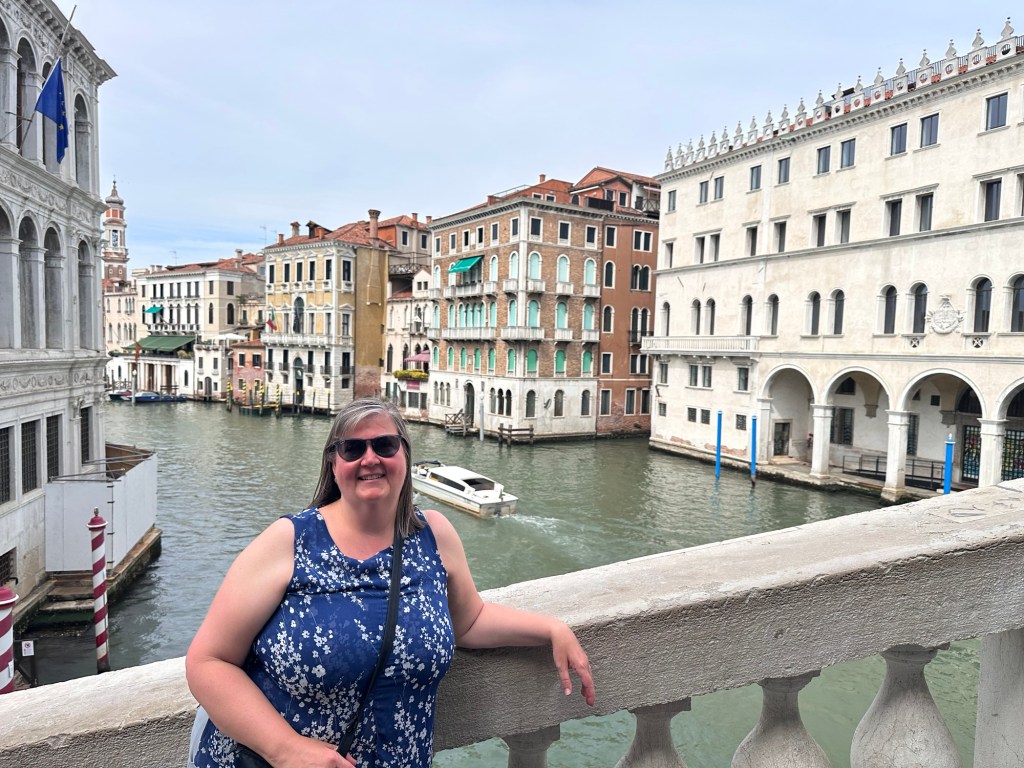
After breakfast we put our 4-day vaporetto pass to good use and motored up the Grand Canal to the Rialto market.
It was fun to watch the locals haggle over fish and produce.

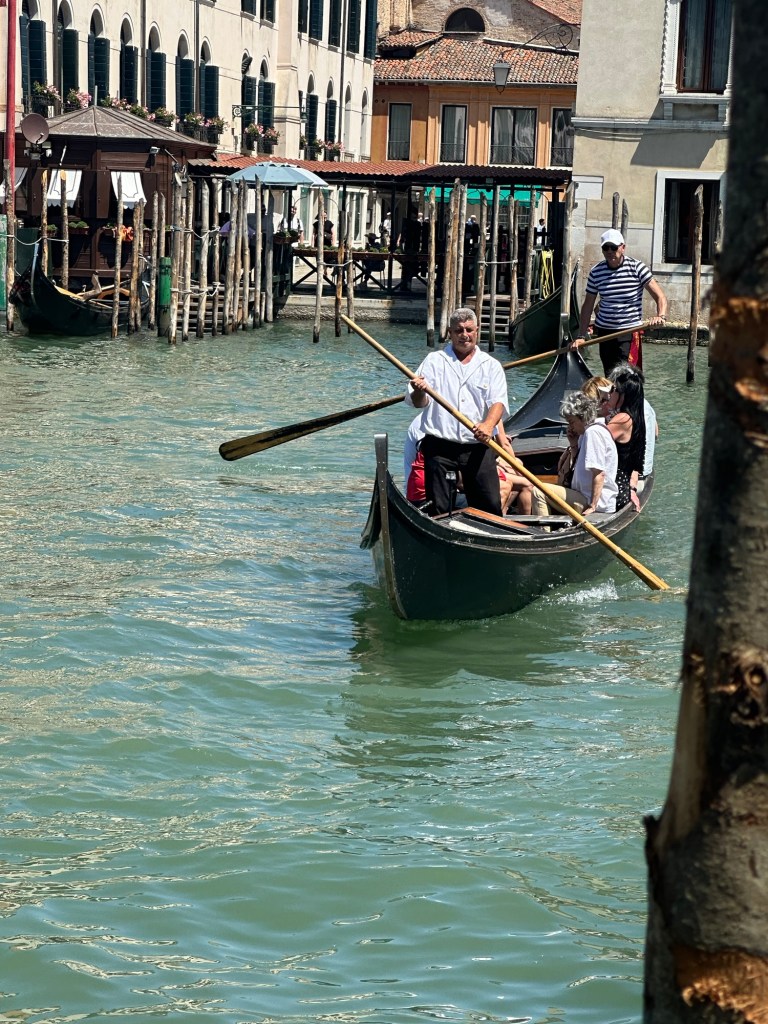
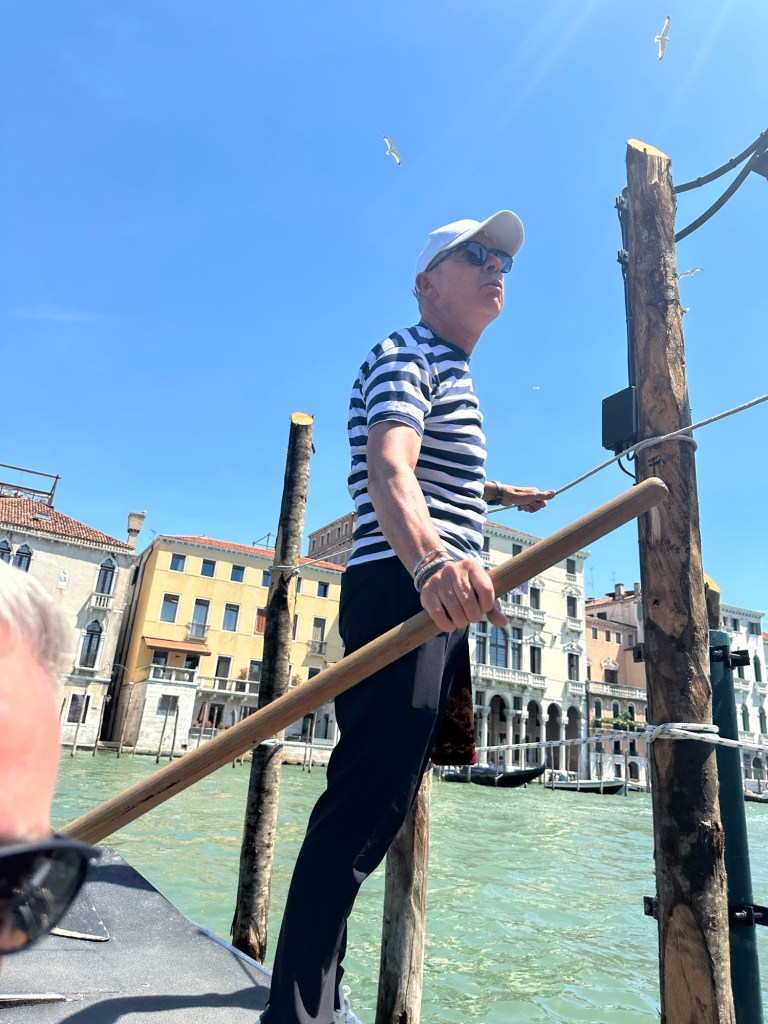
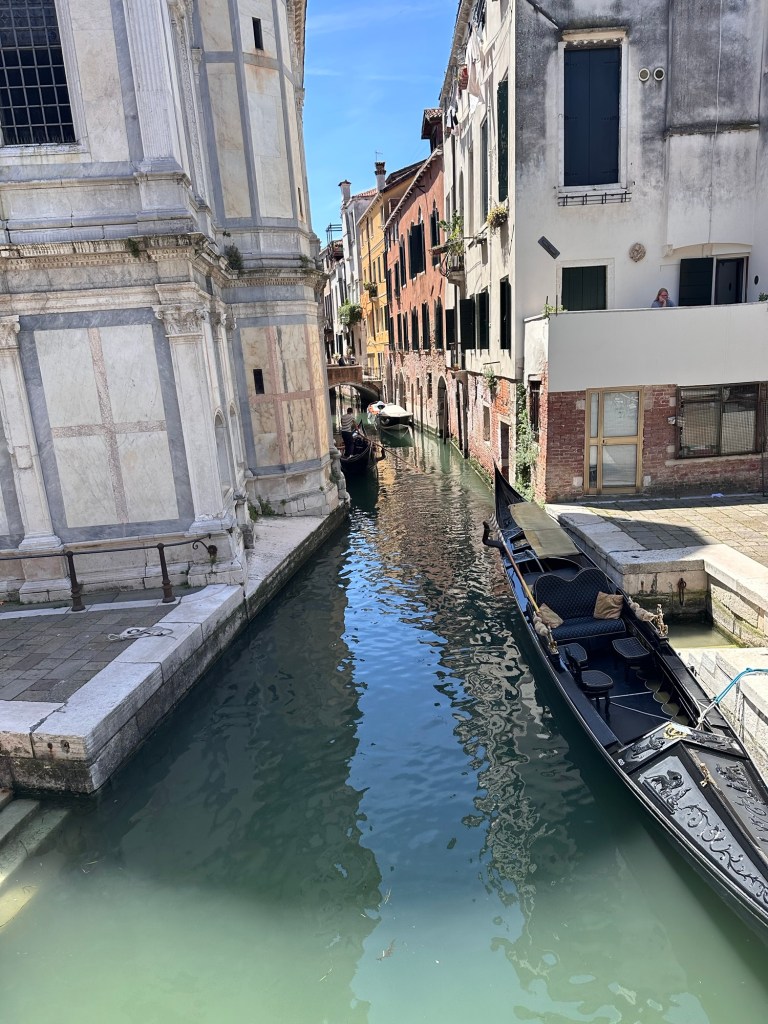
Private gondola rides in Venice are very expensive and perhaps overrated. So instead, we took the traghetto (transportation gondola) across the Grand Canal from Rialto Pescaria (the fish market) to Santa Sofia.
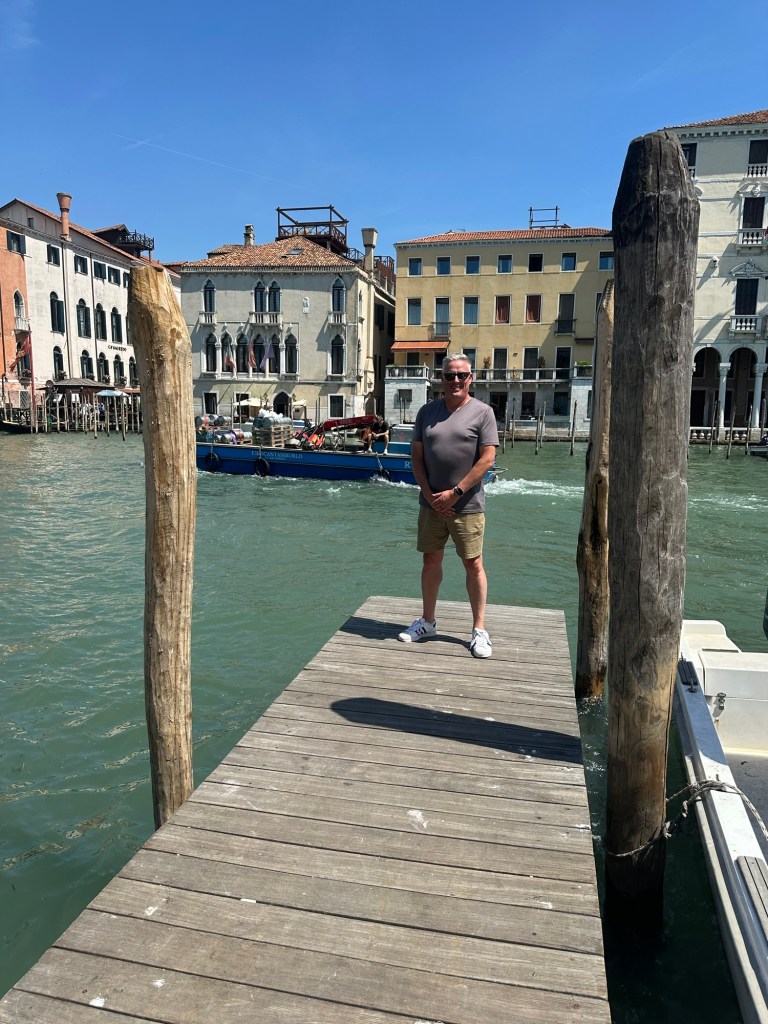
The small boat is not a traditional tourist attraction, but how residents travel quickly across the canal at points with no bridge.
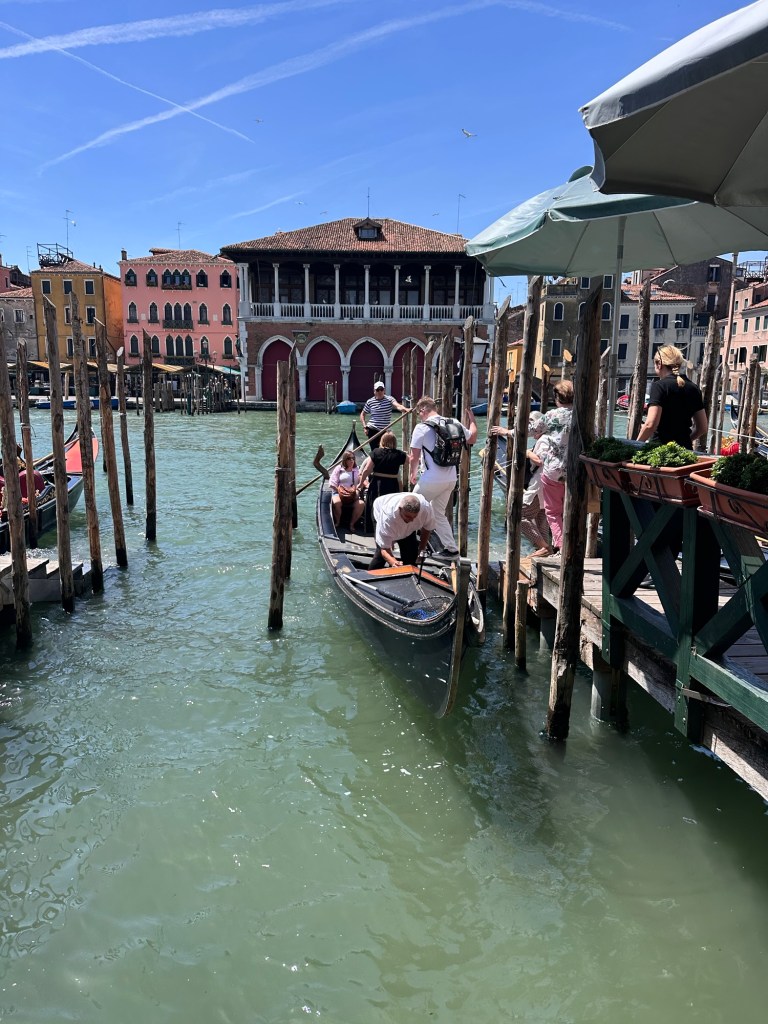
Often people just stand in the gondola for the 2 minute trip, but it was suggested we sit due to some wash from the larger rented boats (our gondolier yelled at several boats to slow down!).
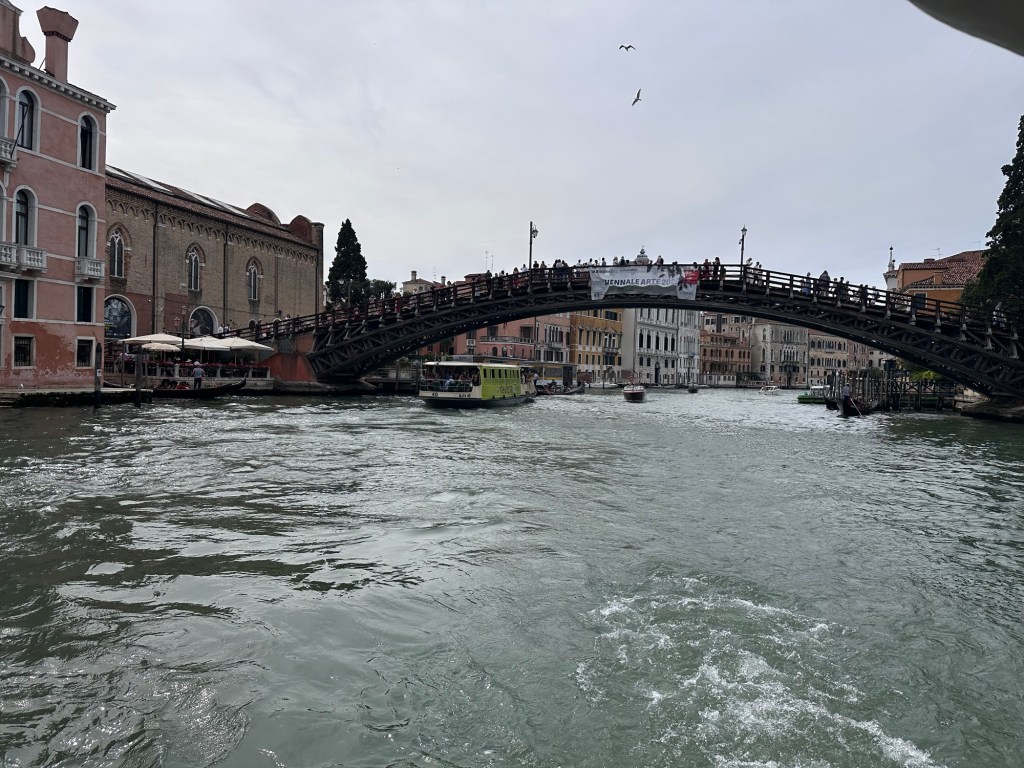
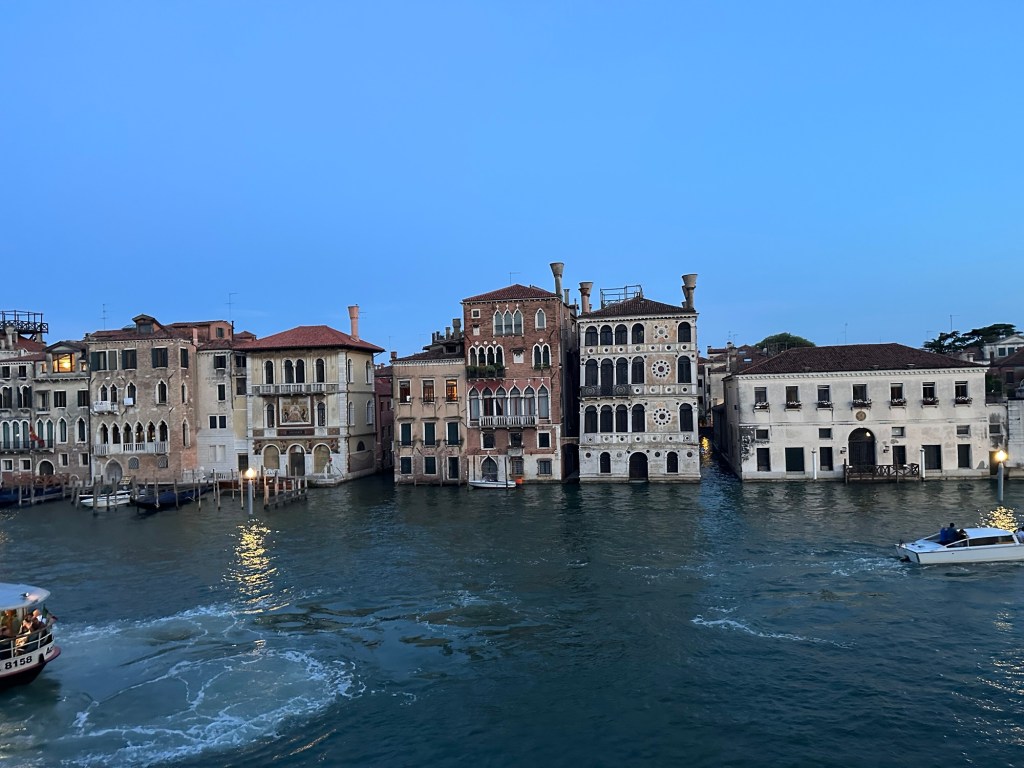
There are 435 bridges in Venice, but only four that span the Grand Canal. The Ponte della Costituzione and the Ponte degli Scalzi are in the north near the train station.
The Accademia bridge links the Dorsoduro siestre with San Marco. There has been a bridge here since 1488. The steel bridge built in 1854 was replaced by this current wooden bridge in 1933, despite the city’s desire for a stone bridge.
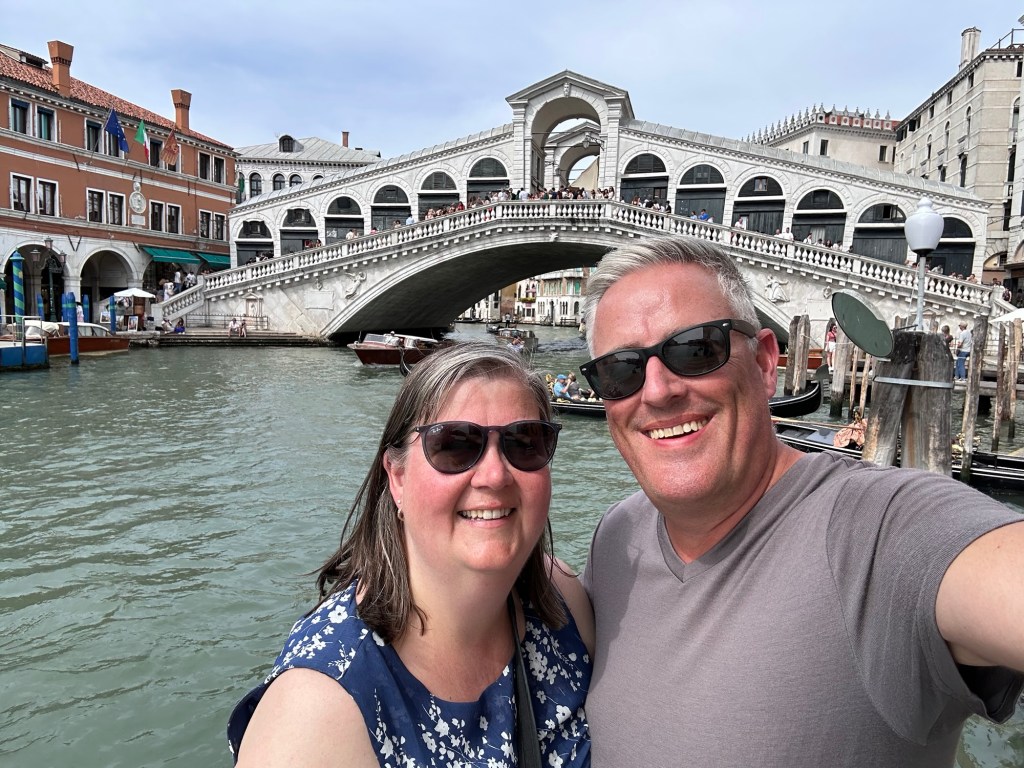
The Rialto Bridge is the oldest and most famous of the Grand Canal bridges. Built between 1588-1591, it connects the districts of San Polo and San Marco.
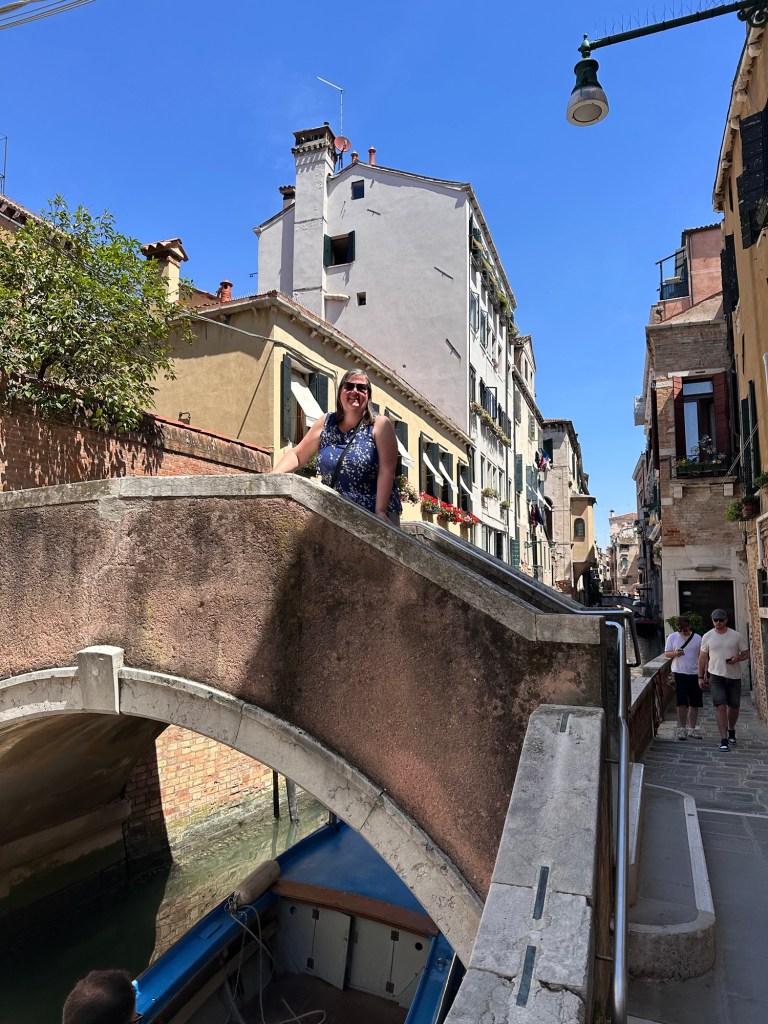
The Ponte delle tette (bridge of tits) is a bridge over a small canal (Rio di San Canciano).
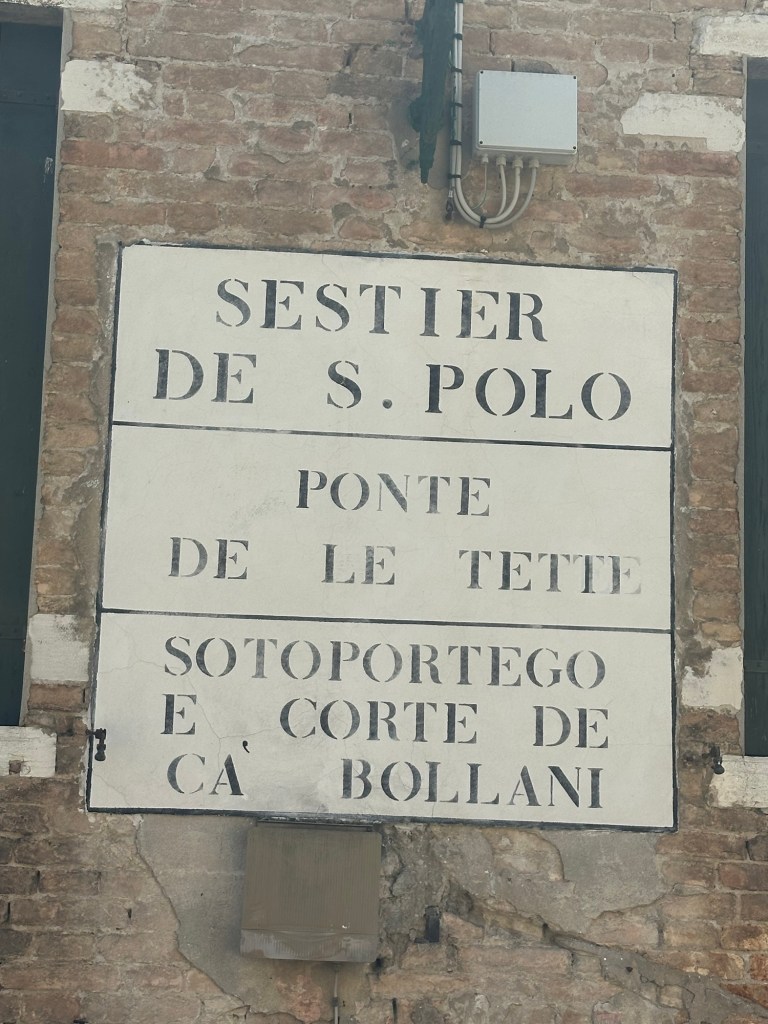
It was frequented by prostitutes in the 16th C who were encouraged by the Doge to stand topless on the bridge and in nearby windows of the old red light district to entice and convert suspected homosexuals.
The Strada Nova in the Cannaregio sestiere is one of the widest streets in Venice, and possibly the longest at 400m! This area is the shopping mecca of Venice.

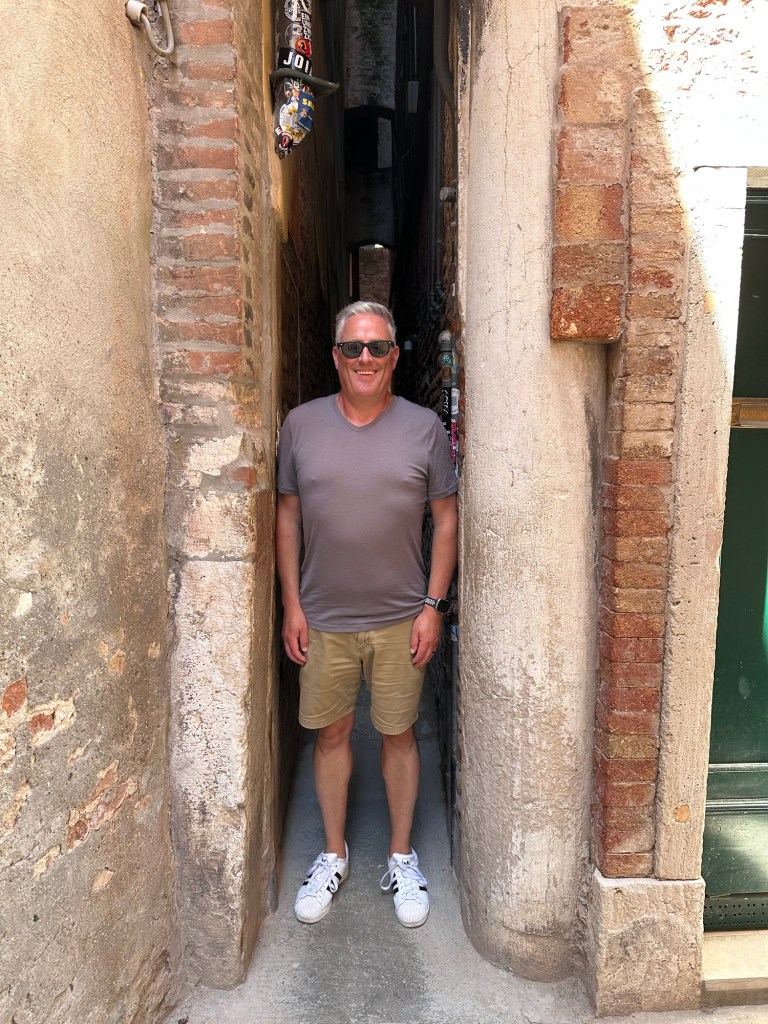
We thought we had seen a narrow street in Paris – the Rue du Chat qui Peche in Saint Michel is just shy of 6 feet wide (1.8m). The Calleta Varisco in Venice is 53cm wide, not quite 2 feet!!

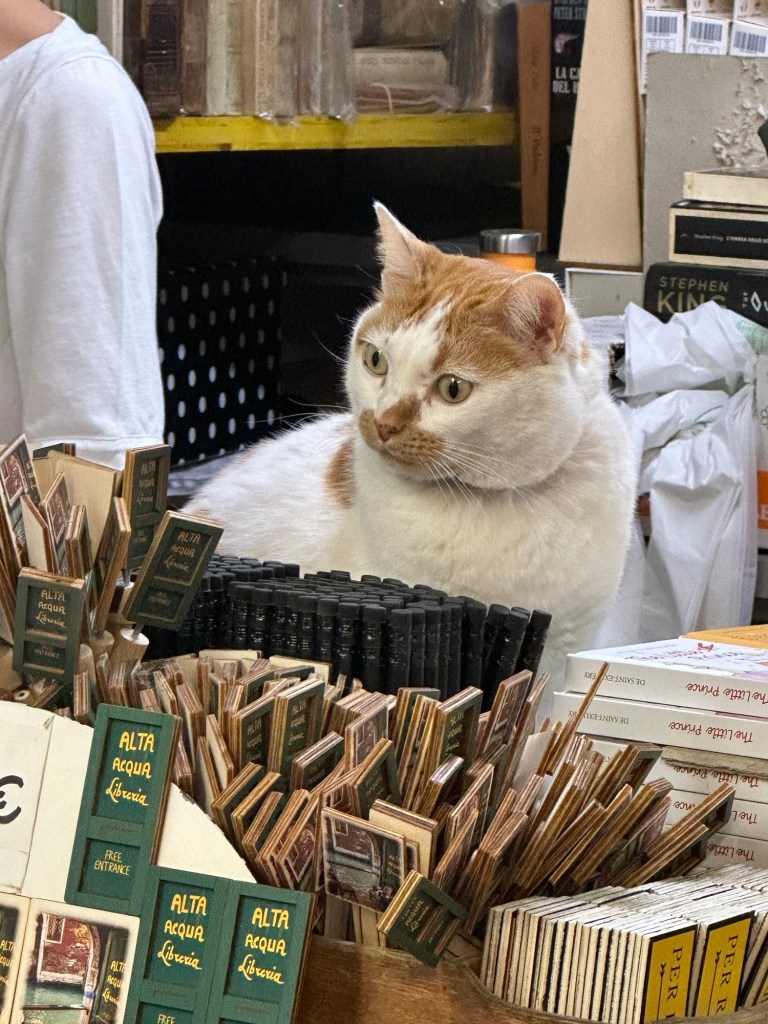
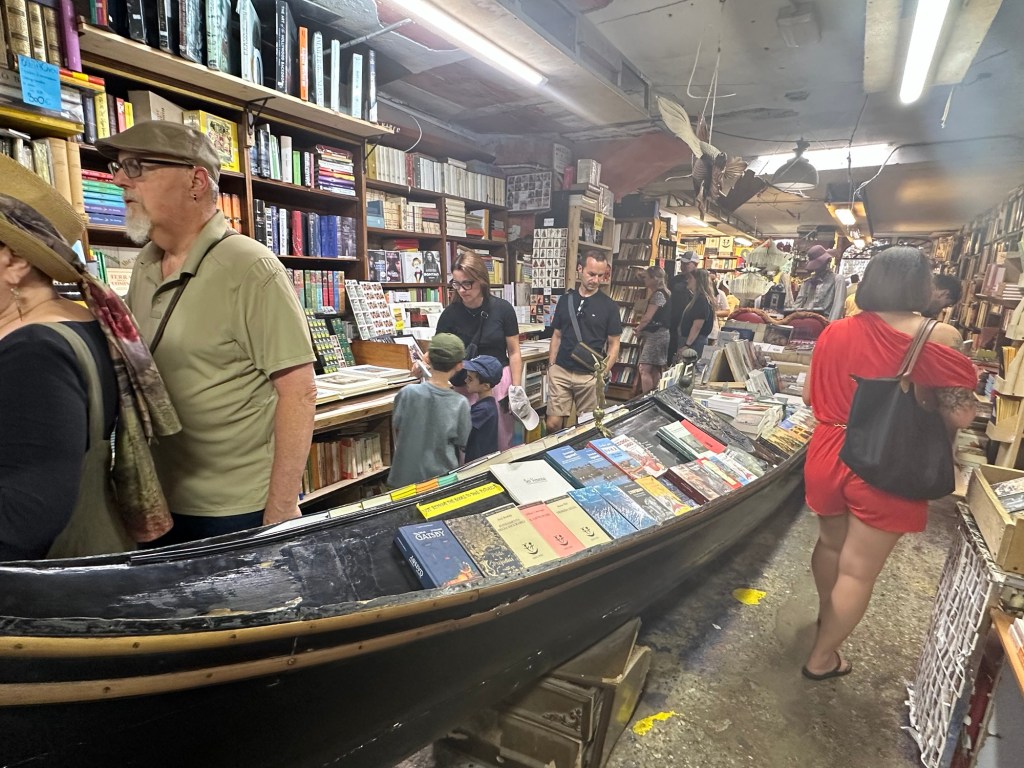
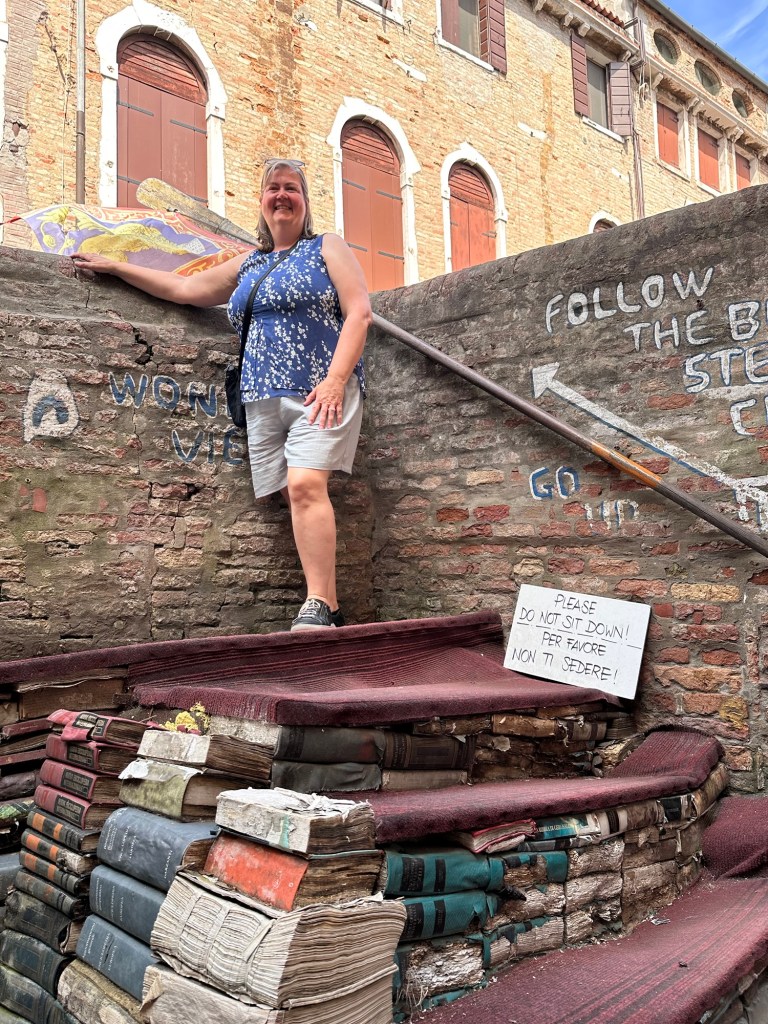
The Libraria Acqua Alta is an overly-instagrammed bookstore.
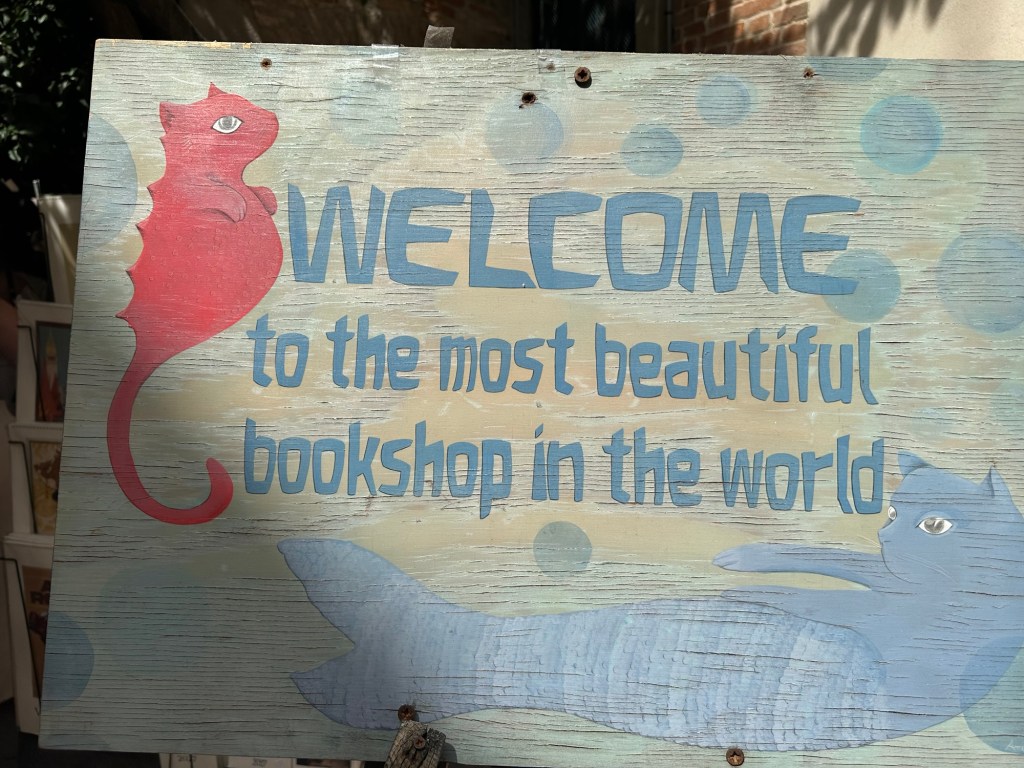
We stopped by to pet their 5 resident cats (but only saw two of them). This guy was up by the till, another fluffy gray kitty was running under bookshelves and didn’t pause for photos!
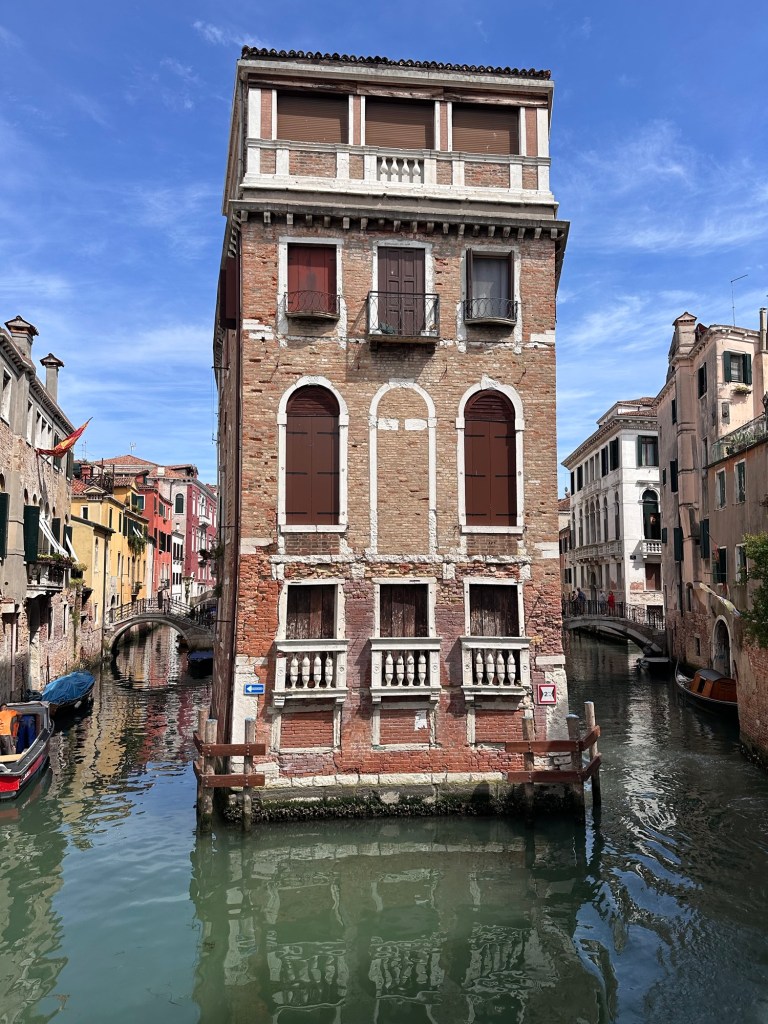
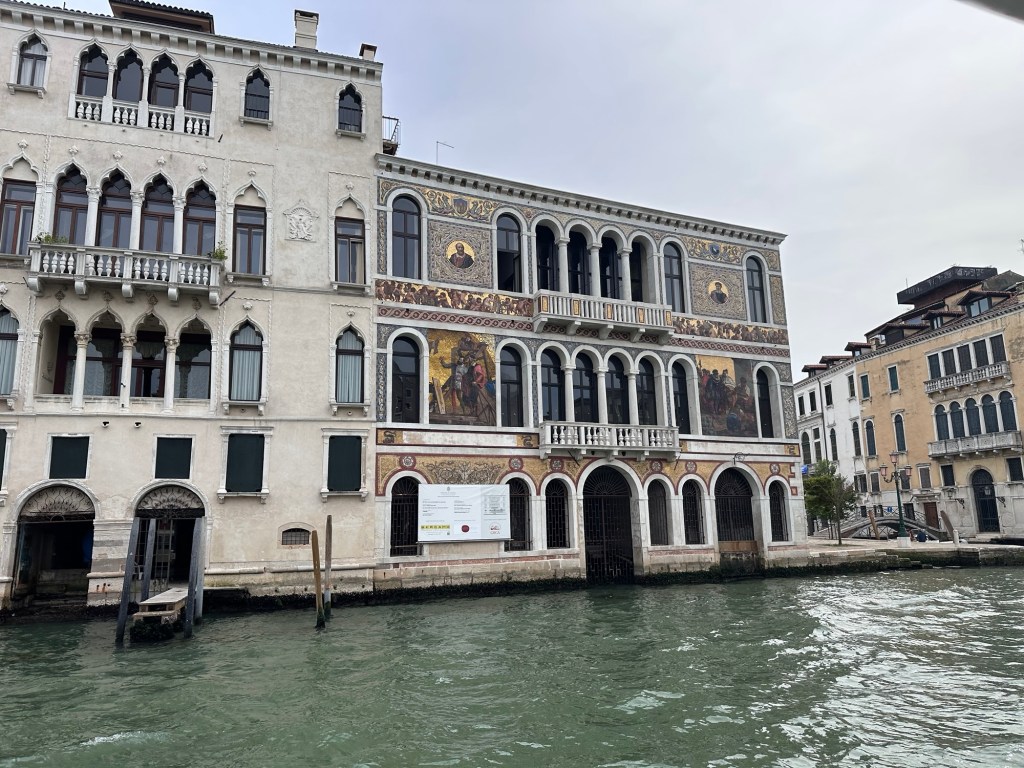
The Palazzo Tette is a beautiful house surrounded by water on three sides.
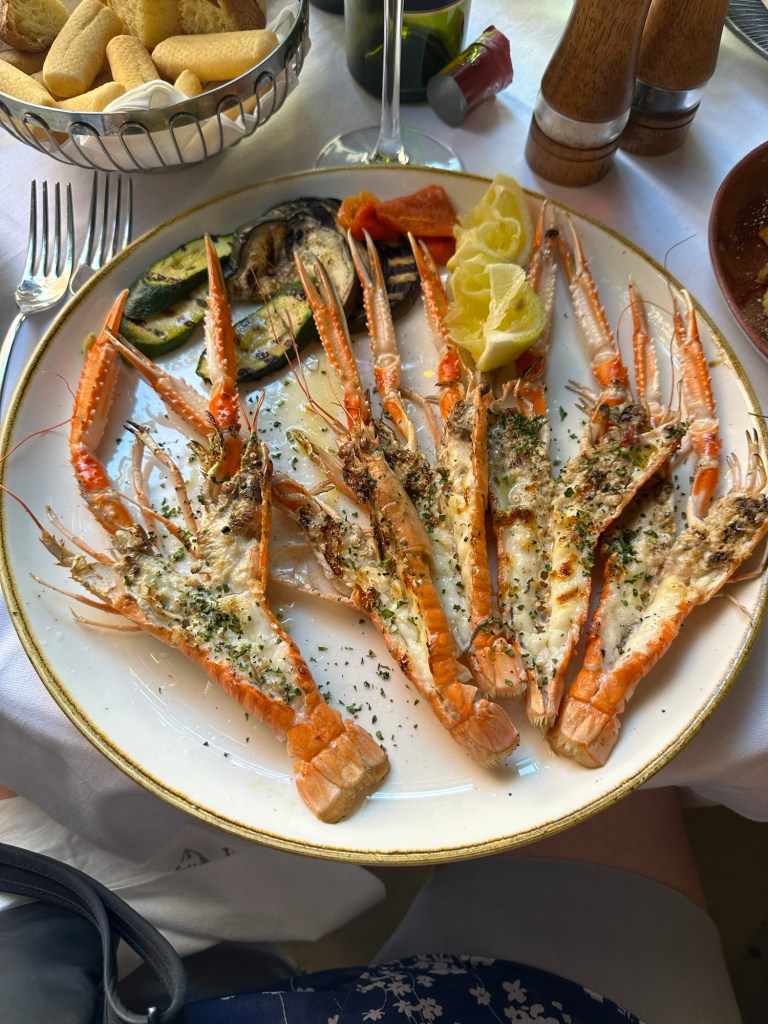
Hungry after a morning of walking, we lunched at Ristorante ai Barbacani. The barbacani are ‘shelves’ coming out of the structure of the wall allowing the houses on the upper floors to be larger than those on the ground floor. This was done for tax purposes, as residents only paid for the square footage of the main floor.
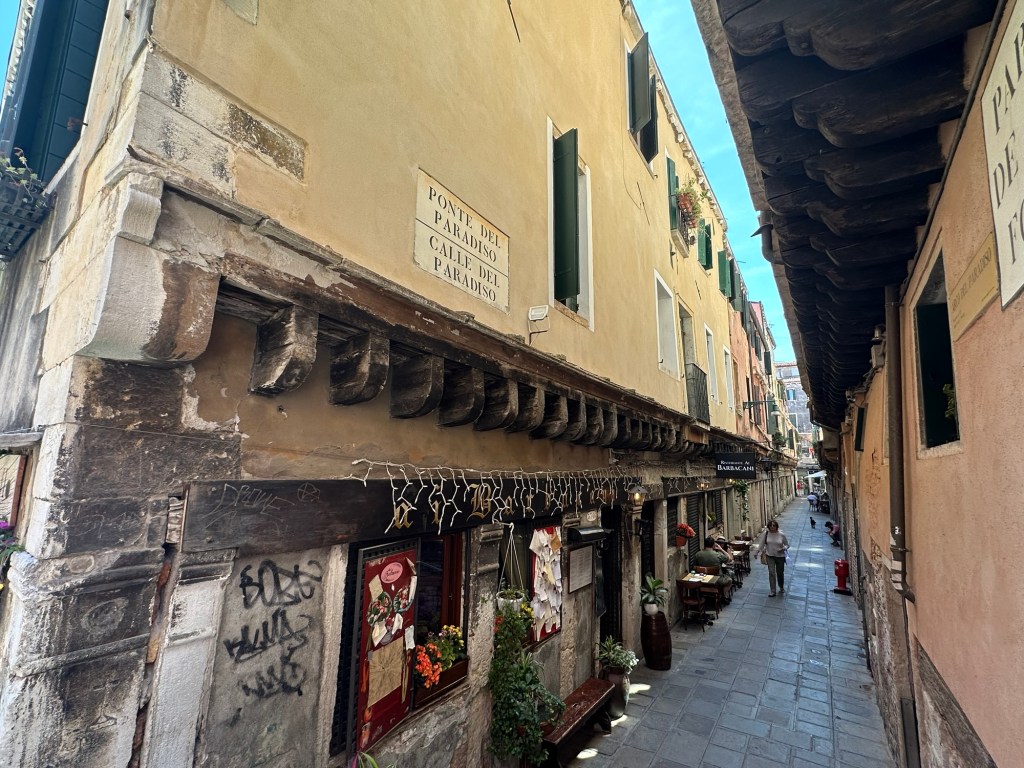
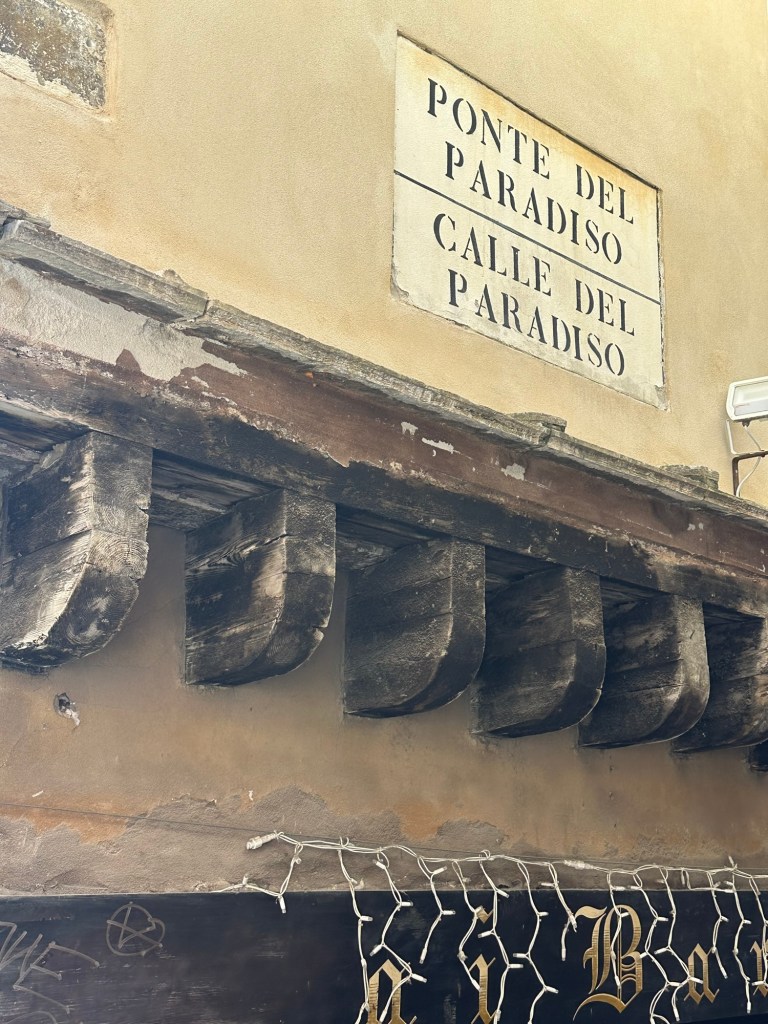
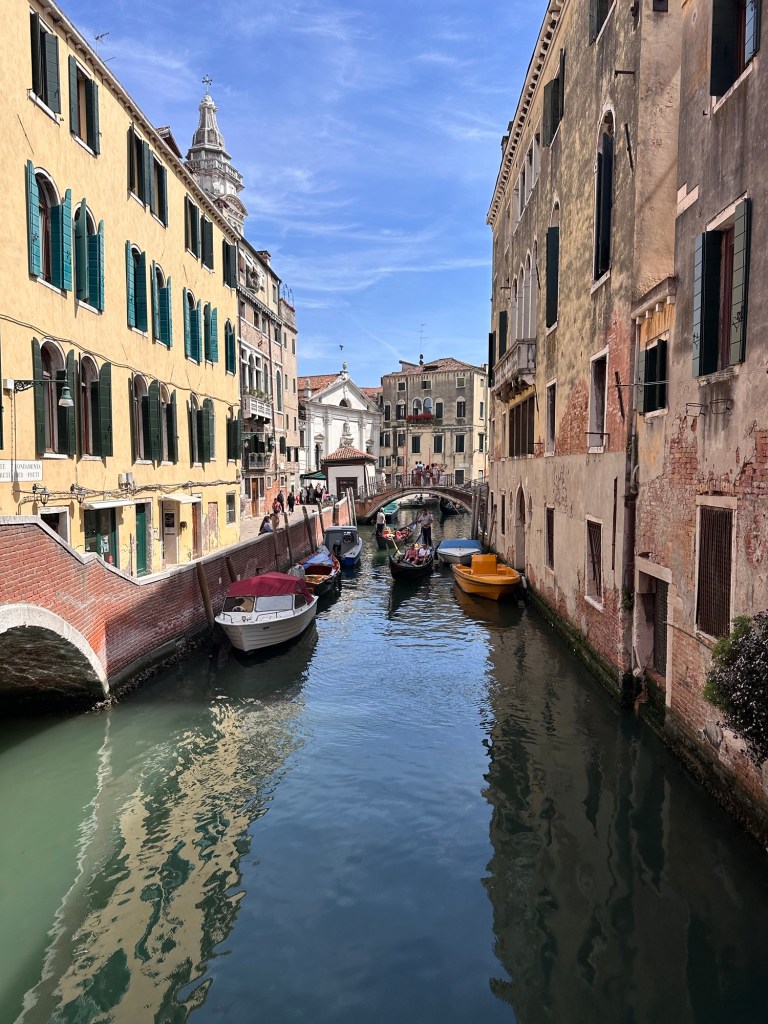
We made a reservation months ahead for the one canal-side table in the window where we watched singing gondoliers pass by.
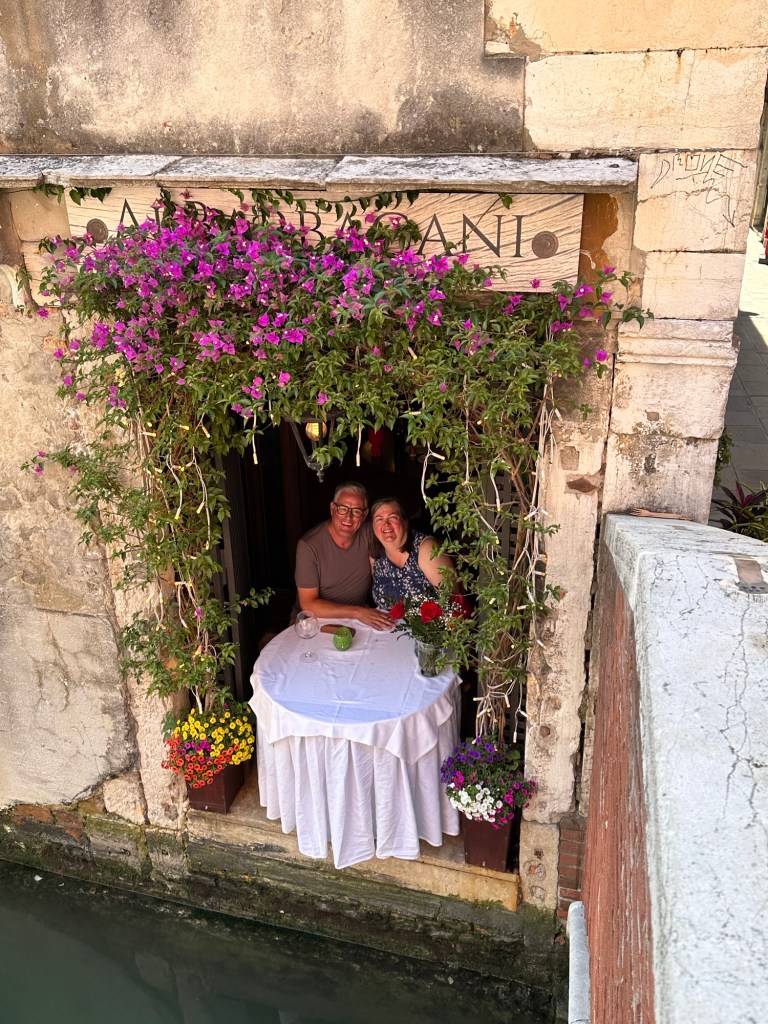
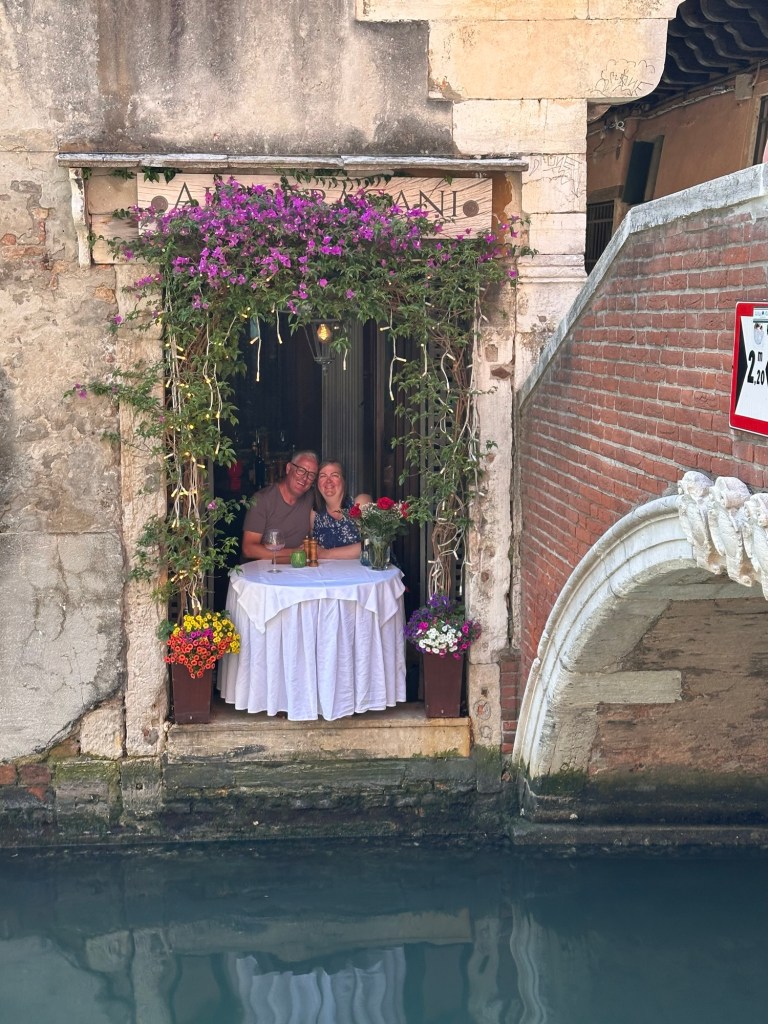

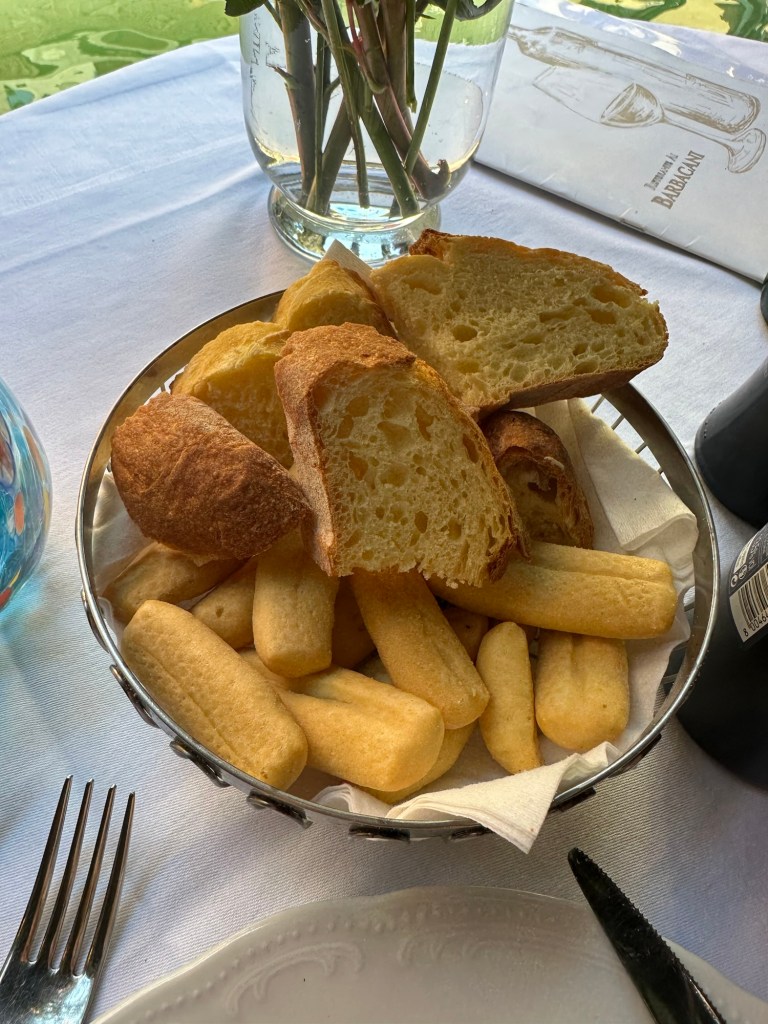
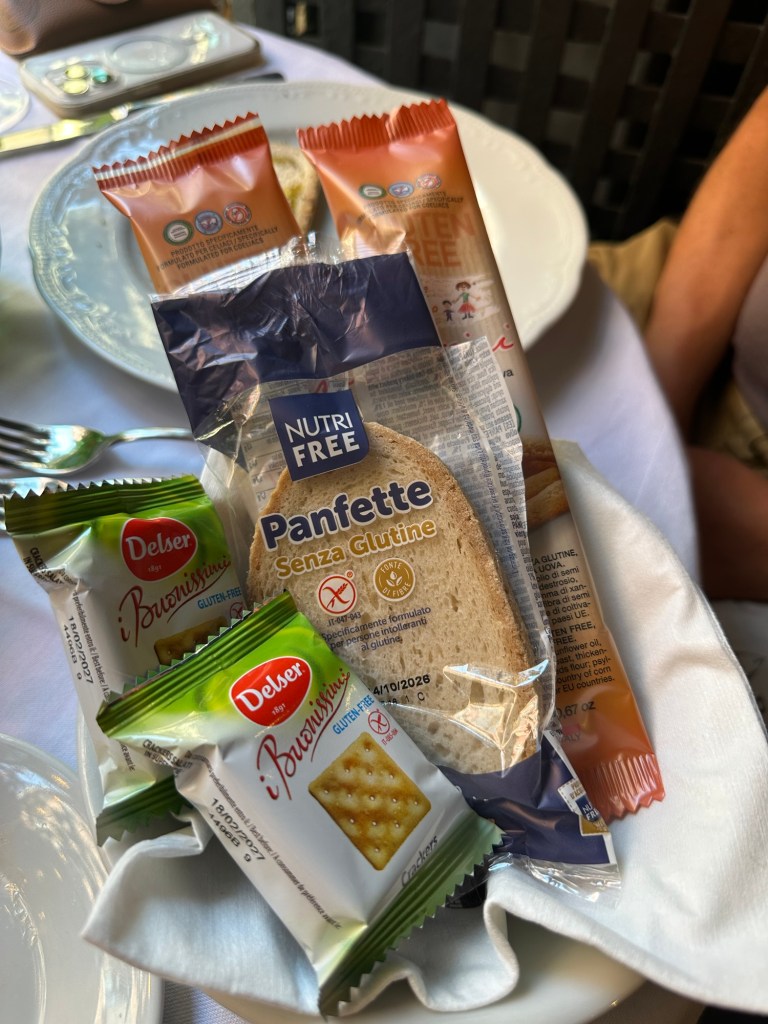
Dave has had some luck finding gluten free bread at restaurants, usually a single bun or package of crackers. Ai Barbacani really stepped up!

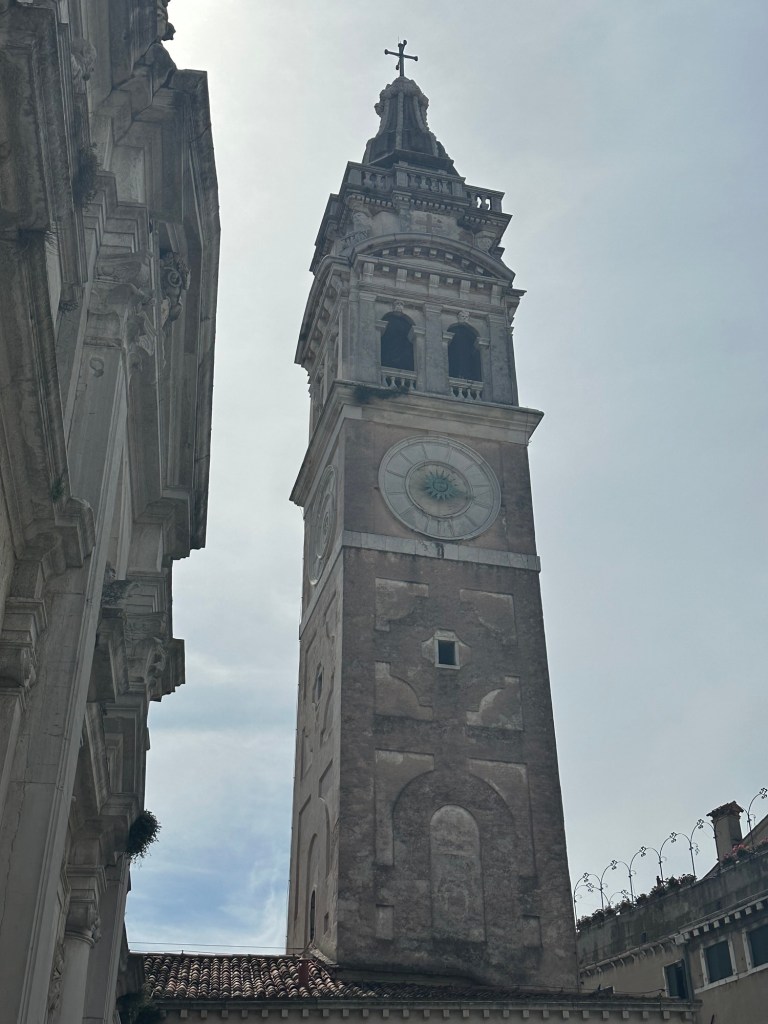

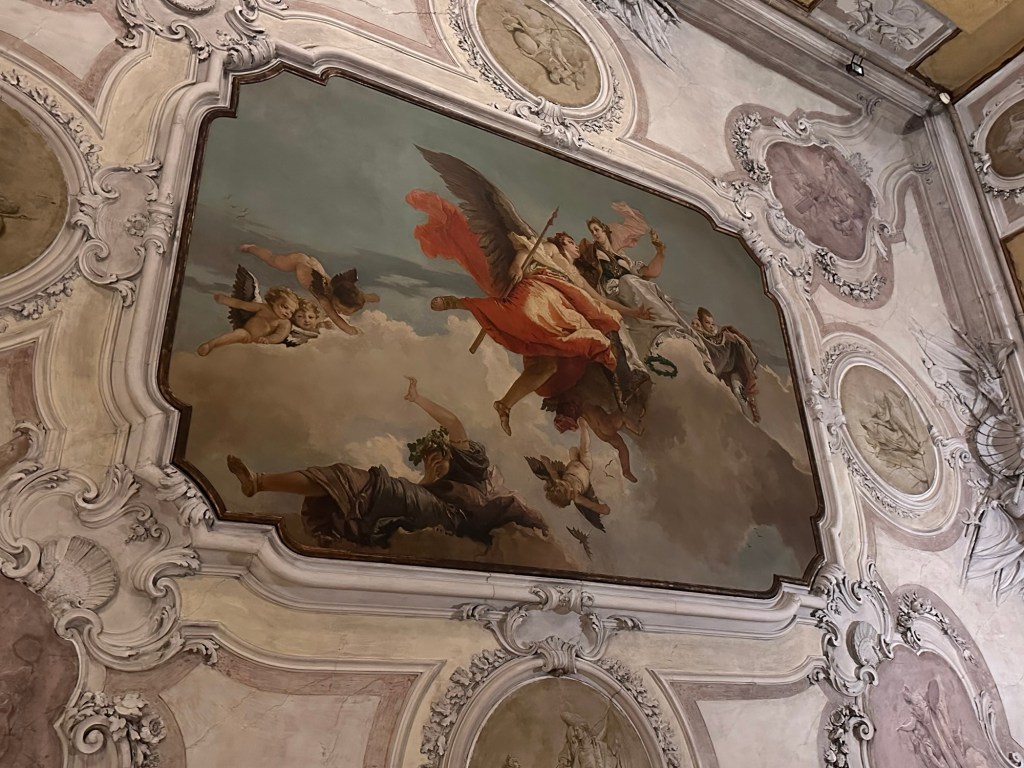
This evening we attended an opera at the Musica a Palazzo, a renovated 15th C palace.
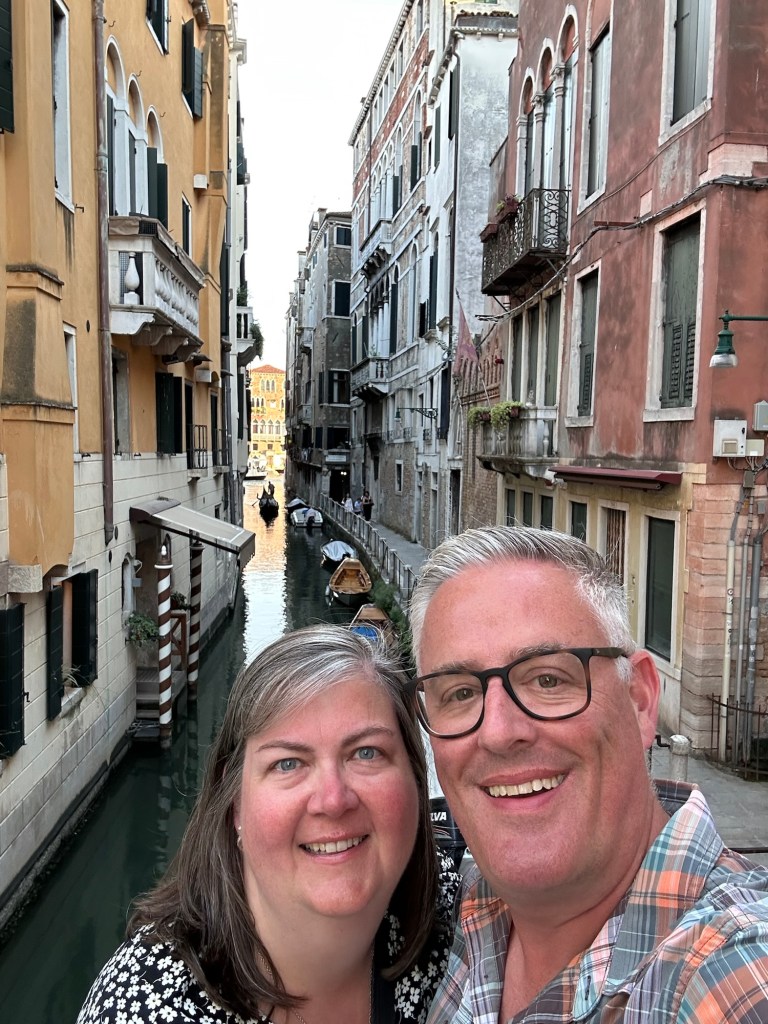
Each act of the play takes place in a different room of the house.
Tonight’s offering was La Traviata (the Fallen Woman), based on La Dame aux Camelias, a play adapted from the Alexandre Dumas novel. It was originally called Violetta after the main character, a courtesan dying of consumption in Paris at the beginning of the 19th Century.
We didn’t understand much of the Italian, but the palazzo was beautiful, the singing was wonderful and we enjoyed our cultural experience.


Leave a Reply